Best Seller

Ref: LP-CSB-01
Consolidate complete turnkey electric guitars, matched bridge tremolo systems, and precision replacement hardware direct from our verified production floor with low MOQs and rapid dispatch to Lisbon.
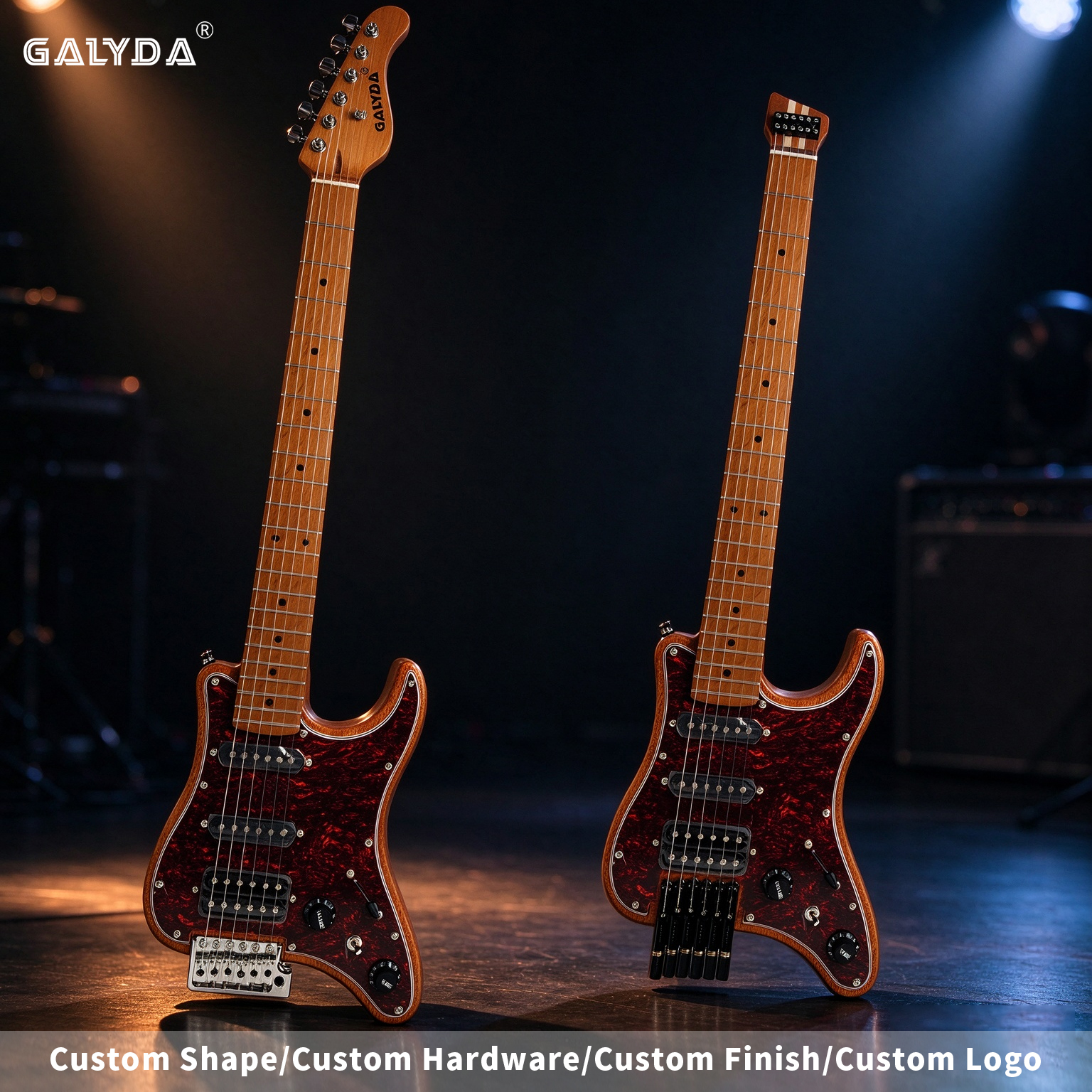
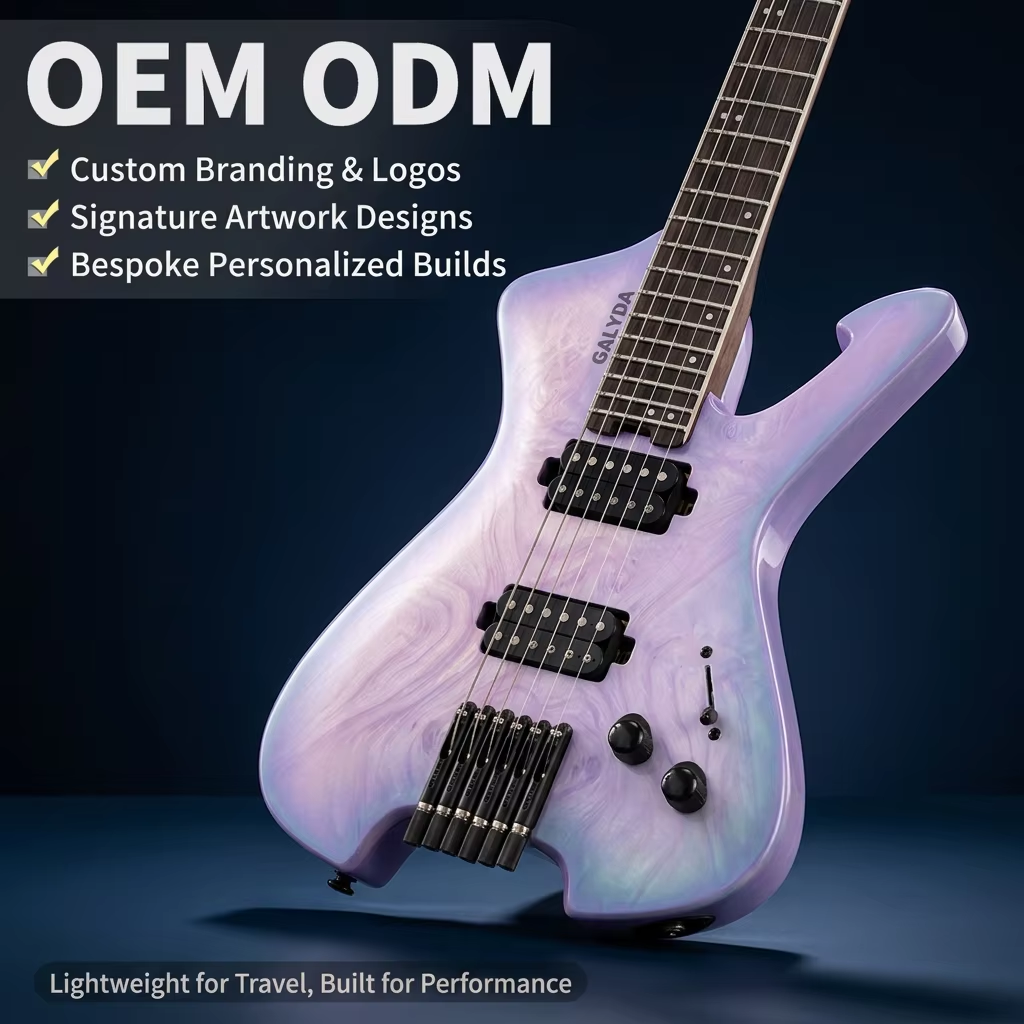
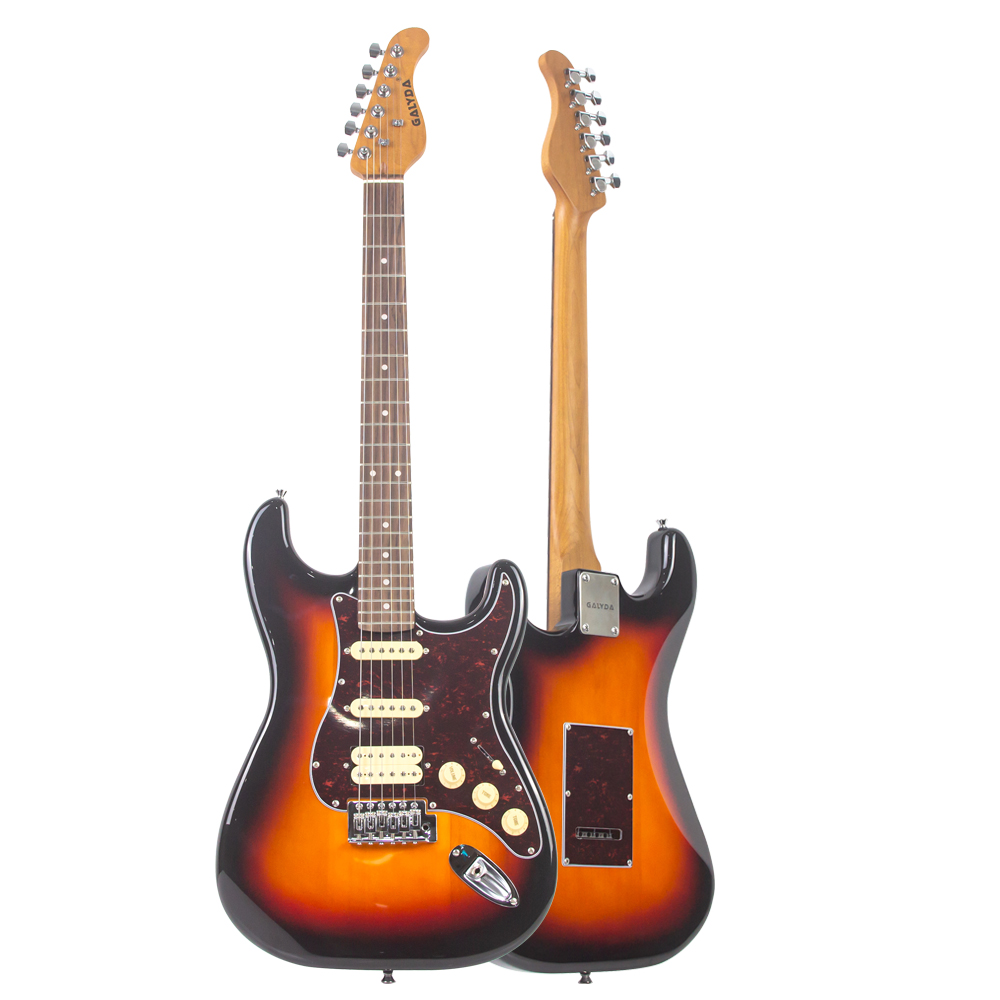
A comprehensive metallurgical and acoustic evaluation of bridge architecture, vibrational energy dissipation, and saddle physics for modern guitar manufacturing.
In the discipline of modern chordophone acoustics, the guitar bridge is fundamentally an impedance-matching transducer. It serves as the mechanical nexus between the vibrating string core and the resonant structure of the instrument body. When a player strikes a steel or phosphor-bronze string, transversal and torsional standing waves generate kinetic energy. The efficiency with which this energy transfers into the resonant top plate—without premature high-frequency harmonic decay or dissonant mechanical rattle—is dictated entirely by the bridge's metallurgical composition, structural mass density, saddle break angle, and machining tolerances.
Historically, low-cost commercial manufacturing relied on sintered zinc alloy die-castings (Zamak 3). While economical for standard OEM builds, die-cast zinc possesses an internal micro-porosity that dampens harmonic sustain, attenuating upper-order overtones between 2.5 kHz and 6 kHz. For professional boutique luthiers, high-end retail brands, and European restoration specialists across the Iberian Peninsula, such vibrational loss degrades instrument articulation. Huizhou NFGF Musical Instrument Co., Ltd. resolves this compromise through state-of-the-art CNC precision-machined solid brass saddles, cold-rolled carbon steel inertia blocks, and aircraft-grade T6061 billet aluminum chassis assemblies.
From knife-edge fulcrum two-point tremolos to through-body hardtail bridges and pinned classical tie-blocks, every physical interface impacts playability, intonation stability, and action adjustability. Precision engineering demands bridge baseplates machined flat within ±0.005 mm tolerances to ensure 100% surface-to-wood contact coupling. Furthermore, saddle height adjustment screws and intonation springs must withstand extreme mechanical fatigue while repelling galvanic corrosion triggered by skin perspiration and coastal atmospheric salinity.
Bridging historical craftsmanship in the Portuguese guitar heartland with modern OEM component supply chains for repair hubs, custom builders, and European exporters.
Lisbon maintains a heritage of stringed instrument lutherie, centered around the iconic Guitarra Portuguesa (Lisboa and Coimbra variations). While traditional fado guitars employ floating bone-topped wooden bridges with peacock tailpiece tuners (leque), contemporary Portuguese luthiers across Alfama, Bairro Alto, and Marvila are pioneering hybrid crossover acoustics and electric solid-body guitars requiring custom movable saddles, compensated individual bridge studs, and low-tolerance string anchoring.
Instruments played in Lisbon, Cascais, and along the Tagus estuary are continuously subjected to humid maritime air loaded with salt aerosol. Inferior nickel plating corrodes within months, causing saddle adjustment screws to seize and pivot points to degrade. Our hardware utilizes multi-layer vacuum electroplating (Copper undercoat + Nickel barrier + 5-micron Hard Chrome or PVD Titanium Gold), passing strict 96-hour neutral salt spray (ASTM B117) corrosion tests.
Wholesale musical instrument importers, regional retail chains (such as those serving the Lisbon-Porto corridor), and e-commerce music gear distributors face rising transport costs and unpredictable lead times from small European distributors. By sourcing directly from our factory in Huizhou with tailored OEM branding, Lisbon businesses eliminate secondary distributor markups, access flexible batch MOQs starting at 1 unit for guitars and hardware sets, and receive certified DDP air/sea logistics.
Analyzing shifting buyer demands: the headless revolution, multi-scale intonation geometry, and stringent environmental directives shaping procurement.
Across the European Union, instrument design is undergoing a structural paradigm shift driven by ergonomic awareness, modern progressive genres (such as modern metal, fusion, and neoclassical acoustic styles), and international regulatory vigilance. Sourcing managers in Lisbon must align their product development with these distinct industry trajectories:
1. Headless & Monorail Bridge Architecture: Compact travel guitars and ergonomic multiscale instruments are witnessing double-digit compound growth across Europe. Headless designs rely entirely on the bridge assembly for string ball-end retention, precise linear tuning via knurled thumbwheels, and individual saddle ground contact. Our factory manufactures hardened brass individual monorail bridge units that isolate each string, effectively eliminating cross-string sympathetic crosstalk and accommodating fanned-fret multiscale angle layouts from 24.75" to 28".
2. EU REACH and RoHS Metallurgical Compliance: Guitar hardware imported into Portugal and the broader European market must adhere to rigorous heavy-metal limitations. Lead (Pb) content in brass alloys is restricted to under 0.1% unless specific exemptions apply, and hexavalent chromium or toxic cadmium electroplating chemistries are strictly banned. Huizhou NFGF guarantees certified RoHS-compliant electroplating and alloy casting, providing importers complete audit trails and declarations of conformity to breeze through EU customs inspections at Lisbon Port (Porto de Lisboa).
3. Piezo & Acoustic-Electric Sensor Integration: The demand for hybrid performance guitars—instruments capable of producing crisp dreadnought chime alongside high-gain humbucking roar—has spurred adoption of integrated saddle transducers. Our custom R&D lines precision-mill bridge baseplates with under-saddle wire routing channels and isolated ceramic piezo crystals that capture authentic wood resonance without electromagnetic hum.
Comparative engineering metrics evaluating raw materials utilized in guitar bridge manufacture and their respective acoustic sustain properties.
| Alloy / Component Material | Density (g/cm³) | Sound Velocity (m/s) | Sustain Quotient (1-10) | Corrosion Resistance (ASTM B117) | Optimal Musical Application |
|---|---|---|---|---|---|
| C36000 Solid Billet Brass | 8.50 | 3,830 | 9.6 / 10 | High (Plated or Natural Patina) | Warm low-mids, singing high sustain, vintage Tele/LP bridge saddles |
| Cold-Rolled 1018 Carbon Steel | 7.87 | 5,120 | 9.4 / 10 | Moderate (Requires Nickel/Chrome Barrier) | Inertia tremolo blocks, explosive note attack, crisp fundamental snap |
| T6061 Aircraft Aluminum | 2.70 | 6,320 | 8.2 / 10 | Exceptional (Anodized Protection) | Ultra-lightweight solid bodies, lightning transient attack, acoustic pins |
| Cast Zamak 3 (Zinc Alloy) | 6.60 | 3,700 | 6.5 / 10 | Fair (Vulnerable if Plating Wears) | Budget mass-production beginner electric guitars, non-critical tailpieces |
| Grade 5 Titanium (Ti-6Al-4V) | 4.43 | 5,070 | 9.8 / 10 | Impervious to Sweat & Ocean Salt | Ultra-high-end custom shop luthiers, zero-wear knife edges, micro-clarity |
Combining the mass production advantages of Guangdong's musical instrument heartland with boutique tolerances, audited QA, and dedicated OEM engineering.
Our Qiuchang, Huiyang District facility was independently inspected and assessed on-site by SGS Group in November 2025. Every production lot undergoes rigorous raw material spectral inspection, CNC dimensional verification within 0.005mm tolerances, and automated plating adhesion tests.
From laser-engraved luthier signatures on the bridge baseplate to bespoke string pitch spacings (e.g., 52.5mm vs 54mm vs 56mm), custom saddle radius profiling (7.25", 9.5", 12", or compound), and customized heavy inertia blocks, our in-house engineering squad turns CAD sketches into metal prototypes in under 10 business days.
Unlike traditional component factories demanding 1,000-unit commitments per SKU, NFGF supports European innovators with sample orders starting at just 1 unit for electric guitars/basses and ultra-low batch runs on specialized hardware components, empowering boutique brands to test market demand risk-free.
Clear, transparent guidance addressing shipping, compliance, tooling, and quality guarantees for Portuguese buyers and European importers.
For in-stock catalog instruments and standardized electric guitar bridges, our MOQ is as low as 1 piece or set, allowing immediate sample inspection and testing. For custom-machined ODM bridges featuring bespoke string spacing or custom logo laser engraving, our typical trial batch starts at 50 to 100 sets, significantly lower than general industry thresholds.
Every exterior metal piece destined for maritime and European destinations undergoes a multi-tier electroplating cycle followed by an ASTM B117 salt spray chamber test for 96 continuous hours. In addition, we utilize SUS304 stainless steel springs and hex height adjustment grub screws to ensure mechanical integrity against salt mist exposure.
Yes. We strictly adhere to European environmental directives. Our metal finishing lines exclude banned hexavalent chromium and excessive lead in copper-zinc matrices. We supply comprehensive material safety declarations (MSDS) and RoHS certificates of conformity to prevent any regulatory hold-ups at Portuguese customs.
For expedited prototype samples, express air couriers (DHL, FedEx, UPS) deliver to Lisbon, Porto, or Faro within 4 to 7 business days. For commercial wholesale orders, ocean container freight from Shenzhen/Guangzhou ports to the Port of Lisbon (Porto de Lisboa) or Sines averages 28 to 35 transit days. We offer full DDP (Delivered Duty Paid) door-to-door logistics handling customs clearance and VAT filing.
Absolutely. Our factory operates 5-axis and 3-axis CNC milling centers capable of routing bridge plates to any bespoke CAD specification. Whether your design requires narrow 9.8mm string spacing for Portuguese fado crossover builds or wider multi-scale geometry for modern 7- and 8-string headless guitars, we deliver tailored bridge geometry.
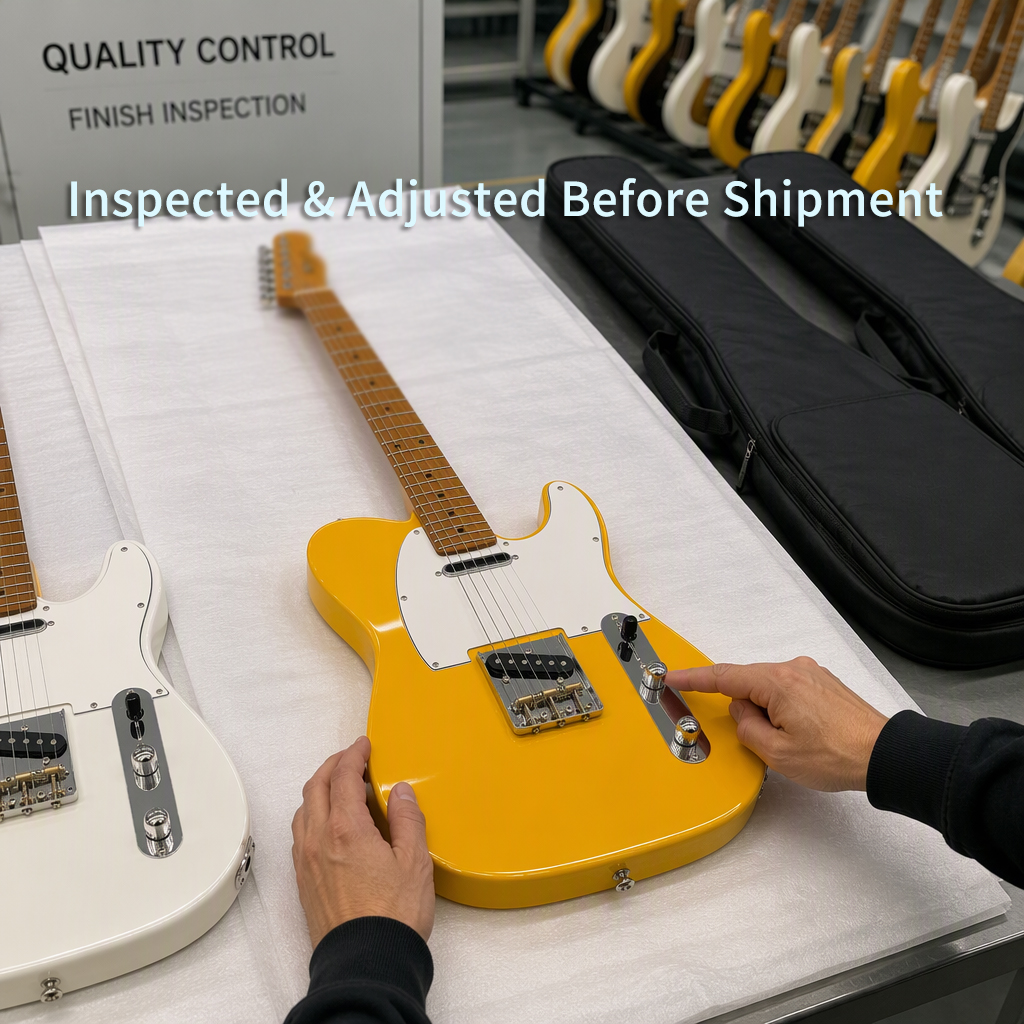
For turnkey instruments, our QA luthiers assemble, string, tune, and test each instrument under full string tension. We inspect bridge saddle radius curvature with precision under-string radius gauges to ensure it matches the fretboard radius (e.g. 9.5", 12", 14") with optimal string action and zero fret buzz before carton sealing.
Whether you need custom-milled solid brass bridges for a boutique instrument collection or high-volume OEM guitar production delivered seamlessly to Lisbon, our engineering team is standing by to evaluate your CAD designs, provide rapid prototyping samples, and deliver competitive factory-direct quotations.