Featured OEM/ODM Electric Guitars & Pro Luthier Hardware
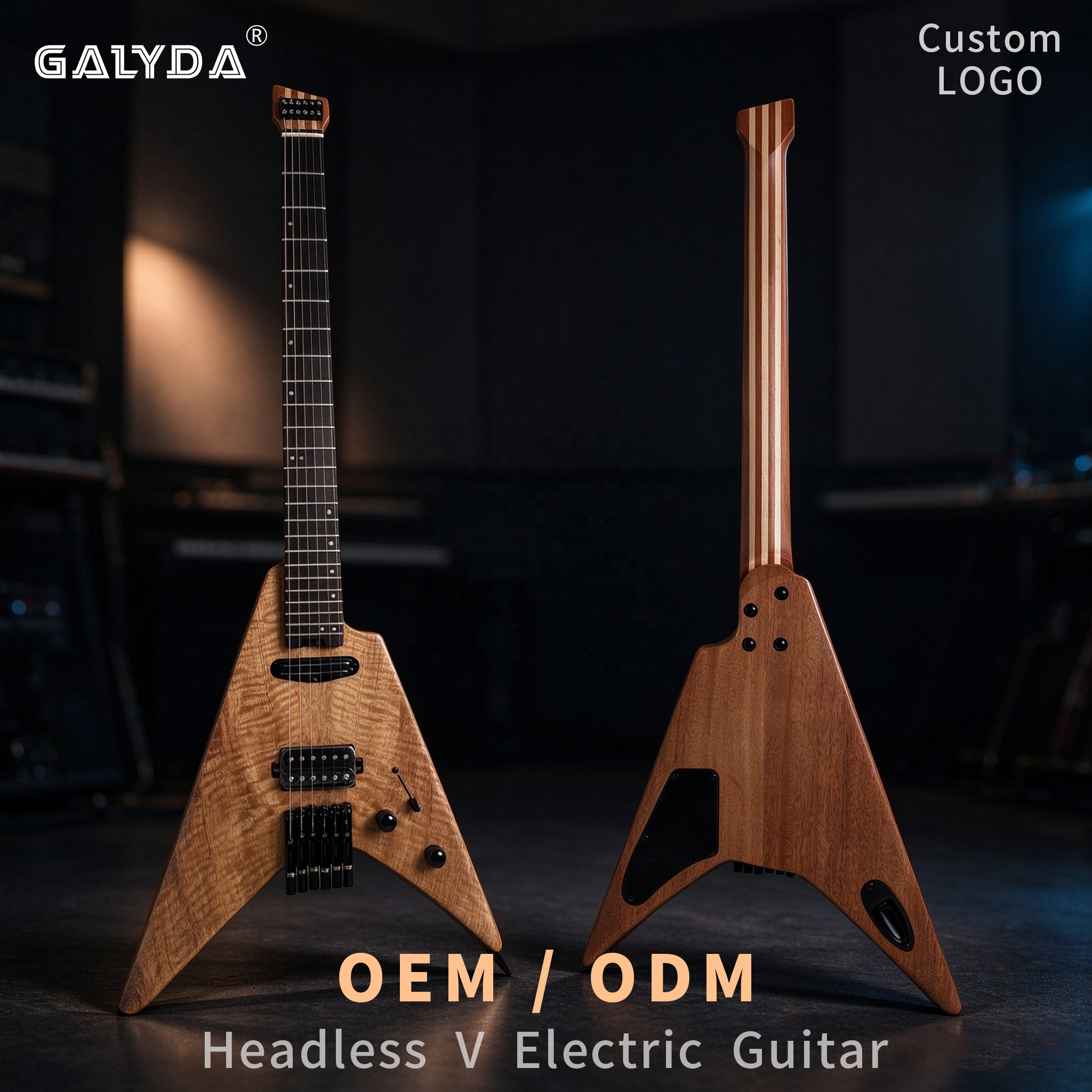
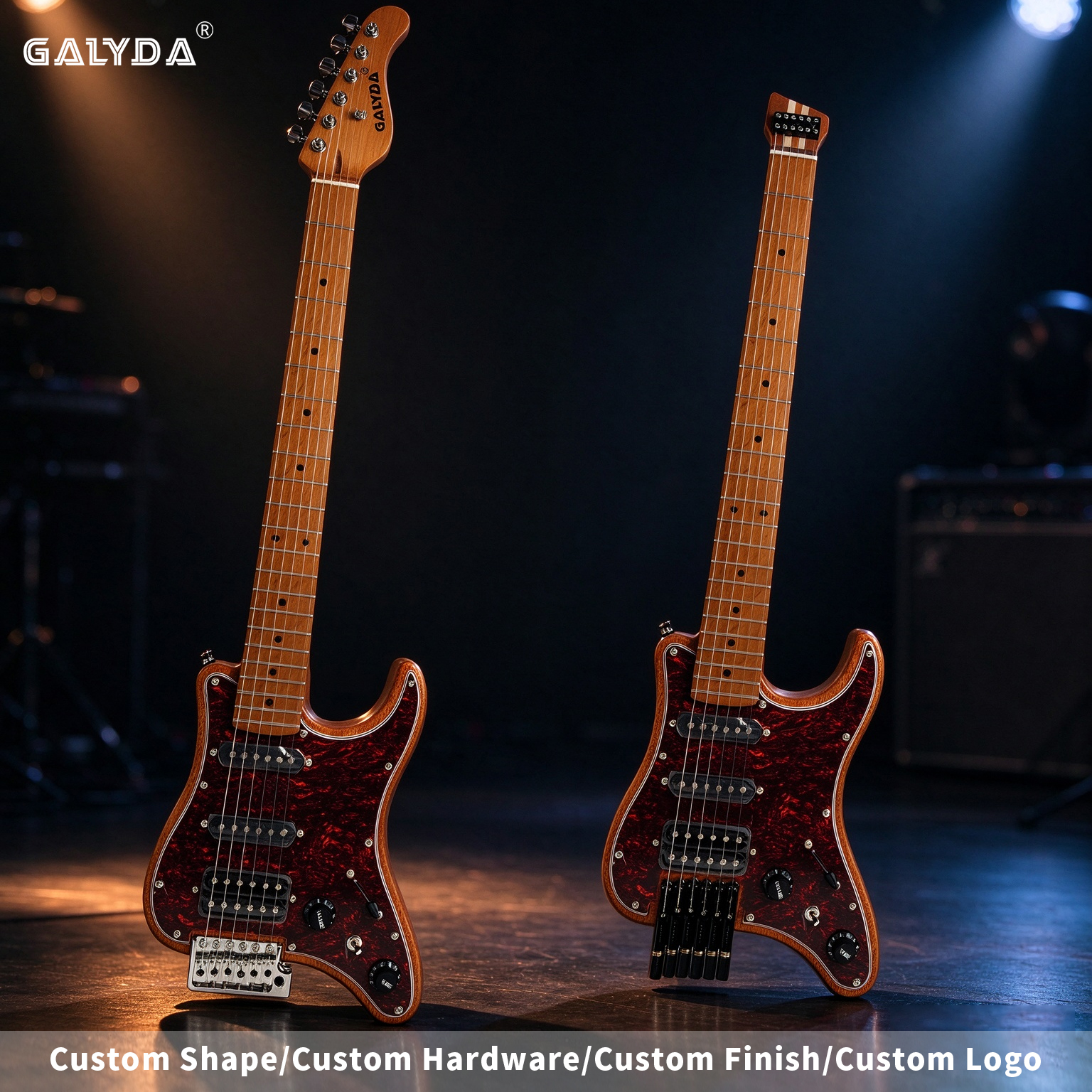
Engineered at our Huizhou production lines and configured with studio-grade volume potentiometers, high-output pickups, and hardware tailored for northern European distribution.



1. Technical Architecture of Guitar Volume Potentiometers
The electric guitar volume potentiometer is often oversimplified as an ordinary variable resistor. However, in passive high-impedance guitar circuits, the volume pot acts as a dynamic voltage divider network that interacts intimately with pickup inductance, cable capacitance, and amplifier input impedance. For luthiers, workshop technicians, and commercial distributors operating in Estonia and across the Baltic region, selecting the correct volume potentiometer specification is vital to preserving high-end transient clarity and preventing tonal mud across the sweep range.
Standard electric guitars utilize either logarithmic (Audio A) or linear (Linear B) resistive tapers. Human auditory perception interprets sound pressure level logarithmically; hence, an Audio Taper potentiometer (typically designated as A250K or A500K) produces an apparently smooth, linear transition in perceived acoustic volume. When linear taper potentiometers are deployed in volume positions, players experience an abrupt drop in volume between 10 and 7 on the dial, followed by negligible attenuation through the remainder of the travel. Our manufacturing facility implements micro-engineered conductive carbon resistive tracks calibrated to a precise 15% to 20% audio resistance ratio at 50% physical rotation, delivering an exceptionally musical sweep curve favored by demanding stage performers.
| Nominal Value | Typical Pickup Compatibility | Resistive Element Track | Rotational Life Expectancy | Rotational Torque (gf·cm) | Stray Capacitance Insertion |
|---|---|---|---|---|---|
| 250kΩ Audio (A250K) | Single-Coil (ST/TL styles, Alnico III/V) | Conductive Carbon Composite | > 50,000 Cycles | 120 - 180 gf·cm (Vintage Firm) | < 3.5 pF at 10 kHz |
| 500kΩ Audio (A500K) | Dual Humbuckers / High-Output Rails | Hot-Molded Carbon Film | > 75,000 Cycles | 70 - 110 gf·cm (Low-Friction Swell) | < 2.8 pF at 10 kHz |
| 1MΩ Linear/Audio (1000kΩ) | Active Pre-amps / Extended Range Bass | Cermet / Conductive Plastic | > 100,000 Cycles | 90 - 140 gf·cm (Standard) | < 2.0 pF at 10 kHz |
| 500kΩ Push-Pull DPDT | Coil-Split, Phase Reversal, Series/Parallel | Precision Carbon Film + Gold Contacts | > 35,000 Switch Operations | 130 - 190 gf·cm (Tactile Detent) | < 4.0 pF at 10 kHz |
Wiper Assembly, Contact Resistance, and Rotational Torque Dynamics
Inside the sealed potentiometer casing, the multi-finger beryllium copper or phosphor bronze wiper travels over the carbon track. Inferior potentiometers exhibit microscopic contact bounce and irregular contact pressure, leading to the dreaded "scratchy pot" noise (potentiometer crackle) under DC bias or high-gain stage amplification. By utilizing proprietary synthetic damping lubricants with an operational range spanning from -35°C to +85°C, our volume potentiometers ensure uniform hydraulic resistance, zero shaft wobble, and long-term protection against track oxidation.
Conductive Carbon Substrates
Multi-layer screen-printed resistive tracks on high-temp phenolic resin sheets eliminate flaking, providing ±10% ultra-tight resistance tolerances compared to industry standard ±20% deviations.
Custom Rotational Torque
Available in both "Low-Friction Fast Swell" (ideal for pinky volume violin-effects in ambient shoegaze) and "Tactile Firm Drag" configurations preventing accidental stage knob bumping.
Solid Brass Bushing & Shaft
Reinforced machined brass threaded bushings withstand up to 15 kgf·cm nut-tightening torque during pickguard mounting without stripping threads or pinching inner rotor bearings.
2. Localized Application Scenarios Serving the Tartu Musical Ecosystem
Tartu holds a unique standing as the intellectual, academic, and cultural heart of Estonia. As home to the world-renowned University of Tartu, prestigious acoustic research initiatives, and vibrant music venues such as Genialistide Klubi, the Tartu guitar community spans indie rock songwriters, experimental electronic-acoustic composers, folk traditionalists, and heavy metal instrumentalists. Providing guitar volume potentiometers and finished OEM instruments to this market requires nuanced understanding of local operational environments:
Sub-Zero Baltic Winter Climate Resistance
South Estonian winters routinely drop well below freezing, causing extreme indoor dryness due to radiator and central heating. Standard guitar potentiometers contract, leading to grease solidification, carbon track micro-cracking, and static discharge bursts. NFGF's cold-tolerant formulation prevents winter track failure across Tartu luthier benches.
Academic Sound Labs & Modding Workshops
At institutions like the Viljandi Culture Academy and Tartu university-affiliated audio tech clubs, students and sound engineers construct custom guitars, noise gates, and modular pedalboards. High-precision 1M and 500k Ohm volume potentiometers with linear curves facilitate empirical acoustic research and experimental noise reduction circuits.
Club Stages & Alternative Festivals
Tartu's underground indie clubs, live theater pit bands, and acoustic folk-rock ensembles demand silent potentiometer operations under dynamic light rigs and variable mains grounding. Double-shielded metal housings and ground-lug soldered bases guarantee zero RF buzz and microphonic hum during live performance sets.
3. Emerging Trends in Baltic Guitar Electronics & Sourcing
In recent years, the Baltic guitar sector has shifted significantly from purchasing off-the-shelf budget instruments to pursuing custom-spec luthier kits, modding pre-owned electric guitars, and establishing boutique private-label instrument brands. Several pronounced industry trends shape the Tartu procurement market:
Treble Bleed Circuit Integration: Standard passive volume controls suffer from high-frequency attenuation when turned down, resulting in dark, muffled rhythm tones. Estonian players increasingly demand volume pots factory-equipped or paired with resistor-capacitor parallel networks (e.g., 1000pF cap with 150kΩ resistor) to maintain crystalline highs at lower volumes. We supply pre-wired harnesses incorporating our low-tolerance pots directly to retail stores and repair shops.
Push-Pull / Push-Push Coil Splitting Versatility: Modern Baltic musicians prioritize hybrid flexibility. Rather than transporting three guitars to gigs around Tartu, Tallinn, and Riga, a single guitar equipped with an HSS configuration or coil-split dual humbuckers serves all genres. NFGF integrates custom heavy-duty DPDT and PCB-mounted switches directly onto 500k volume pots, tested to exceed 35,000 switching actuations without mechanical failure.
Direct-from-Manufacturer OEM Logistics: With supply chain volatility in mainland Europe, Baltic distributors, retailers, and guitar repair cooperatives are bypassing regional third-party middlemen. By partnering directly with our verified manufacturing center in Huizhou, Baltic buyers obtain factory-floor wholesale pricing, customized laser-etched logos, and custom shaft sizing (metric 18-spline coarse vs imperial 24-spline fine) with rapid air or rail shipping.
4. Enterprise Strengths: Huizhou NFGF Musical Instrument Co., Ltd.
Founded in 2014 in Qiuchang, Huiyang District, Huizhou — the premier musical instrument manufacturing hub of Guangdong, China — Huizhou NFGF Musical Instrument Co., Ltd. is an SGS-verified manufacturer integrating complete research, industrial design, automated CNC fabrication, and global export operations.
5,100 m² Integrated Facility
Housing raw tonewood drying chambers, high-speed multi-axis CNC body profiling routers, precision sanding, automated spray-finishing booths, and clean-room electronics assembly under one roof.
SGS On-Site Audited Assurance
Independently verified by SGS Group (audit updated November 2025). We maintain stringent incoming electronic component QC, soldering heat dissipation protocols, and finished playability setup checks.
100+ Patents & Flexible MOQs
Over one hundred original industrial design patents and copyrights. From sample test quantities starting at 1 piece for standard guitars and electronics to full container loads, we empower expanding European brands.
5. Frequently Asked Questions (FAQ) for Baltic & Tartu Importers
What is the difference between 250k and 500k volume pots for our guitar line? +
Can we specify split-shaft vs solid-shaft and metric vs imperial spline count? +
How do your potentiometers and guitar finishes tolerate Baltic sub-zero transit? +
What are the compliance certifications for importing electrical musical gear into Estonia (EU)? +
Can we order mixed SKUs combining potentiometers, pickguards, and complete guitars? +
Connect with NFGF Engineering & Sourcing
Whether you require custom taper volume pots, pre-wired guitar pickguards, or complete OEM/ODM guitar lines for the Estonian and Baltic musical markets, our engineering team is on standby to assist with specs, 3D CAD drawings, and factory-direct pricing.