High-Velocity Guitar Sets & Core Assemblies for Reykjavik Importers
Direct factory configurations certified for stable intonation, resilient fretboards, and moisture-controlled subarctic shipping. Custom headstock branding and personalized carton sets available with low MOQ thresholds.

Factory Custom LP Style Electric Guitar Double Coil Pickups Gold Bridge Black White Gloss Finish OEM
- Dual Alnico V Humbuckers
- Thermo-Treated Rosewood Fretboard
- Gold Tune-O-Matic Stable Bridge

GALYDA Electric Guitar GM Style SS Pickup Tremolo Bridge 3 Way Toggle Switch Custom Logo OEM ODM Factory
- Precision SS Single-Coil Pickup System
- Synchronized Fulcrum Tremolo
- Low-Tolerance Shielded Cavities
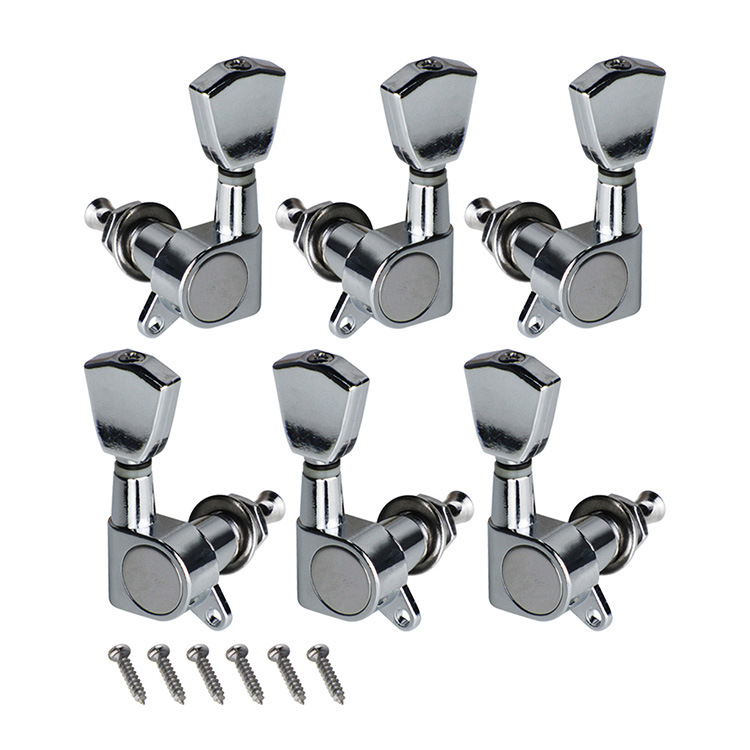
Factory Price Acoustic Guitars Machine Heads Tuner Pegs Stringed Instrument Metal Tuning Pegs Direct From Manufacturer Supplier
- 1:18 Anti-Backlash Gear Ratio
- Sealed Anti-Oxidant Chrome Coating
- Universal Peghead Geometry
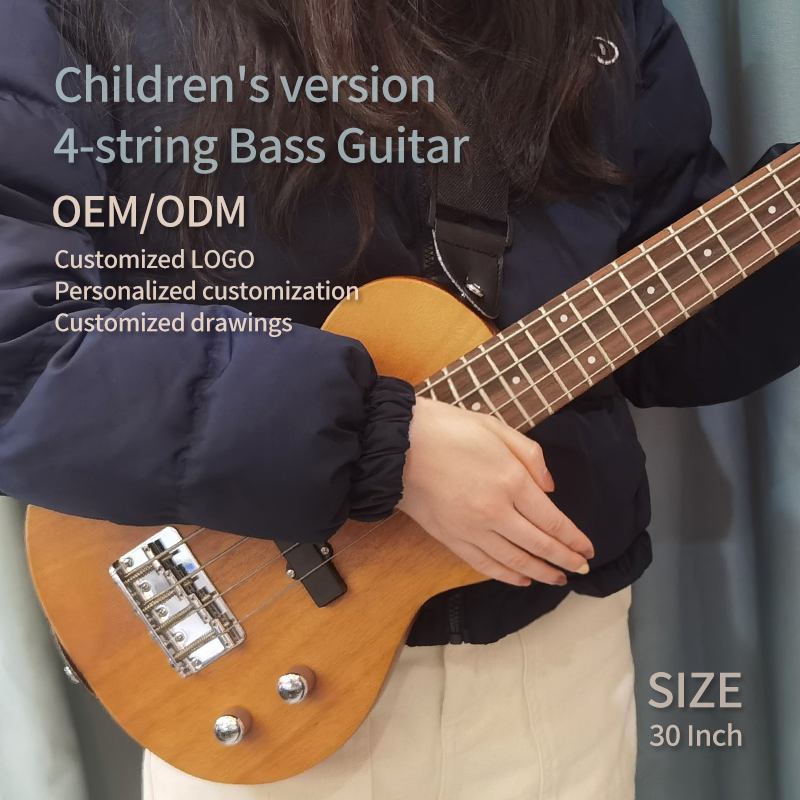
High Quality 30-inch Four-String Electric Bass Factory Direct OEM Made in China
- Ergonomic 30-inch Scale for Youth/Edu
- High-Output Split PB Single-Coil
- Balanced Light Basswood Contour
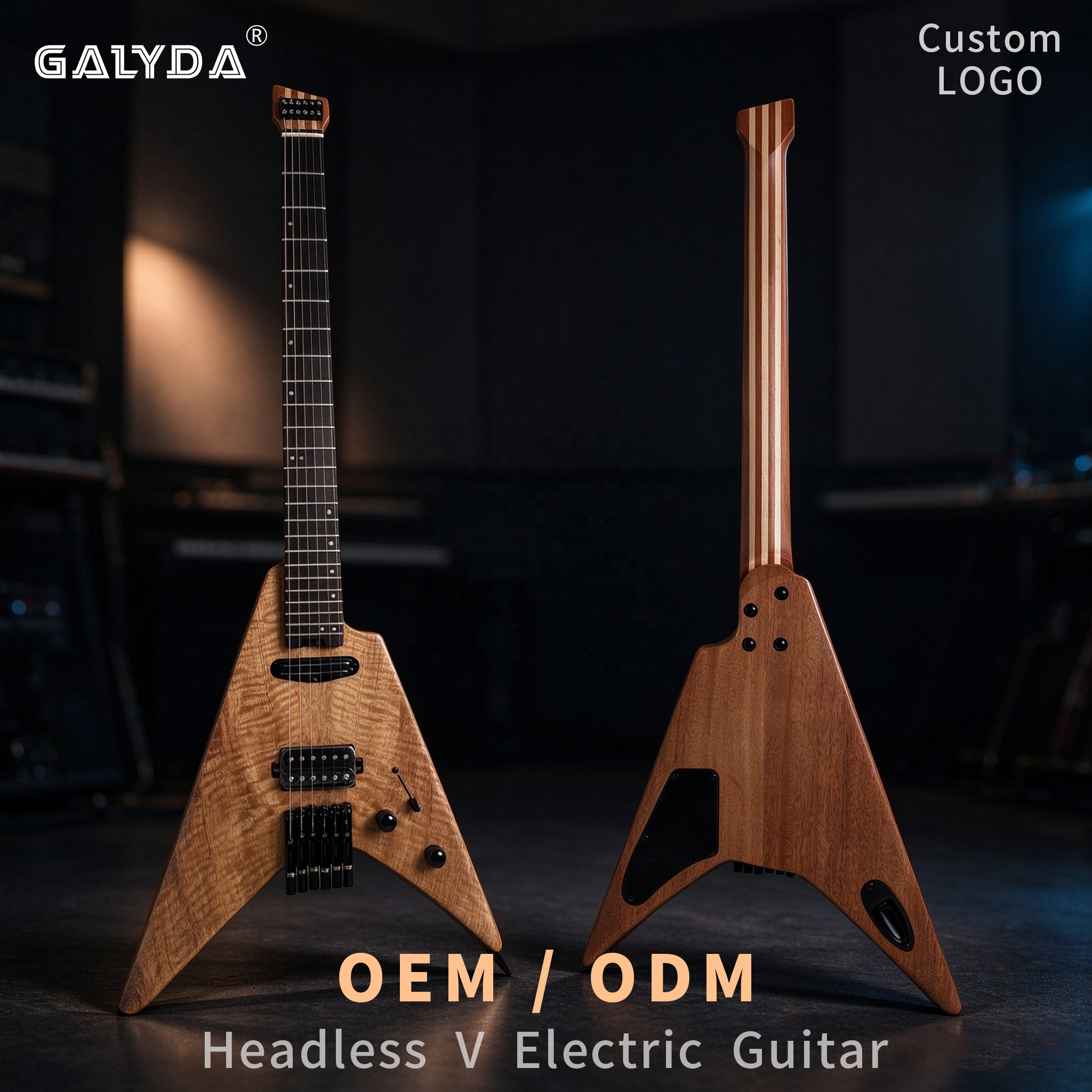
Headless V Shape Electric Guitar 6 Strings Mahogany Body 7 Piece Maple Neck Rosewood Fingerboard Guitar OEM
- 7-Piece Multi-Laminate Reinforced Neck
- Headless Bridge with Locking Saddles
- Resonant Solid Mahogany Core

GALYDA Electric Guitar with Wood Texture Finish HSH Pickup Single-Action Tremolo Bridge ST Electric Guitar
- Versatile HSH Configuration (5-Way Switch)
- Open-Pore Breathable Wood Texture
- Comfort Rolled Fingerboard Edges
AG Headless Electric Guitar With Maple Neck Acrylic Body and Small Double-wire Tremolo Bridge
- Ultra-Dense Polymer Crystalline Body
- Dual-Wire Tremolo Precision System
- Zero-Humidity Sensitive Material
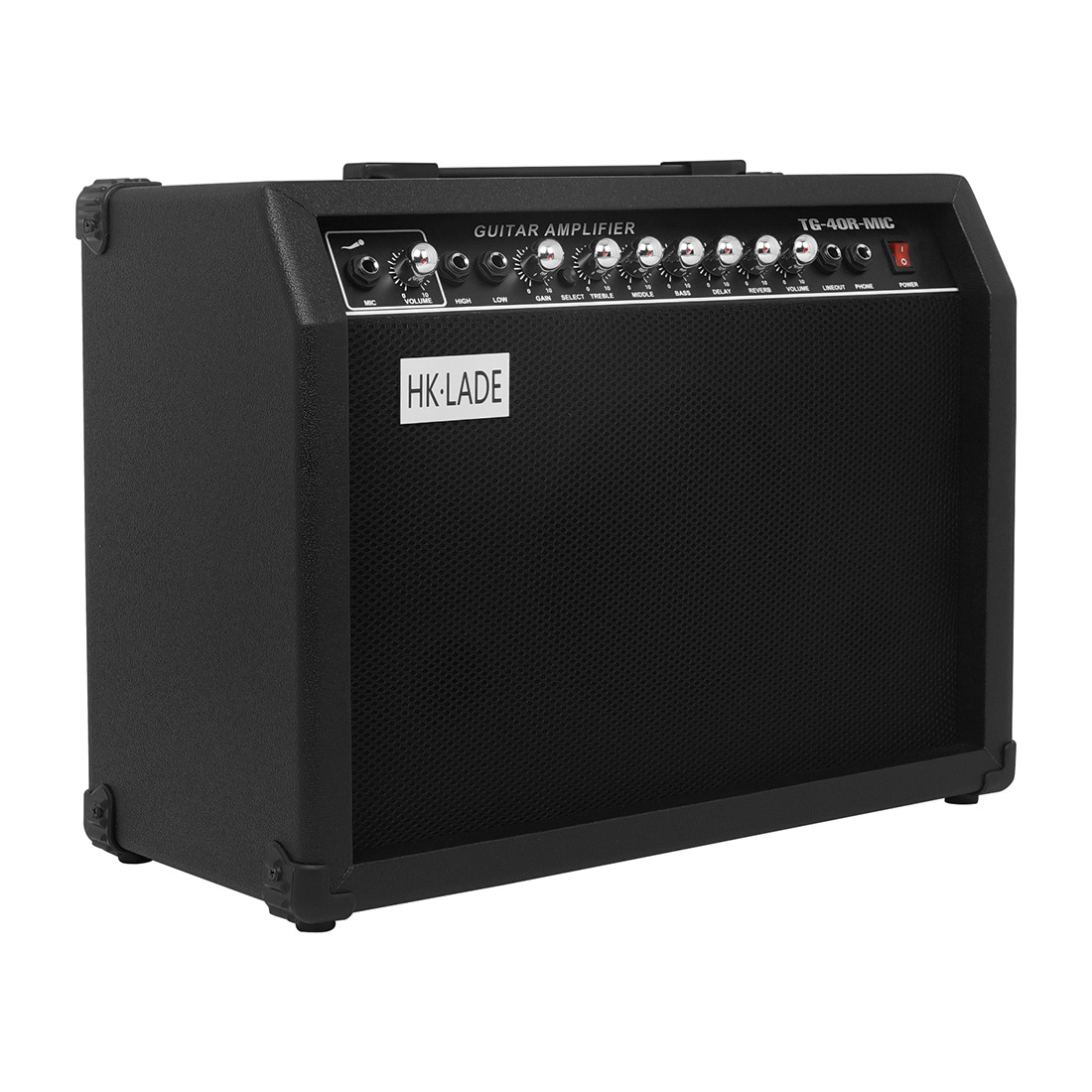
Portable Electric Guitar Bass Amplifier 40W Outdoor Performance Speaker
- Dual Input (Guitar / Dynamic Mic)
- High-Capacity Lithium Cell (Cold-Rated)
- CE & FCC Certified Electronics
The Reykjavik Guitar Procurement Landscape: Geo-Climatic Challenges & Sourcing Realities
Procuring musical instruments for Iceland's capital region (Höfuðborgarsvæðið) requires an engineering discipline that diverges significantly from mainland European retail. Reykjavik represents a remarkably concentrated, music-literate economy where instrument ownership per capita ranks among the highest globally. However, for B2B instrument buyers—encompassing brick-and-mortar retailers in central Reykjavik, regional cultural centers, municipal music academies (Tónlistarskólar), and live rental houses catering to events like Iceland Airwaves—sourcing turnkey guitar sets from Asian manufacturers presents formidable technical hurdles.
The foremost operational challenge stems from the stark thermodynamic contrast governing Icelandic interiors and exteriors. Reykjavik experiences maritime subarctic weather characterized by high ambient maritime humidity (often fluctuating between 75% and 90% RH outdoors) coupled with aggressive North Atlantic wind-driven precipitation. Conversely, indoor domestic and commercial spaces in Reykjavik rely almost universally on geothermal district heating systems supplied by utilities such as Veitur. Geothermal heating provides inexpensive, non-stop ambient warmth, but during winter months, the indoor Relative Humidity (RH) routinely plummets below 18% to 25% in heated buildings unless actively supplemented with industrial humidification.
Technical Insight for Importers: When standard production guitars built at 55% factory RH are unpacked in Reykjavik's geothermal dry indoor climate, the tonewood undergoes rapid desorption. The fretboard contracts across the grain while the nickel-silver or stainless steel frets remain dimensionally inert. This results in severe "fret sprout" (sharp fret edges extruding beyond the binding), neck back-bowing, fret buzz, and acoustic bridge liftoff. Factory-level pre-stabilization is mandatory.
To overcome this chronic failure rate, Huizhou NFGF Musical Instrument Co., Ltd. applies targeted subarctic stabilization protocols during production. By processing kiln-dried hardwoods through secondary environmental conditioning chambers down to 6%–8% equilibrium moisture content (EMC) and executing multi-angle fret beveling with rolled edge treatments, our OEM guitar sets land in the Port of Sundahöfn structurally stabilized, eliminating the costly pre-sale bench time typically demanded of Icelandic guitar techs.
EFTA Customs & Tariff Neutrality
Direct compliance with Icelandic customs (Skatturinn) standards. Optimized HS classification (HS 9202.90 for electric/acoustic, HS 8518.40 for amplifiers) ensuring smooth bonded processing without clearance penalties.
Cold-Chain Ocean Logistics
Protection against maritime North Atlantic salt-fog during transit via Rotterdam or Hamburg onto Eimskip or Samskip feeder vessels. Sealed barrier bags with specialized desiccants prevent hardware corrosion.
RoHS & CE Environmental Compliance
Full conformance with European Economic Area (EEA) chemical directives. 100% lead-free solder alloys on control harnesses, non-toxic PU/nitrocellulose finishes, and verified non-CITES rosewood substitutes.
Localized Guitar Set Applications Across Iceland’s Musical Infrastructure
The consumption of musical instruments in Iceland is characterized by versatility. Rather than purchasing fragile single-purpose instruments, Icelandic musicians, academic institutions, and rental companies prioritize hybrid durability. NFGF's turnkey sets are configured around four core deployment environments found in Reykjavik and coastal municipalities like Akureyri and Hafnarfjörður.
Tónlistarskólar (Music Academies)
Municipal music education in Iceland demands rugged 30-inch short-scale electric basses and compact ST-style electrics. Withstands heavy daily student handling, frequent tuning adjustments, and dry classroom air.
Reykjavik 101 Indie & Post-Rock
Alternative rock and dark-wave ensembles require guitars with extreme tonal dynamics—from chiming single-coil clarity to massive humbucking fuzz sustain, paired with zero-drift locking hardware.
Coastal Festival Touring
Harsh coastal touring schedules (from Harpa Reykjavik to remote outdoor summer venues) demand headless models and dense acrylic bodies that are physically immune to humidity shocks and rapid altitude changes.
Turnkey Retail Starter Bundles
All-in-one packaging containing instrument, 40W lithium-rechargeable amplifier, 20mm padded thermal gig bag, cables, straps, and picks—ready for immediate Scandinavian retail sale with zero prep.
Engineering Acoustic and Electric Durability for Subarctic Performance
In the electric guitar category, electronics reliability is frequently compromised by environmental condensation. When a guitar is transported in freezing temperatures across the wind-scoured Ring Road and immediately brought into a warm, humid concert hall or club venue in downtown Reykjavik, micro-condensation forms instantly inside standard potentiometer housings and pickup bobbin tapes. NFGF mitigates this risk by equipping all custom OEM assemblies with sealed mini-potentiometers, paraffin-vacuum-potted pickups, and polyurethane-shielded signal routing cavities. This prevents grounding hum, oxidation crackle, and signal loss during critical live performances.
For acoustic sets, tonewood choice is paramount. Traditional solid spruce tops often display bridge concave distortion when exposed to dry geothermal heat. In response, NFGF engineers top-solid acoustic sets featuring torrefied (roasted) Sitka spruce soundboards paired with layered mahogany back and sides. Torrefaction artificially ages the cellular hemicellulose structure, crystallizing the resin inside the wood capillaries. The result is an acoustic soundboard that produces the harmonic complexity of a 40-year-old vintage instrument while displaying near-complete structural immunity to seasonal hygroscopic shock.
Macro Trends Reshaping Musical Instrument Wholesale in Northern Europe
Procurement directors in Reykjavik are increasingly restructuring their supply chain strategies away from multi-tiered European distributors toward direct factory-level manufacturing. Several converging economic and demographic factors drive this transition:
Margin Compression Relief
Middlemen distributors in the UK and Germany levy 28%–45% markups. Direct-from-factory procurement from Huizhou allows Icelandic retailers to maintain competitive shelf prices while achieving gross margins exceeding 50%.
Proprietary Store-Branding
Reykjavik retailers are developing private house labels. Our flexible OEM laser headstock engraving, custom neck-plate stamping, and branded packaging enable stores to build long-term local brand equity.
Ultra-Low Sample MOQ Models
Given Iceland's total population (~390,000), massive container-load single-SKU orders are financially impractical. NFGF provides flexible mixed-container consolidations with MOQs starting as low as 1 to 2 units per model.
Comparative Technical Matrix: Standard Commercial OEM vs. NFGF Subarctic Specification
The following engineering benchmarks illustrate why standard mass-market guitar imports fail in the Icelandic environment, and how NFGF's specialized manufacturing parameters address each vulnerability:
| Technical Parameter | Standard Mass-Market Export Guitars | NFGF Subarctic Certified Guitar Sets | Reykjavik Market Impact |
|---|---|---|---|
| Kiln Drying & Moisture Content | 12% – 16% standard equilibrium | 6% – 8% dual-kiln thermo-treated | Eliminates Wood Shrinkage |
| Fret End Dressing | Straight cut, minimal hand beveling | Hemispherical rolled ends, 35° bevel | Prevents Winter Fret Sprout |
| Neck Core Architecture | Single piece unroasted maple or nato | Multi-laminate maple/mahogany + carbon rods | Zero Seasonal Neck Warpage |
| Potentiometer & Switch Sealing | Open casing, carbon-track pots | Sealed-enclosure pots + full cavity shielding | Immune to Condensation Crackle |
| Tuning Machine Gear Tolerances | 1:14 generic die-cast, open tolerance | 1:18 micro-sealed anti-backlash machines | Rock-Solid Pitch Stability |
| Thermal Transit Protection | Thin single-corrugated shipping carton | Triple-flute carton + 20mm insulated gig bag | Zero Cold-Crack Finish Damage |
Huizhou NFGF Musical Instrument Co., Ltd. — Industrial Strength & Luthier Craft
Established in 2014 in Qiuchang, Huiyang District, Huizhou City—the premier epicentre of China's musical instrument manufacturing cluster—Huizhou NFGF Musical Instrument Co., Ltd. operates as a vertically integrated manufacturer uniting acoustic research, industrial CNC tooling, automated electrostatic spraying, and hand lutherie.
Spanning an advanced 5,100 m² modern manufacturing complex, our factory houses dedicated production lines for solid-body electric guitars, electric basses, acoustic folk and classical guitars, concert and tenor ukuleles, kalimbas, and precision guitar effects pedals. Rather than operating as an unverified broker, NFGF is an on-site verified manufacturing partner under regular audit surveillance by the multinational inspection authority SGS Group (most recently inspected and re-verified on-site in November 2025).
Our 8-Stage Turnkey Production and Quality Assurance Loop
Every single instrument set departing our factory floor undergoes eight discrete inspection and manufacturing gates, guaranteeing that zero defective units reach ocean freight staging:
01. Tonewood Selection
Moisture-meter grading of North American Alder, African Mahogany, Canadian Maple, and kiln-dried Basswood down to target subarctic tolerances.
02. 5-Axis CNC Milling
Micron-accurate computer-numeric-control milling of neck pockets, pickup chambers, truss rod channels, and bridge anchor holes.
03. Hand Sanding & Jointing
Multi-stage progressive hand sanding from 180 to 800 grit to establish pore-free grain contact prior to lacquer application.
04. Electrostatic Lacquer
High-gloss, satin, matte, and open-pore wood finishes cured in temperature-regulated, dust-isolated spray suites.
05. Mirror Buffing
Rotary high-speed polishing utilizing automated buffing compounds for deep optical clarity and high durability.
06. Electronics Harnessing
Precision hand-wiring, copper shielding tape application, paraffin potting, and oscilloscope signal verification.
07. Luthier Action Setup
String installation, precision nut slot filing, fret leveling via under-string radius gauges, and laser intonation strobe calibration.
08. Export Packaging
Sealing in vapor-barrier poly liners, desiccant placement, impact foam support, and drop-tested master export packaging.
Frequently Asked Questions: Sourcing Guitar Sets for the Reykjavik Market
Authoritative answers addressing logistics, seasonal wood dynamics, customs documentation, and bespoke OEM options for Icelandic commercial buyers.
What are the minimum order quantities (MOQ) for custom-branded guitar sets delivered to Iceland? +
For standard catalog models—including our LP-style electrics, ST-style guitars, and 30-inch electric basses—our MOQ begins at just 1 set for evaluation and sample testing. For custom-branded runs featuring your private store logo on the peghead, custom laser neckplates, and customized starter set cartons, our MOQ starts at 20 to 50 sets depending on the level of aesthetic modification. This enables Icelandic music stores to maintain healthy inventory velocity without tying up working capital.
How does NFGF prevent fret sprout and neck distortion caused by Reykjavik’s geothermal indoor heating? +
Reykjavik's indoor heating creates an ultra-dry environment where relative humidity drops to 15%–20%. We mitigate fret sprout through three engineering controls: (1) We subject neck blanks to secondary environmental stabilization down to 6%–8% equilibrium moisture content; (2) We utilize roasted (thermo-treated) maple and multi-laminate neck constructions reinforced with dual-action truss rods; and (3) Our master luthiers hand-roll the fingerboard edges and cut fret tangs short with beveled end-dressing, ensuring wood can contract slightly without exposing sharp metal fret ends.
What shipping pathways are utilized for cargo transit from Huizhou to Sundahöfn (Reykjavik)? +
Most commercial shipments depart our factory in Huizhou via Shenzhen or Hong Kong ports by ocean freight, routing through major European transshipment hubs (such as Rotterdam, Bremerhaven, or Hamburg). From there, cargo is transferred onto specialized North Atlantic container vessels operated by Eimskip or Samskip directly to the Port of Sundahöfn in Reykjavik. Transit times typically range from 38 to 48 days. For urgent showroom samples or limited production runs, we provide expedited DTP/DAP air express via Keflavík International Airport (KEF) within 5 to 8 business days.
Are our instrument sets fully compliant with EEA and Icelandic chemical and electrical regulations? +
Yes. As an SGS-verified manufacturer, NFGF complies with European Economic Area (EEA) harmonization regulations, which Iceland enforces through the EFTA framework. Our guitar amplifiers and electronic circuits are fully CE and FCC certified with low-voltage safety verifications. Furthermore, all instrument lacquers, plastics, wiring harnesses, and fingerboards conform to RoHS and REACH guidelines, completely free from hazardous heavy metals and CITES-restricted timber species.
Can turnkey guitar starter sets be bundled with localized accessories and Icelandic power adapters? +
Absolutely. We specialize in assembling complete, retail-ready instrument packages. A typical turnkey set includes: the instrument, a 15mm or 20mm padded all-weather gig bag, a 40W rechargeable portable amplifier equipped with a standard European Type C / Type F Europlug charger (230V / 50Hz compatible with Icelandic wall sockets), a braided low-noise instrument cable, digital clip-on chromatic tuner, nylon strap, truss rod adjustment keys, and branded celluloid picks—all housed in a single barcode-labeled, four-color gift carton.
How are import VAT (Virðisaukaskattur - VSK) and customs duties handled for direct factory orders? +
Under Iceland's customs tariff schedule, musical instruments classified under HS 9202 (other string musical instruments) and HS 9207 (musical instruments where sound is produced electrically) generally enter with 0% basic tariff duty. Importers are solely responsible for Iceland's standard value-added tax (VSK) of 24%, levied upon arrival at customs clearance in Sundahöfn or Keflavík. NFGF provides full export commercial invoices, packing lists, and Certificates of Origin (COO) to ensure your clearing agent expedites processing without demurrage delays.
Connect Directly With Our Engineering & Sourcing Team
Whether you require a custom prototype evaluation run for a Reykjavik retail chain, a bulk fleet order for municipal music academies, or private-label turnkey starter sets engineered for subarctic resilience, our factory project directors provide rapid CAD drawings, timber verification, and container freight planning within 24 hours.
Contact Us