Featured OEM Instrument Accessories & Specialty Lines for Osaka Buyers
Direct factory supply engineered with tight tolerances, premium tonewoods, and studio-grade electronics. Available for private labeling, white-label distribution, and custom OEM/ODM runs starting from low Minimum Order Quantities (MOQs).


Executive Summary & The Osaka Musical Instrument Landscape
The Osaka prefecture, as the cultural heart of Japan’s Kansai region, represents one of Asia's most dynamic and quality-sensitive musical instrument retail and lutherie markets. From the vibrant musical district of Americamura (Amemura) in Shinsaibashi to the dense network of live performance venues (Live Houses) across Namba and Umeda, Osaka’s musician community demands exceptional reliability, precise acoustic tonality, and robust structural hardware. For Japanese music distributors, retail chains, and boutique repair shops, securing a direct OEM/ODM manufacturing partner who understands these exacting specifications is paramount to gaining market share and preserving profit margins.
Huizhou NFGF Musical Instrument Co., Ltd. serves as an established manufacturing engine for global brands and regional Kansai importers. Situated in the Qiuchang instrument cluster of Guangdong, China, NFGF operates a fully audited 5,100 m² SGS-verified facility. By combining computer-controlled CNC machining with rigorous hand-finishing, NFGF bridges the gap between high-volume production economy and custom-shop precision engineering. This technical white paper outlines our complete OEM accessory product capabilities, localized application insights for the Osaka market, supply chain compliance protocols, and technical specifications tailored for commercial buyers.
Engineering Excellence & Technical Deep-Dive: Product Hardware & Components
In high-end retail and custom workshop environments, guitar accessories and hardware are not mere commodities—they are critical control points for acoustic resonance, tuning stability, signal integrity, and playability. NFGF manufactures stringed instrument hardware under strict metallurgical and acoustic quality controls, meeting the high standards expected by Japanese technicians.
1. High-Precision Sealed Metal Tuning Pegs & Machine Heads
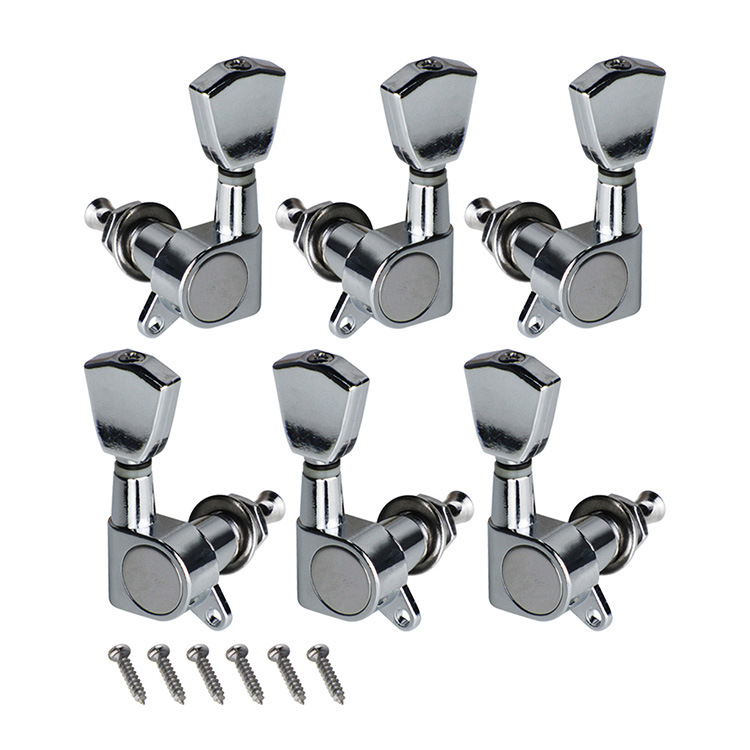
Tuning drift is a major cause of customer returns in retail sales. NFGF’s metal tuning machine heads feature precision die-cast zinc housing and internal gear assemblies engineered with 18:1 and 21:1 gear ratios. This allows micro-tuning adjustments required by professional musicians playing in complex stage lighting environments where temperature fluctuations affect string tension.
- Gear Metallurgy: Heavy-duty internal brass and steel worm gears prevent gear slip and backlash under high string tension (standard E-tuning to dropped tunings).
- Surface Electroplating: Multi-layer electroplating (Chrome, Gold, Cosmo Black) passes a 48-hour salt-spray anti-corrosion test, guaranteeing resistance against high humidity during Osaka's monsoon season.
- Universal Retrofit Engineering: Standardized 10mm headstock peg-hole compliance ensures smooth replacement on Japanese, Western, and domestic acoustic guitar builds without re-drilling.
2. Acoustic Resonance Optimization: Natural Unbleached Bone Nuts & Saddles
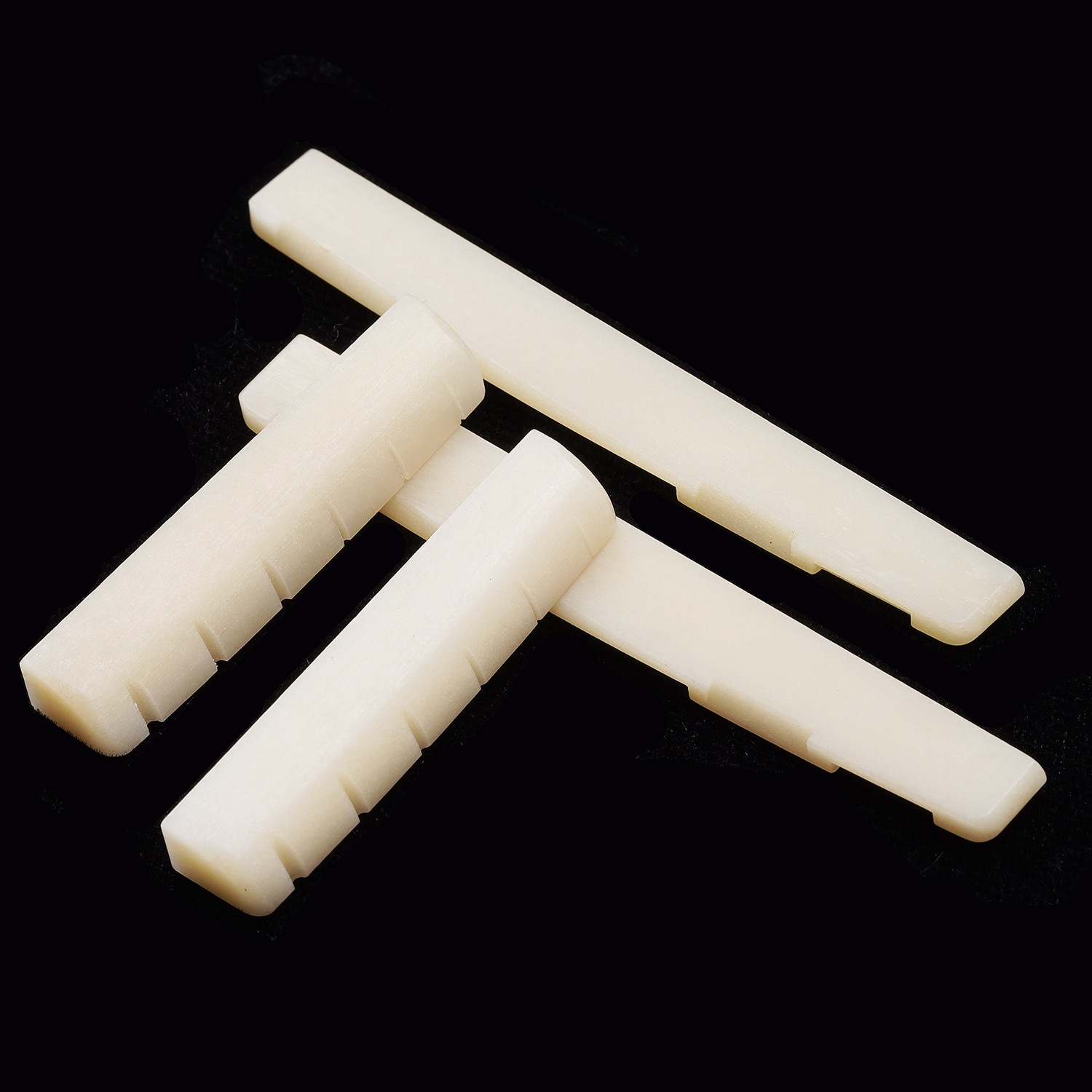
While synthetic plastic components dampen string energy, high-density organic bone maximizes energy transfer from the vibrating string directly into the tonewood soundboard. NFGF supplies high-grade natural unbleached cattle bone nut and saddle blanks pre-cut to 43mm nut and 74mm saddle standards.
| Material Category | Density (g/cm³) | Sound Transmission Speed | Tone Profile Character | Durable Lifespan |
|---|---|---|---|---|
| NFGF Unbleached Natural Bone | 1.85 - 2.05 | High (~4,200 m/s) | Rich overtones, extended sustain, clear fundamental separation | 10+ Years (Self-lubricating) |
| Standard Bleached Bone | 1.60 - 1.75 | Medium (~3,600 m/s) | Slightly brighter, slightly brittle tone profile | 5 - 7 Years |
| Synthetic ABS / Plastic | 1.05 - 1.20 | Low (~1,800 m/s) | Muffled highs, compressed dynamic range, quick string grooving | 1 - 2 Years |
3. Electric Guitar Pickup Architecture & Hardware Systems
Tone design requires custom bobbin winding, precise magnet selection, and noise shield potting. Our specialized GALYDA & SSH Pickup series provide guitar builders and brand managers with versatile tonal options across vintage rock, fusion, and high-gain modern genres popular in Osaka's indie live house circuit.
- Magnet Formulation: Choice of hand-beveled Alnico V magnets for warm, expressive vintage chime, or ceramic magnets for tight low-end punch and high-output overdrive.
- Vacuum Wax Potting: 80/20 paraffin and beeswax formulation penetrates deep into coil windings, completely eliminating microphonic feedback at stage volume.
- Switching & Bridge Systems: Heavy-duty 3-way/5-way nickel-plated toggle switches paired with vintage-style dual-fulcrum tremolo bridges crafted from high-mass zinc alloy blocks to increase low-end warmth and sustain.
4. Ergonomic Modern Instruments: Headless Fanned-Fret Basses & Multi-Key Kalimbas
Beyond traditional accessories, modern Kansai players are adopting ergonomic headless instruments and acoustic thumb pianos for compact urban mobility and solo arrangements.
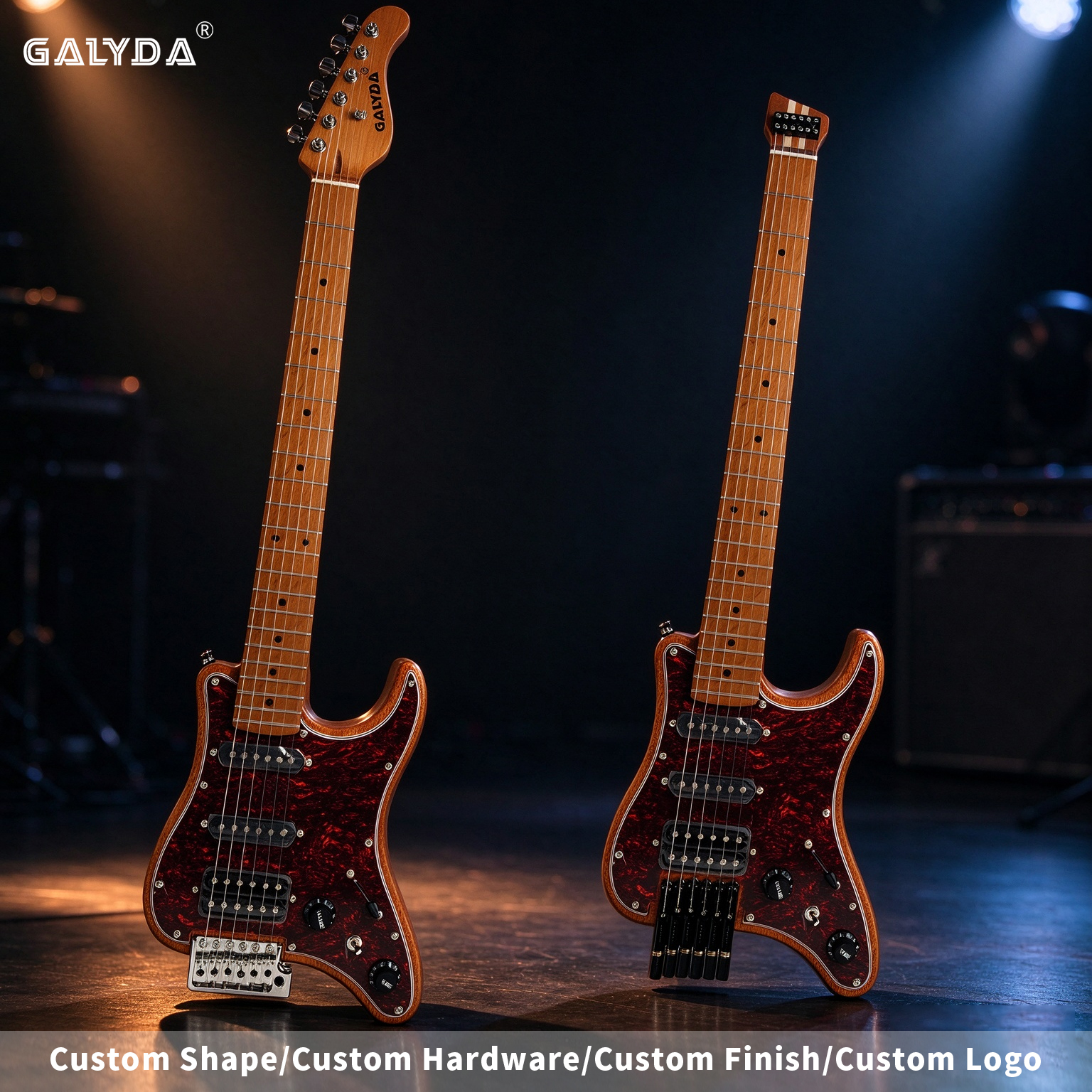
Headless 5-String Fanned-Fret J Bass
Engineered with a multiscale length (34" to 35.5") that maintains crisp B-string tension while keeping treble strings supple. The compact headless body reduces overall length by 25%, making it easier to transport on Osaka's crowded Midosuji and JR Loop train lines.
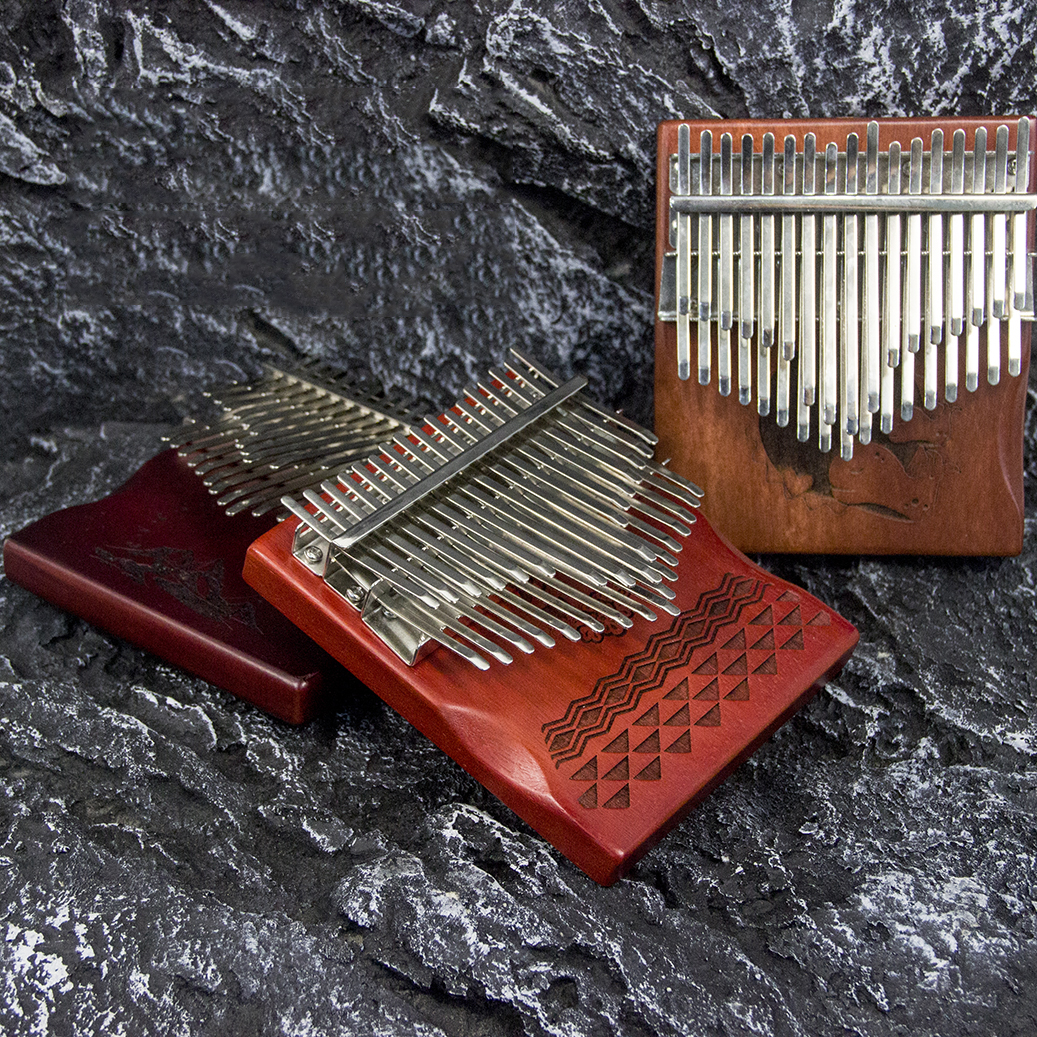
34-Tone Solid Mahogany Kalimba
Features a dual-layer manganese steel key structure that offers a full chromatic range. Made from solid kiln-dried mahogany, it provides warm acoustic resonance ideal for Japanese studio recording, sound therapy, and home performance.
Localized Application Scenarios in the Osaka & Kansai Regional Market
Understanding where and how musical instrument components are utilized in the local Osaka eco-system empowers procurement buyers to select products that match local consumer habits.
Amemura Guitar Repair & Mod Shops
Dozens of specialized luthier workshops in Shinsaibashi focus on guitar modification and restoration. Replacing worn-out plastic nuts with NFGF unbleached bone nuts and installing high-ratio sealed tuning machines are staple upgrade services offered to local musicians seeking improved tuning stability and tone.
Namba & Umeda Live House Touring Equipment
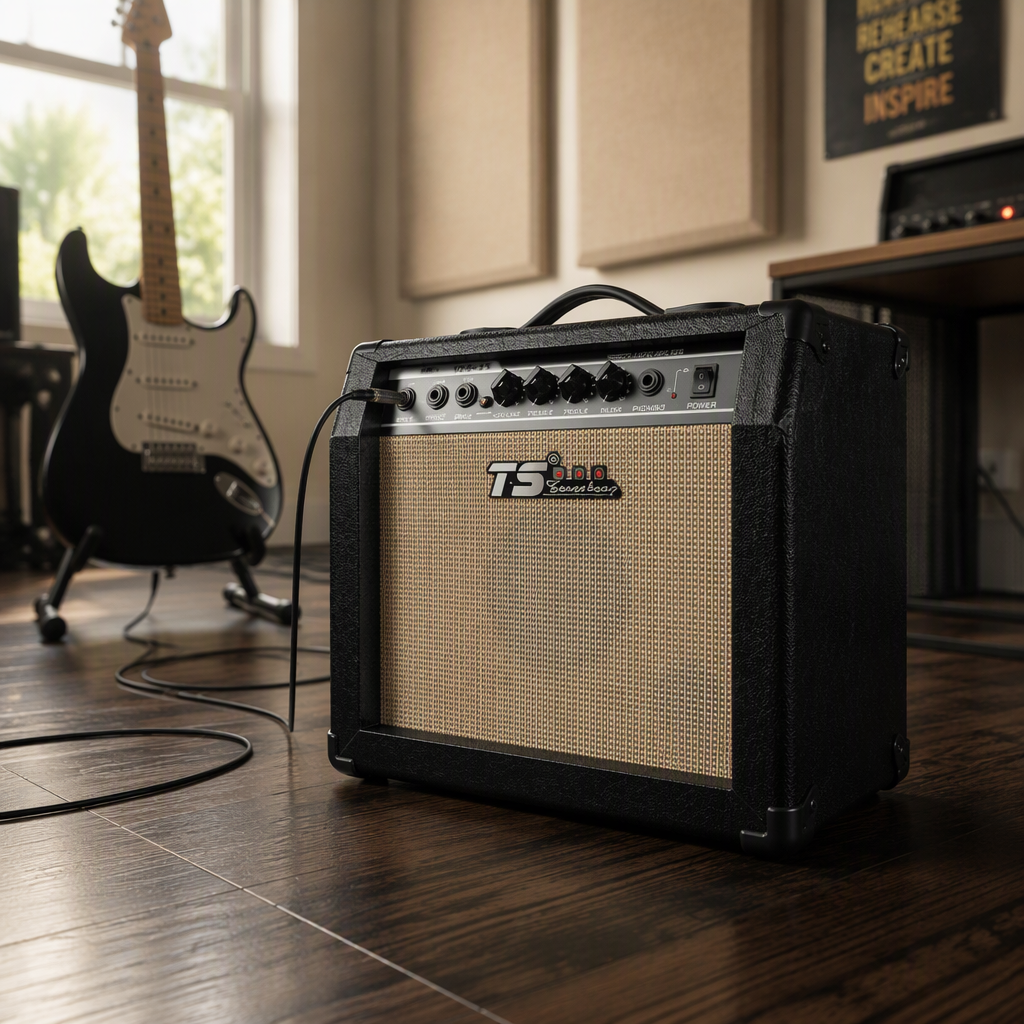
Osaka’s energetic rock and pop indie acts perform back-to-back shows in dense live music venues. Gear durability is essential. Portable rechargeable B-T 15W–100W amplifiers serve as versatile backstage warmup amps and small-venue monitors, operating reliably without demanding dedicated AC outlets.
Educational & Music School Sourcing
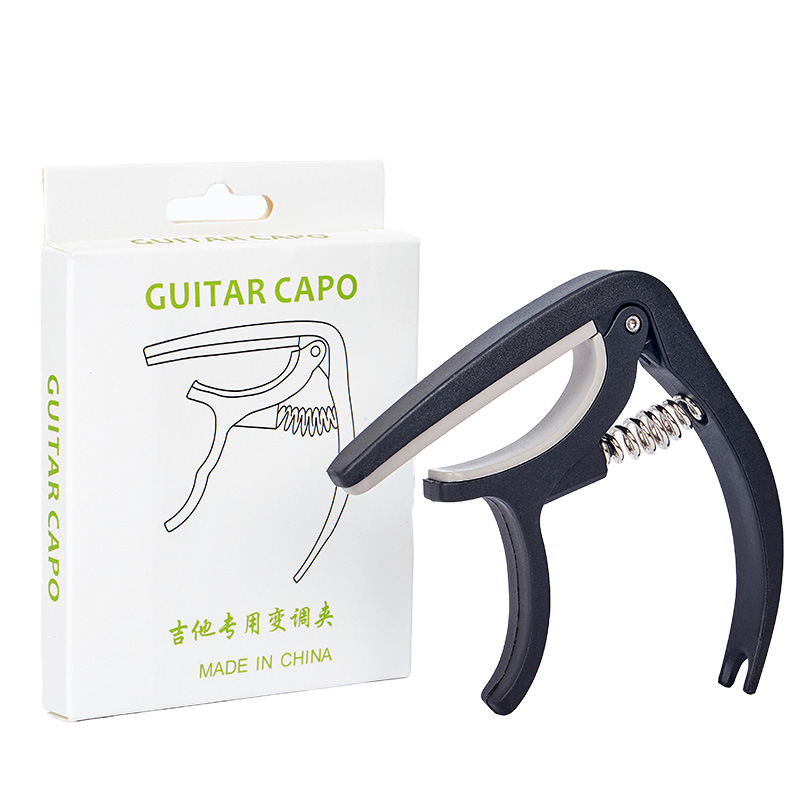
Music academies across Kansai require lightweight, durable accessories for student instrument bundles. Quick-release high-clamping ABS polymer guitar and ukulele capos provide reliable fretboard tension without damaging delicate neck finishes, making them ideal for high-volume instructional use.
Kansai Regional Supply Chain Trend Analysis
Recent market shifts in Osaka show an increasing demand for consolidated multi-SKU freight shipments. Rather than sourcing tuning pegs, pickguards, capos, and instruments from multiple separate vendors, Japanese importers are reducing landing costs and custom entry friction by ordering mixed containers directly from single-source OEM manufacturers like NFGF.
Market Trends & Technological Evolution in Japan’s Instrument Sector
Analyzing consumer behavior and technical standards in Japan highlights four major procurement trends for Osaka-based instrument dealers:
- Rise of Modern Technical Basses & Extended Range Guitars: Driven by popular Japanese fusion, math-rock, and modern metal styles, demand for multi-scale fanned-fret designs and 5-string active/passive bass models has increased by over 35% year-over-year in urban retail stores.
- Acoustic Material Upgrade Demand: Japanese acoustic guitar players favor natural organic materials over synthetic polymers. High-density unbleached cattle bone remains the preferred choice for achieving authentic tone separation and long sustain.
- Compact, Wireless & Battery-Powered Practicality: Urban living spaces in Osaka necessitate quiet, efficient practice solutions. Amplifiers featuring integrated lithium-ion rechargeable batteries, Bluetooth connectivity, and cabinet emulation headphone outputs are rapidly replacing traditional solid-state desktop practice units.
- Low-MOQ Custom Branding & Private Labeling: Independent music stores in Kansai are increasingly establishing their own in-house accessory brands to build customer loyalty. Factory-direct laser etching of logos on capos, tuning key backplates, and pickup covers offers an accessible entry point for regional brand building.
Manufacturing Authority: Why Global Brands & Osaka Importers Partner with NFGF
Huizhou NFGF Musical Instrument Co., Ltd. operates with an unyielding commitment to quality, backed by third-party audit verifications and rigorous factory quality control standard operating procedures.
SGS On-Site Verified Facility
Our facility undergoes routine on-site inspection and audit by SGS Group (latest audit November 2025). This assessment covers raw wood drying standards, metal plating thickness, worker safety, operational capacity, and finished product quality checks.
End-to-End Vertical Manufacturing
By controlling every step—from raw tonewood kiln drying and CNC carving to automated spraying, hand-buffing, pickup coil winding, and electronics bench testing—we eliminate middleman markups and prevent quality discrepancies.
Strict 4-Stage Quality Assurance Protocol
To guarantee that every shipment arriving at Osaka Port or Kansai International Airport (KIX) meets commercial retail specifications, NFGF enforces a structured quality control workflow:
Stage 1: Raw Material & Component Testing
Incoming tonewood moisture levels are checked with pinless moisture meters (maintained strictly between 8% and 12%). Metal hardware undergoes salt-spray and thread pitch accuracy testing before entering the assembly floor.
Stage 2: Precision CNC & Dimensional Verification
Guitar body pockets, neck heel profiles, nut slotting depths, and tuning peg mounting holes are machined using multi-axis CNC machinery with tolerances within ±0.05mm to ensure reliable neck-joint alignment.
Stage 3: Hand Finishing & Multi-Layer Coating
Luthiers perform manual sanding down to 800-grit before static polyurethane spray application. Instrument surfaces are mirror-polished through multi-stage rotary buffing wheels to remove finish haze.
Stage 4: Playability & Electronic Bench Testing
Every pickup is tested for DC resistance and coil continuity. Assembled stringed instruments undergo complete setup checks: neck relief calibration, fret crowning, action height adjustments, and intonation balancing.
Osaka Procurement & Logistics FAQ (Frequently Asked Questions)
Clear answers to common logistics, customs compliance, MOQ, and technical customization questions raised by Japanese B2B procurement managers.
A: Cargo shipped from our facility to the Port of Osaka or Kobe Port typically takes 4 to 7 days in transit via ocean freight routes departing from Shenzhen/Yantian ports. Express air freight to Kansai International Airport (KIX) takes approximately 2 to 4 business days. We support FOB, CIF, and DDP (Delivered Duty Paid) trade terms to simplify import processing for local Japanese buyers.
A: We offer exceptionally flexible OEM minimums. Standard stock hardware, electric guitars, and basses start from just 1 piece for initial sampling. Laser-etched custom logo capos and custom-printed picks start at 100 pieces. Full custom color guitar body production runs start from as low as 10 to 30 sets depending on specifications.
A: Yes. Our electronic components, rechargeable lithium battery circuits, and Bluetooth audio modules are designed to comply with International CE, FCC, and RoHS environmental standards. For Japanese market distribution, we assist buyers in ensuring compliance documentation for PSE certification and Telec (Giteki) wireless radio law clearance where applicable.
A: Absolutely. Our internal engineering and tooling team accepts CAD drawings, 3D files, or physical reference samples. We produce custom bone nut dimensions, specific pickup resistance profiles (kΩ output targets), and custom pickguard screw hole patterns to meet your exact repair shop or brand requirements.
A: Every shipment is packed in heavy-duty export corrugated cartons with molded inner foam protection. In the rare event of transit damage or quality discrepancies, NFGF provides immediate replacement parts or credit adjustments on subsequent orders based on photographic or video documentation.
OEM Accessories Customization & Order Briefing Checklist
When requesting an OEM quotation, preparing the following technical details helps our engineering team provide an accurate quotation and timeline within 24 hours:
| Accessory Category | Key Technical Parameters to Specify | Available Customization Options |
|---|---|---|
| Tuning Machine Heads | Gear ratio (18:1 / 21:1), peg hole size (10mm), mounting angle | Laser etched logo, button button style, plating color (Chrome, Gold, Black) |
| Bone Nuts & Saddles | Length (42mm/43mm/72mm/74mm), radius curve, string slotting | Unbleached natural vs bleached finish, pre-slotted vs blank slab |
| Guitar Pickups | DC resistance targets, bobbin material, magnet type (Alnico V / Ceramic) | Custom laser engraved covers, wire lead type, custom winding ratios |
| Guitar Amps & Electronics | Wattage output (15W/50W/100W), battery capacity, Bluetooth spec | Custom cabinet color/grille cloth, silk-screened control panel branding |
| Capos & Small Tools | Spring tension force, pad silicone density, neck profile curve fit | Custom anodized body color, laser etched brand name, retail blister pack |
Partner with a Verified Direct-to-Factory Manufacturer
Streamline your supply chain, expand your margin profiles, and deliver reliable instrument hardware to musicians across Osaka and the broader Kansai market. Contact our engineering team today to discuss custom OEM manufacturing, request sample units, or receive a complete catalog price list.