Direct factory supply models engineered for high stability, superior tonewood resonance, and fast international order fulfillment.



Executive Whitepaper: The Headless Guitar Architecture & The Detroit Market Evolution
The Metropolitan Detroit musical instrument market—spanning the vibrant artistic communities of Downtown Detroit, Ferndale, Royal Oak, Ann Arbor, and Grand Rapids—is undergoing a profound structural shift toward high-efficiency, highly portable, and ergonomically balanced stringed instruments. Historically rooted in Motown rhythm & blues, hard rock, and techno production, contemporary Michigan musicians and touring session guitarists demand gear that solves the fundamental mechanical limitations of traditional instruments.
Traditional electric guitars suffer from moment-of-inertia imbalances (commonly known as "head-dive"), weight-induced physical fatigue during extended 3-hour gig sets, and tuning instability exacerbated by Midwest climatic fluctuations. Headless electric guitars solve these physical bottlenecks through total structural redesign: eliminating the headstock relocates the tuning mechanics directly to the bridge tailpiece, moving the instrument's center of mass closer to the player's core.
Key Architectural Dynamics Drive Regional Adoption in Michigan
Compact Gig-Bag Form Factor
Headless guitars average overall lengths of 30.5 to 31.5 inches—nearly 5 to 7 inches shorter than standard ST or LP models—allowing seamless travel across Midwest touring circuits via flight overhead bins or compact vehicle trunks.
Sustain & Acoustic Resonance
Direct-clamping locking nut systems eliminate string length overhang beyond the nut, minimizing unwanted sympathetic string vibrations and delivering immediate kinetic energy transfer directly into the body wood.
Extreme Climate Resilience
Equipped with dual carbon fiber reinforcement rods alongside heavy-duty two-way truss rods, high-tier headless necks maintain razor-straight neck relief despite Detroit’s severe winter heating and summer humidity swings.
Luthier Engineering Benchmarks: Manufacturing Standards for Importers
For B2B buyers, music store chains, and brand owners in Michigan, partnering with a precision-driven Chinese manufacturer requires strict evaluation of material preparation, CNC machining tolerances, and hardware reliability. Huizhou NFGF Musical Instrument Co., Ltd. operates a specialized 5,100 m² factory in Qiuchang, Huiyang District, Huizhou—the heart of China's premium instrument manufacturing hub.
1. Tonewood Selection & Scientific Kiln-Drying Control
Tonewood instability is the primary root cause of retail return rates, fret-sprout, and neck twisting in North American climates. At NFGF, body woods such as Okoume, Mahogany, Basswood, and Alder, along with neck woods including Carbonized/Roasted Maple and Rosewood, undergo automated kiln-drying down to a strict Equilibrium Moisture Content (EMC) of 8% to 10%. This target EMC matches indoor ambient conditions in heating-intensive regions like Metro Detroit during winter months.
Roasted Maple & Okoume Combos
Carbonized/Roasted maple undergoes thermal treatment in an oxygen-free chamber at temperatures above 180°C. This caramelizes wood sugars, crystallizes cellulose fibers, seals capillaries, and produces a highly hydrophobic neck wood that remains totally impervious to Michigan climate shifts.
Body Weight Distribution Physics
Okoume and lightweight Mahogany body blanks are selected within specific density bands (0.42 to 0.52 g/cm³). CNC weight-relief routing and ergonomic back contours guarantee total instrument weight stays between 2.2 kg and 2.8 kg (4.85 to 6.17 lbs).
2. Precision Headless Bridge Systems & Fretwork Engineering
A headless guitar is only as dependable as its mechanical tailpiece. NFGF utilizes aircraft-grade CNC machined aluminum alloy and brass saddle assemblies. Individual string saddles incorporate fine-pitch micro-tuners with sealed ball-bearing thrust washers, delivering smooth 18:1 ratio tuning response without mechanical backlash.
Fretwork execution follows custom luthier standards: 24 medium-jumbo or jumbo stainless steel frets are pressed into computer-slotted fingerboards, bevel-cut at 45 degrees, and hand-dressed to eliminate sharp fret ends. Action is calibrated at our factory workbench to 1.2mm on the high E and 1.5mm on the low E at the 12th fret.
Localized B2B Application Scenarios in Metro Detroit
Understanding where and how headless guitars are deployed within the local Michigan music economy allows wholesale buyers to target inventory accurately to end-user segments.
1. Independent Music Retailers & Boutiques
Locations: Ferndale, Royal Oak, Ann Arbor, Rochester Hills.
Store owners benefit from stocking striking visual aesthetics (wood-grain finishes, flame maple veneers, metallic satin coats) that attract modern guitarists seeking alternatives to conventional designs. Low MOQs from NFGF allow retailers to test market demand with minimal capital tied up in inventory.
2. Recording Studios & Session Musicians
Locations: Downtown Detroit, Hamtramck, Dearborn.
Pro sound engineers demand zero electromagnetic hum and perfectly intonated frets across all register positions. NFGF headless models featuring humbucker-single-humbucker (HSH) or humbucker-single-single (HSS) pickups with shielding paint cavities deliver whisper-quiet studio tracks.
3. Regional Touring Bands & Midwest Fly-Gigs
Circuits: Detroit → Chicago → Cleveland → Toronto.
Touring musicians navigating van transport or air travel require compact cases that fit easily alongside drum hardware and amplification rigs, protecting instruments against physical impact and rapid temperature shocks.
Enterprise Advantages: Partnering with Huizhou NFGF Musical Instrument Co., Ltd.
Choosing NFGF as your supply chain partner delivers direct access to an established, audit-verified manufacturing enterprise (Est. 2014) designed for long-term B2B stability and high-margin product lines.
SGS On-Site Verified Manufacturing
Our facility underwent full on-site evaluation by SGS Group (audit completed November 2025), validating raw material tracking, production line capacity, environmental compliance, and finished product quality assurance workflows.
100+ Design Patents & In-House R&D
Our dedicated R&D luthiers continuously innovate body ergonomics, pickups voicing, and hardware bridges. Importers gain access to exclusive, patented instrument shapes that protect your market position against generic cloning.
Flexible OEM / ODM Customization
From custom headpiece laser engraving, pearl inlay designs, specific pickup impedance wire specs, to custom color matching (Pantone/RAL) and branded padded gig bags, we turn your brand concept into market-ready retail products.
Complete One-Stop Category Consolidation
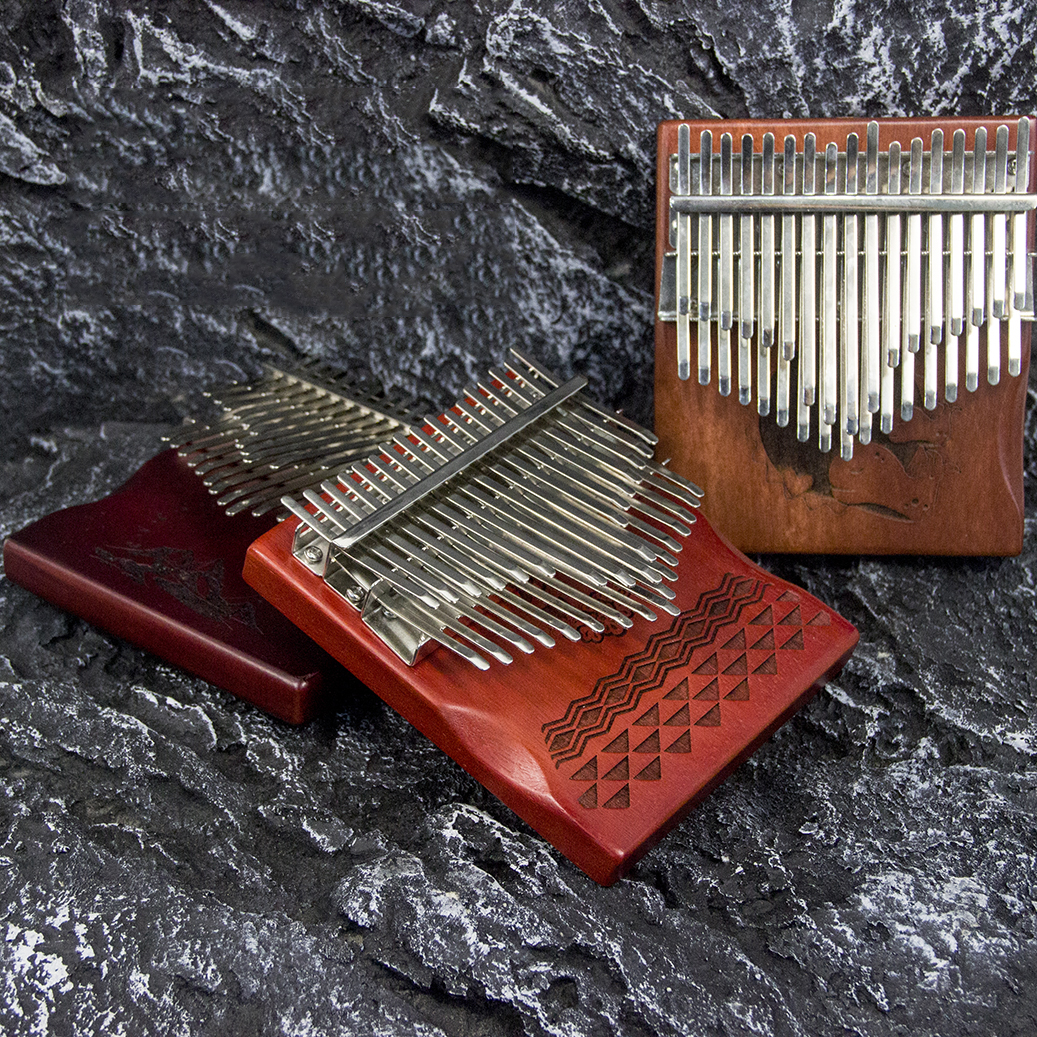
Beyond headless electric guitars, simplify your purchasing by consolidating shipments in a single container with electric basses, acoustic guitars, ukuleles, solid mahogany kalimbas, steel tongue drums, and true-bypass effect pedals.
8-Stage Integrated Production & Quality Management Flow
Every instrument moves through eight dedicated stages strictly inside our own facility—preventing quality discrepancies caused by third-party outsourcing:
Detroit B2B Procurement FAQ
Essential commercial and technical answers for Michigan musical instrument buyers, importers, and retail store owners before placing wholesale orders.
1. How do NFGF headless guitars withstand Detroit’s extreme seasonal climate shifts? +
Our headless guitar necks incorporate double carbon fiber reinforcement rods positioned parallel to a heavy-duty two-way steel truss rod. Furthermore, all tonewoods undergo automated kiln-drying to a strict 8%-10% Equilibrium Moisture Content (EMC). This prevents neck bowing, twisting, or fret-sprout when instruments transition between humid Michigan summers and intensely heated indoor winter environments.
2. What are the logistics options, lead times, and customs tariff codes for Detroit delivery? +
We ship directly from our Huizhou facility via ocean freight (FCL/LCL) to the Port of Detroit or regional Midwest logistics hubs (such as Chicago or Cleveland), as well as air freight express for urgent orders. Standard production lead time is 25 to 35 days depending on OEM customization depth. Guitars enter under HTS Code 9207.90 (Electric Stringed Musical Instruments). Our export documentation team assists with complete US Customs clearance paper trails.
3. What is the Minimum Order Quantity (MOQ) for custom-branded OEM orders? +
To support growing brands and local retail testing, stock headless electric guitar models feature sample MOQs starting from 1 piece. For custom logo placement, custom colors, or specific pickup/wood configurations, custom OEM production runs typically start at just 30 to 50 pieces per batch.
4. Can we customize the hardware finish, pickup voicing, and body top wood? +
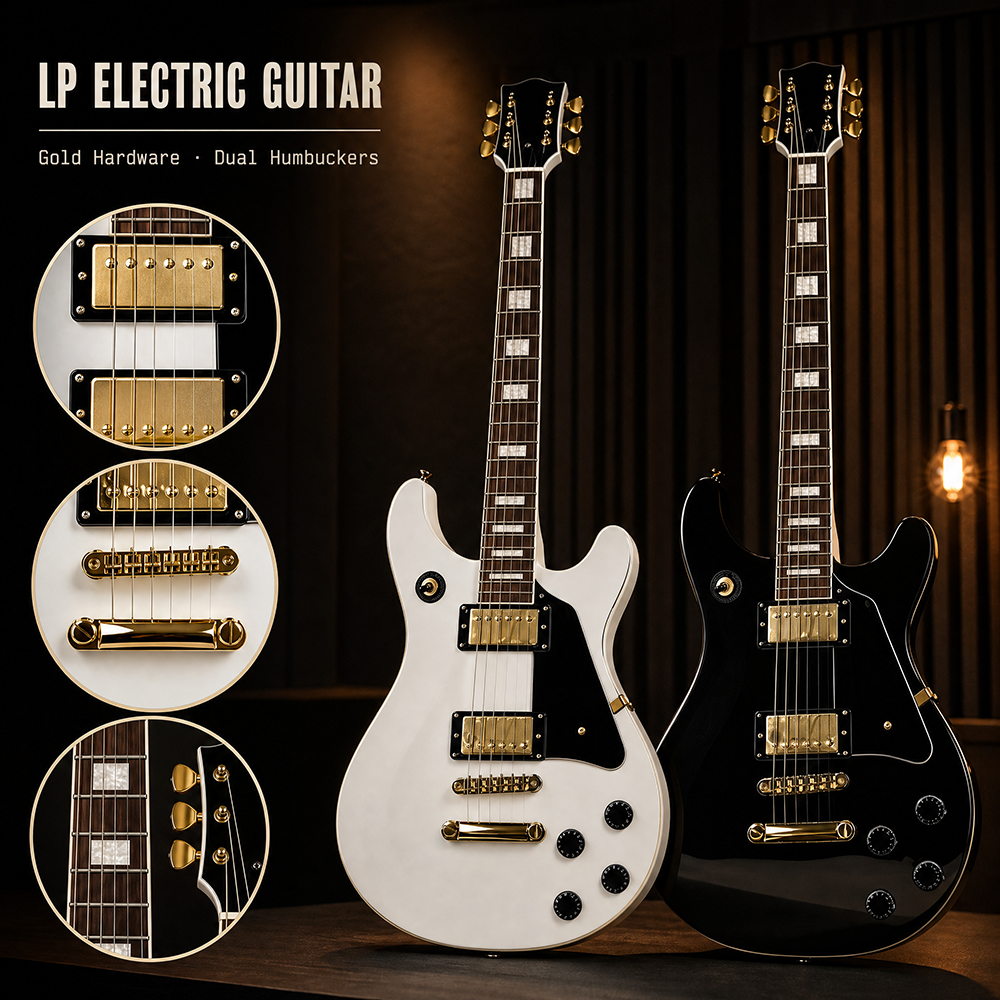
Yes. NFGF offers complete ODM design-based customization. You can specify top woods (e.g., solid flame maple, quilted maple veneer, burl ash), hardware finish (black anodized, satin chrome, gold), electronic layout (active preamps, coil-split push-pull pots, HSS/HSH pickup configurations), and fingerboard fretboard materials.
5. How do headless bridge systems handle string changes compared to standard guitars? +
Our headless hardware features dual-compatibility bridge designs: they accept standard single-ball-end electric guitar strings as well as double-ball-end strings. The headpiece locking nut clamps single-ball strings securely with set screws, allowing musicians to use any standard string brand readily available in local music stores across Michigan.
6. What quality control documentation and factory verification do you provide? +
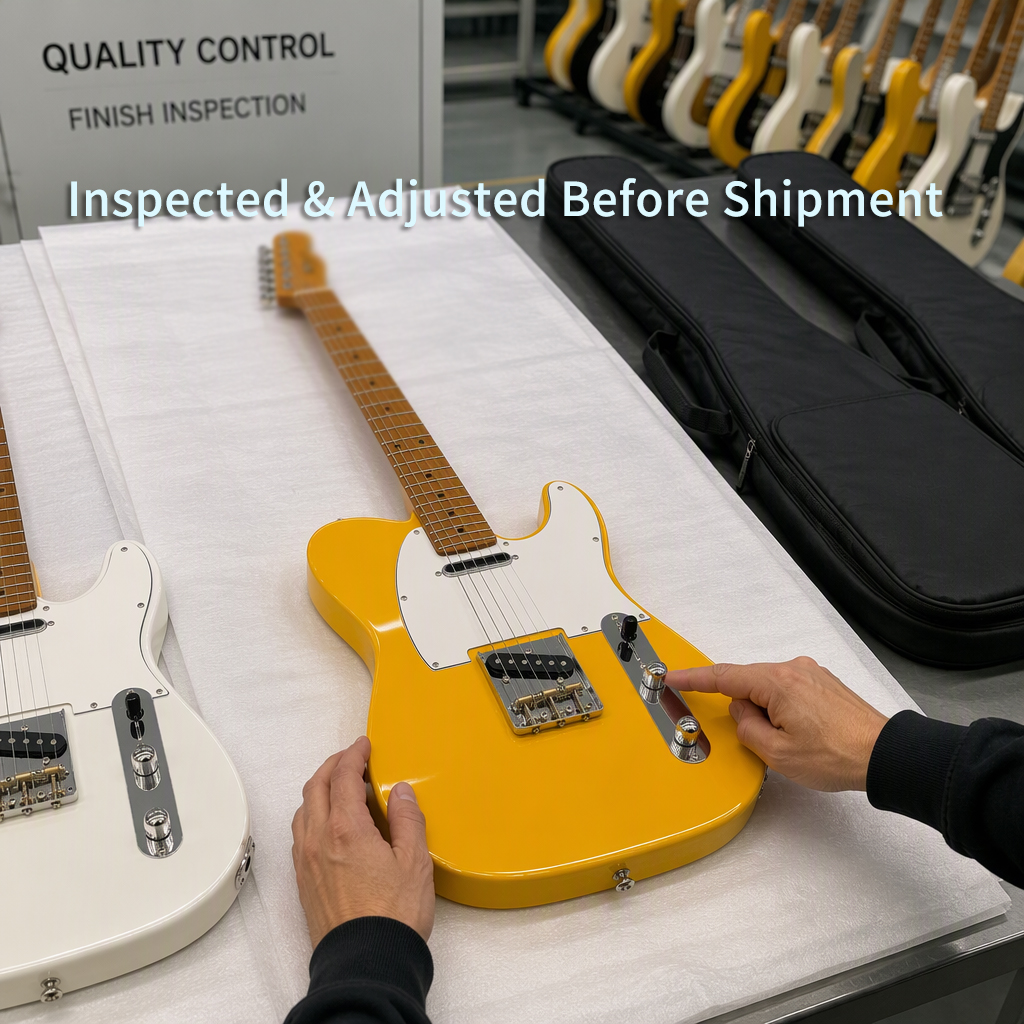
Every shipment includes an individual QC checklist covering dimensional tolerances, electronic shielding, playability action setup, and visual paint finish inspection. Huizhou NFGF Musical Instrument Co., Ltd. is independently verified on-site by SGS Group, with full audit reports available for partner review upon inquiry.
Partner with China's Premier Headless Guitar Factory
Expand your retail catalog or launch your private-label instrument brand in the Detroit market with audit-verified quality, direct factory pricing, and low MOQ flexibility.
Send an Inquiry