CE Certified

Tested for European acoustic consistency, electromagnetic safety (CE/EMC), low volatile organic compound (VOC) lacquer finishes, and international shipping endurance.


A rigorous examination of tonewood drying, acoustic projection in reverberant basalt structures, and compliance parameters for Holy See procurement officers.
The procurement landscape of Vatican City and the wider Roman ecclesiastical perimeter represents one of the most culturally demanding and acoustically complex niches in European musical instrument distribution. Unlike secular commercial music distribution channels, instrument acquisitions destined for the Holy See, Pontifical universities, diocesan seminaries, and pilgrimage basilica centers must satisfy strict dual mandates: profound artistic resonance capable of harmonizing within masonry-intensive, reverberant architectural spaces, and absolute regulatory compliance under European Union and Italian cross-border trade directives.
For a guitar manufacturing facility, providing instruments to this historic enclave is not merely a question of shipping finished dreadnoughts or classical nylon-string guitars. It demands an exhaustive comprehension of acoustic mechanics. Within monumental basilicas and vaulted chapel halls constructed of Roman travertine, Carrara marble, and solid masonry, conventional mid-tier instruments suffer severe acoustic phase cancellation or produce muddy low-frequency overtones. Instruments destined for Roman liturgical settings must exhibit surgical frequency separation, crystalline harmonic projection across the 1.5 kHz to 4.5 kHz band, and extreme structural stability under fluctuating microclimates.
Under Directive 2001/95/EC (General Product Safety Directive), Regulation (EC) No 1907/2006 (REACH), and the European timber regulations, instruments imported into the Italian peninsula for institutional deployment must be verified for non-toxic lacquers, heavy-metal-free fret alloys, and electro-acoustic preamplification compliance under the Electromagnetic Compatibility (EMC) Directive 2014/30/EU.
Huizhou NFGF Musical Instrument Co., Ltd., drawing upon its 5,100 square meter standardized plant in Qiuchang, Huizhou, integrates strict scientific kiln-drying protocols and CNC lutherie to satisfy these sovereign standards. By governing the equilibrium moisture content (EMC) of European spruce soundboards, select mahogany bodies, and seasoned rosewood fingerboards between 8% and 10%, our guitars resist the severe thermal transitions characteristic of Mediterranean summer heat and winter interior heating cycles.
From an organic materials perspective, our CE-certified manufacturing framework eliminates volatile organic finishes that off-gas dangerous formaldehyde or hazardous aromatic hydrocarbons. In enclosed confessional chapels or intimate choir ambulatories, chemical purity is an ethical and health requisite. Our factory utilizes multi-stage, water-based thin-film polyurethanes and natural nitrocellulose compounds buffed to mirror transparency, allowing the tonewood soundboard to vibrate freely without suffocating harmonic sustain.
Furthermore, when integrating active piezoceramic transducers or magnetic soundhole pickups for contemporary liturgical services and international Catholic youth gatherings, NFGF's integrated electro-acoustic models feature fully shielded preamps, premium low-impedance copper circuitry, and CE-marked components that prevent unwanted radio frequency interference (RFI) with institutional wireless microphones and VHF audio systems commonly deployed inside historical basilicas.
Our SGS Group on-site assessment (audited directly in our production bays) verifies that incoming wood stocks, hardware zinc alloys, pickup coil wire, and finished assemblies undergo standardized microscopic inspections, ensuring that institutional bulk purchases by church procurators remain free of premature neck warping or fretting failure.
By leveraging an agile minimum order quantity (MOQ starting at 1 unit for evaluation samples) combined with mass-run container output, NFGF bridges the traditional gap between bespoke artisanal lutherie and cost-efficient industrial scalability for European institutional suppliers.
Tailored acoustic configurations engineered to perform in ancient stone chapels, outdoor papal squares, and academic music institutes.
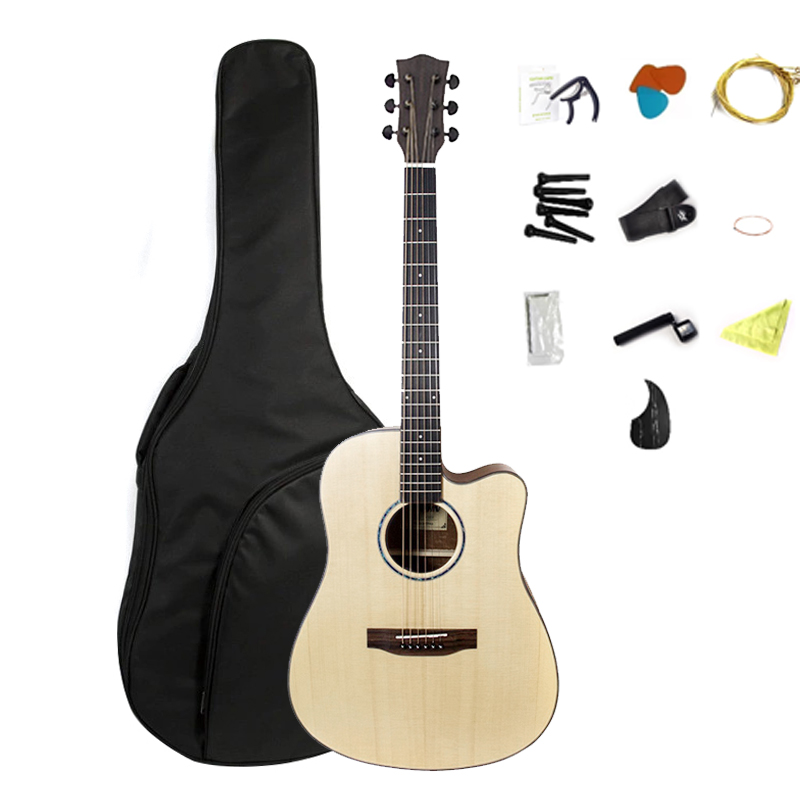
Engineered for high-ceilinged, reverberant stone spaces. Our solid Sitka spruce tops and scalloped forward-shifted X-bracing accentuate individual voice notes without causing muddy bass buildup against marble surfaces.
Deployed during international youth assemblies in St. Peter's Square and open-air pilgrimage events. Our onboard CE-certified preamps feature notch filters and balanced low-noise XLR outputs for direct PA integration.
Providing formal performance tools for sacred music pedagogy across Rome and the Pontifical Institute of Sacred Music (PIMS). Built to exact classical nut widths (52mm) with flat radius fingerboards for precise polyphony.
Insights into purchasing behavior, regulatory scrutiny, and sonic adaptations emerging across Southern European Catholic hubs.
While traditional pipe organs remain primary, diocesan liturgies increasingly incorporate hybrid nylon-string and steel-string acoustic instruments. Procurators favor onboard low-profile under-saddle piezo systems that do not deface the instrument’s traditional aesthetic while delivering pristine direct injection (DI) line signals to digital mixing consoles.
In accordance with Pope Francis’s encyclical Laudato si’ on environmental stewardship, church-affiliated procurement councils now examine the environmental footprint of tonewood suppliers. Demand has shifted sharply toward ethically harvested timber, non-toxic waterborne finishes, and recyclable packaging materials certified under EU packaging directives.
Missionary orders, itinerant youth evangelists, and university pastoral teams increasingly order 36-inch and 38-inch mini-dreadnoughts and parlor bodies. These compact formats offer robust projection while remaining easily portable on international pilgrimage flights and pastoral assignments across rural parishes.
Combining heavy CNC milling tolerances with skilled hand-voicing, sanding, and multi-stage acoustic testing to ensure zero defect rates for institutional importers.
Tonewood blanks undergo computer-monitored dehumidification chambers for 60 to 90 days, locking internal moisture at 8%-10% to prevent neck warping in variable church temperatures.
Bridge slots, dovetail neck joints, truss rod channels, and bracing scallops cut with micron-level repeatability, eliminating structural failure and ensuring exact string alignment.
Our 5,100 m² plant in Qiuchang, Huizhou was independently assessed on-site by SGS Group (November 2025), validating incoming material tests, assembly lines, and finished QA protocols.
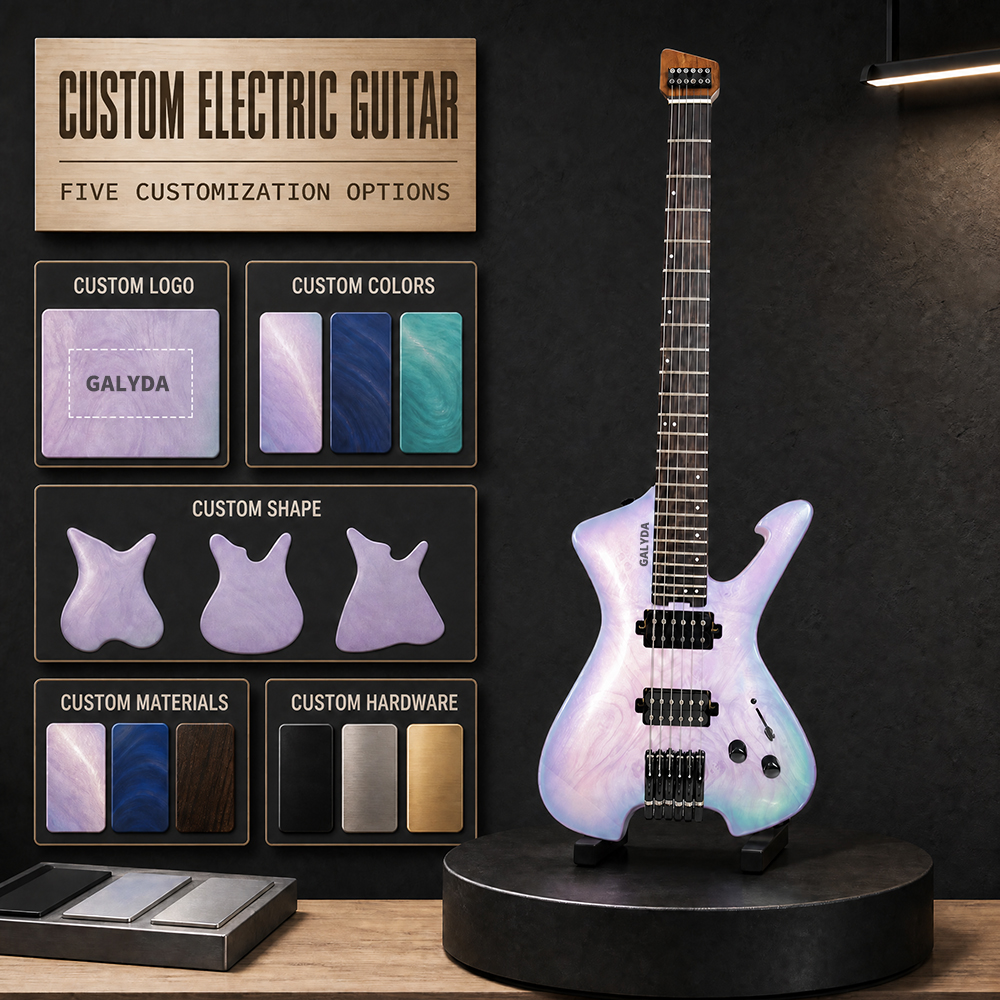
We eliminate purchasing risk for European distributors and institutional boards by offering 1-piece evaluation units with custom silk-screen, laser-engraved, or pearl headstock logos.
Clear, direct answers regarding custom branding, European customs documentation, tonewood origins, and freight logistics to Central Italy.
Every commercial consignment exported to Roman ports of entry (such as Civitavecchia or Rome Fiumicino cargo terminals) is backed by an official EU Declaration of Conformity (DoC). For our active acoustic and electro-acoustic instruments, our electronics carry CE marking verifying compliance with the EMC Directive 2014/30/EU and the RoHS Directive 2011/65/EU (confirming lead-free solder joints and non-toxic plating). For raw instruments, our wood selections comply with international CITES Appendix II/III restrictions with legal chain-of-custody timber permits.
Yes. NFGF specializes in bespoke OEM/ODM brand integration. We can inlay coat-of-arms insignias, diocesan crests, or institutional monograms on the guitar headstock using genuine mother-of-pearl, abalone, or high-definition silk-screen metallics. In addition, internal soundhole labels, truss rod covers, and heavy-duty 10mm/20mm padded transport bags can be customized with your institution's bilingual insignia.
Thermal stability begins at the raw timber stage. Our wood materials undergo long-cycle kiln desiccation followed by stabilization resting in humidity-controlled workshops held between 45% and 55% relative humidity. Finished instruments are packed in double-corrugated 5-layer export boxes with form-fitting closed-cell foam cradles and desiccant gel packs to neutralize ocean freight humidity swings before delivery to Mediterranean warehouses.
For standard factory-spec catalog models, our MOQ starts at just 1 piece for initial sample evaluation. For custom-branded production runs featuring tailored body dimensions, specialized tonewood grading, or distinct electronic preamps, typical minimum runs range from 30 to 50 instruments. Sample production takes approximately 15 business days, while volume sea-freight batch production is executed in 30 to 40 days.
Yes. Every single unit undergoes a strict 4-step quality inspection checkpoint: 1) Incoming timber grain and moisture audit; 2) Post-CNC and neck-pocket joint verification; 3) Post-spray finish clarity and fret-edge leveling; and 4) Final action height (12th fret action set to ~2.2mm bass, 1.8mm treble), neck relief adjustment, and intonation strobe testing. A stamped quality assurance pass card accompanies each instrument.
Connect with NFGF's senior instrument engineers to request CAD schematics, European compliance dossiers, or sample production slots.