Featured Instrument & Accessory Production
High-demand OEM models and precision engineered guitar hardware manufactured under strict ISO-level quality control.

High-Performance OEM/ODM Nylon String Guitar Manufacturing
Engineering parameters, wood acoustics, and structural mechanics behind world-class classical and crossover nylon-string guitars.
In the global stringed instrument trade, selecting a reliable OEM/ODM Nylon String Guitar Factory & Supplier requires evaluating far more than basic wholesale pricing. Nylon-string instruments—encompassing classical guitars, flamenco models, and modern crossover hybrid guitars—operate under delicate physical dynamics. Unlike steel-string guitars where high vector tension (approx. 160–180 lbs) drives top projection, nylon strings exert significantly lower energy (approx. 75–90 lbs). Consequently, the acoustic efficiency, bracing architecture, tonewood aging, and neck-heel geometry directly determine whether an instrument achieves superior sound velocity or suffers from choked projection and structural instability.
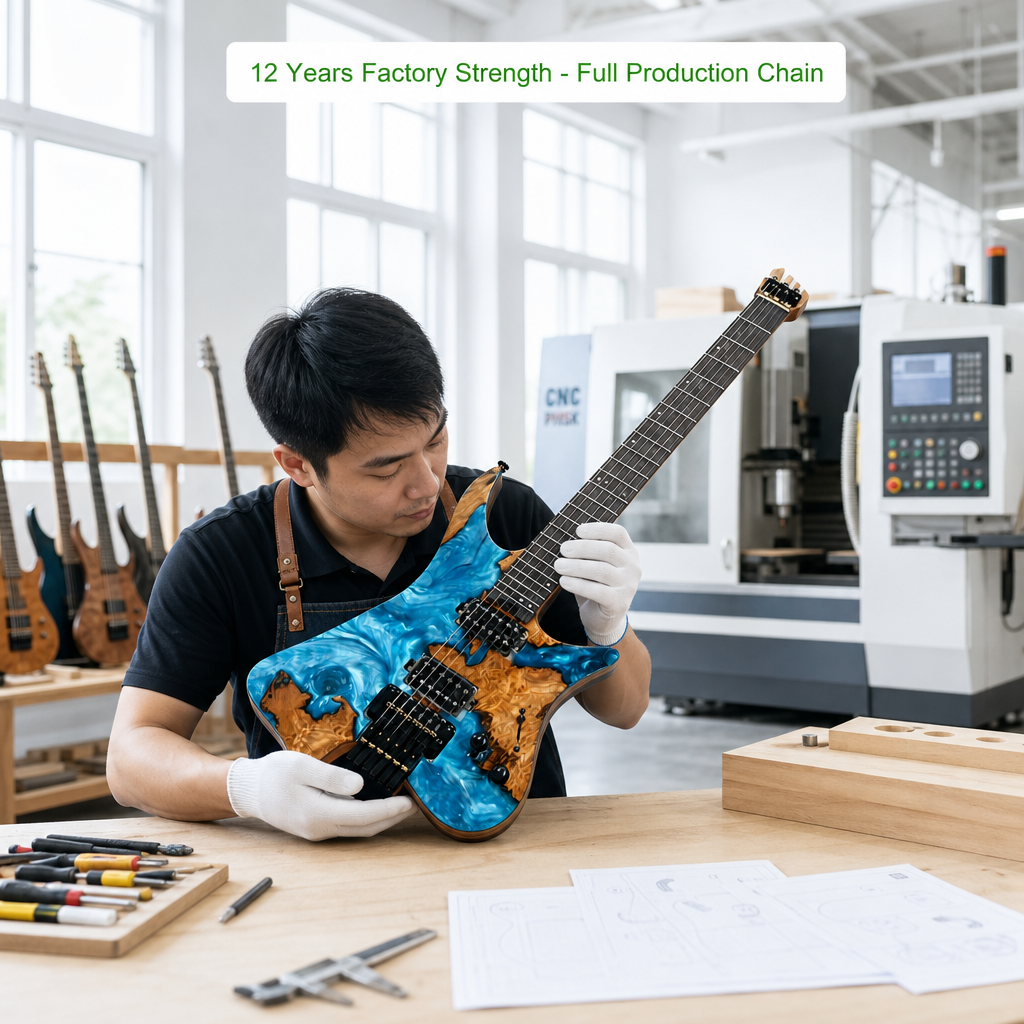
At Huizhou NFGF Musical Instrument Co., Ltd. (established in 2014 in Qiuchang, Huiyang District, Huizhou, Guangdong), our 5,100 m² SGS-verified manufacturing facility bridges time-honored European lutherie with modern industrial automation. Operating dedicated production lines equipped with high-precision CNC multi-axis routing machinery, automated lacquer sanding, and environmental seasoning chambers, NFGF delivers private-label solutions tailored to Western distributors, brand owners, and educational suppliers worldwide.
Acoustic Velocity Optimization
We calibrate solid soundboard thickness down to ±0.05mm using laser micrometer calipers to maximize acoustic energy transfer from low-tension nylon strings.
Spanish Heel Structural Joint
Traditional Spanish Heel neck-to-body integration where the neck foot is carved directly inside the guitar body, ensuring zero energy dissipation along the neck joint.
4-Stage RH Climate Stabilization
All timber undergoes kiln drying followed by 60 days of equilibrium conditioning in controlled 45%–50% Relative Humidity (RH) rooms to eliminate neck warping and belly bulging.
Tonewood Selection & Structural Acoustics
How density ratios, modulus of elasticity, and grain orientation dictate tonal warmth, fundamental note clarity, and harmonic overtones.
The soundboard (top) acts as the diaphragm of the nylon-string guitar. In OEM contract manufacturing, matching the appropriate timber specification to the client's target market is essential. Cedar and Spruce represent the two primary soundboard archetypes, each possessing distinct physical velocity constants ($c = \sqrt{E/\rho}$, where $E$ is Young's Modulus and $\rho$ is wood density).
| Soundboard Timber | Acoustic Character | Physical Properties | Ideal Playing Style & Target Market |
|---|---|---|---|
| Solid Canadian Western Red Cedar (Thuja plicata) | Warm, rich, lush overtones with immediate sound explosion and low fundamental decay. | Lower density (~370 kg/m³), higher internal damping, requires zero break-in period. | Classical conservatory performers, romantic repertoire, fingerstyle players seeking immediate warmth. |
| Solid Sitka / European Engelmann Spruce (Picea abies) | Clear, focused, bell-like fundamental notes with extreme headroom and long sustain. | Higher density (~430 kg/m³), high stiffness-to-weight ratio, matures dynamically over years of playing. | Concert classical artists, flamenco negra models, studio recording professionals demanding clarity. |
| High-Grade AAA Mahogany Back & Sides (Khaya senegalensis) | Punchy midrange response, clean fundamental separation, fast acoustic decay. | Medium density (~540 kg/m³), dimensionally stable across wide temperature fluctuations. | Student models, entry-level school tenders, crossover nylon guitars for ensemble settings. |
| Indian Rosewood / Santos Rosewood Back & Sides | Deep, booming bass response with sparkling metallic highs and complex resonant cavity reflections. | High density (~800 kg/m³), rigid acoustic reflectivity, luxury visual appeal. | Concert series nylon guitars, premium ODM lines, professional flamenco negra models. |
Beyond soundboard selection, back and side tonewoods function as acoustic reflectors. Highly dense timbers like East Indian Rosewood (Dalbergia latifolia) or Pau Ferro (Libidibia ferrea) bounce internal air vibrations back toward the soundhole without absorbing mid-bass energy, producing the resonant depth prized by classical virtuosos.
Bracing Systems: Traditional Fan vs. Modern Lattice & Double-Top
Maximizing soundboard flexibility while maintaining structural integrity under continuous nylon string tension.
Hauser / Torres 7-Fan Bracing
Traditional Classical Dynamics: Utilizes seven quarter-sawn spruce struts fanning outward from the soundhole. Provides organic tonal warmth, smooth balance between bass and treble, and time-tested structural longevity. Recommended for heritage classical models.
Carbon-Reinforced Lattice Bracing
Modern Concert Projection: Replaces heavy wood struts with a grid-patterned lattice ultra-thin framework reinforced with carbon fiber filaments. Reduces soundboard mass by up to 20%, dramatically boosting volume, sustain, and projection for modern concert halls.
Double-Top Composite Construction
High-Tech OEM Engineering: Sandwiches an aerospace-grade Nomex honeycomb core between two ultra-thin (0.6mm) cedar or spruce skins. Resulting tops deliver lightning-fast transient attack, immense dynamic range, and exceptional resistance to humidity cracking.
At NFGF's Huizhou facility, our CNC routers precisely carve tone bracing channels down to 0.1mm tolerances. Luthiers then tap-tune each soundboard by hand to adjust resonant frequencies before final box assembly. This hybrid manufacturing approach ensures that every guitar leaving our export bay maintains identical acoustic consistency—a critical advantage for OEM brand owners building a reputation for retail reliability.
Global B2B Sourcing & Procurement Trends (2025–2030)
Key consumer shifts and supply chain evolutions shaping the future of nylon string guitar wholesale purchasing.
1. The Crossover & Hybrid Nylon Boom
Electric and acoustic steel-string players are increasingly adopting nylon guitars for modern pop, jazz, and Latin fingerstyle. Demand is surging for Narrow Nut Widths (48mm vs. traditional 52mm), radiused fingerboards (16"), Venetian cutaways, and ultra-slim neck profiles. Importers should expand crossover inventory to capture non-classical players.
2. CITES-Free Sustainable Tonewoods
Strict international timber regulations make non-CITES compliance mandatory. Major global brands are migrating from restricted rosewoods to Torrefied Maple, Pau Ferro, Black Walnut, and FSC-certified Laurel. NFGF maintains full timber traceability documentation, guaranteeing hassle-free customs clearance across Europe, North America, and Australia.
3. Advanced Onboard Electronics & Transducer Systems
Modern stage performance demands dual-source pickups combining under-saddle Piezo transducers with internal condenser microphones or digital IR (Impulse Response) acoustic preamps. Integrating OEM preamps with built-in tuners and Bluetooth backing track connectivity is becoming standard across mid-to-high tier classical guitars.
4. Amazon FBA & Drop-Test Ready Packaging
E-commerce retailers require factory packaging that passes ISTA-3A transit drop tests without secondary repacking. Our factory provides custom double-wall honeycomb master cartons, molded EPE foam inner cradles, and desiccant-sealed anti-moisture barrier bags engineered specifically for worldwide container freight and courier delivery.
Industry Development & Technological Advancements
How modern manufacturing automation enhances traditional hand craftsmanship in classical guitar production.
The classical guitar industry is undergoing an unprecedented technological revolution. Historically, classical guitar building relied exclusively on manual labor, which inevitably introduced inconsistencies in neck pitch, fret dressing, and top thickness. Today, leading China-based OEM manufacturers like NFGF utilize high-precision industrial technologies to elevate consistency:
- 5-Axis CNC Neck Carving: Eliminates micro-variations in neck thickness profiles, allowing buyers to order precise custom shapes (e.g., Traditional Spanish D-Shape, Slim Crossover Oval, or Shallow Vintage C) across thousands of units with zero deviation.
- Laser Fret Slotting & Plek Precision Leveling: Fretboards are slot-cut using laser-guided indexing. Frets are pressed with hydraulic pressure and leveled to micro-inch tolerances, guaranteeing zero fret buzz even at ultra-low action settings (2.5mm bass / 2.0mm treble).
- Ultra-Thin UV Cured Finishes: Modern UV-cured polyester and polyurethane lacquers allow applying protective coats as thin as 0.08mm. This thin coating safeguards the instrument against scratches while letting the soundboard vibrate naturally without acoustic choking.
4-Stage Enterprise QC Protocol at NFGF
Preventing defects, fret sprouting, and neck warping before shipment to international markets.
Timber Moisture Audit
Every lot of raw timber is tested using pinless moisture meters upon arrival. Moisture content must register between 8% and 10% before entering the processing line.
In-Process Thickness Check
Soundboards, back plates, and sides undergo caliper gauging after sanding to verify uniform acoustic thickness tailored to the specific wood species.
Thermal & Humidity Stress Test
Sample units from each production batch are placed in environmental stress chambers cycling between 30% and 75% RH to verify joint stability and finish elasticity.
100% Final Playability Setup
Prior to boxing, experienced luthiers tune every instrument to pitch, adjust truss rods, sand bone saddles for optimal action, and test all onboard electronics.
B2B Procurement & OEM FAQ
Answers to essential questions regarding minimum order quantities, custom branding, shipping logistics, and compliance.
What is the Minimum Order Quantity (MOQ) for custom logo OEM nylon guitars? +
Our factory offers low MOQ flexibilities. For standard acoustic and electric guitar models in stock, sample orders start from 1 piece. For custom logo branding (headstock silk-screening, laser engraving, or custom neck label), the typical batch MOQ starts from 30 to 50 pieces per color specification. Fully custom ODM body shapes or custom bracing designs generally require 100 to 200 pieces depending on tooling requirements.
How does NFGF handle custom headstock branding and private labeling? +
We provide comprehensive private label solutions including metallic decal headstock logos, pearl/abalone headstock inlays, laser-engraved headstocks, custom soundhole labels, branded internal heel blocks, custom hardware engraving (tuning machine plates), and customized retail packaging or gig bags.
How do you guarantee that guitars will not suffer fret sprouting in dry destination climates? +
Fret sprouting occurs when fingerboard wood loses moisture and shrinks, exposing sharp fret edges. NFGF prevents this by kiln-drying all rosewood, ebony, and technical wood fretboards down to 7–8% equilibrium moisture content in climate chambers before fret installation. Furthermore, we bevel and hand-bind fret ends using smooth spherical edge polishing treatments.
What certifications and third-party audits does your factory possess? +
Huizhou NFGF Musical Instrument Co., Ltd. is an SGS on-site verified manufacturer. Our production lines, raw material storage, worker safety protocols, and quality control systems are audited by SGS Group. Additionally, our electronic components, guitar pickups, and active preamp systems comply with CE and FCC standards for international sales.
What are the lead times for OEM samples and mass production runs? +
For existing factory models with custom logo application, sample production takes 7 to 15 working days. Complete custom ODM prototyping (new body shapes, unique neck joins) takes 25 to 35 days. Mass container production lead times range between 30 and 45 days upon sample approval and deposit confirmation.
Can we order mixed container loads combining classical guitars, electric guitars, and accessories? +
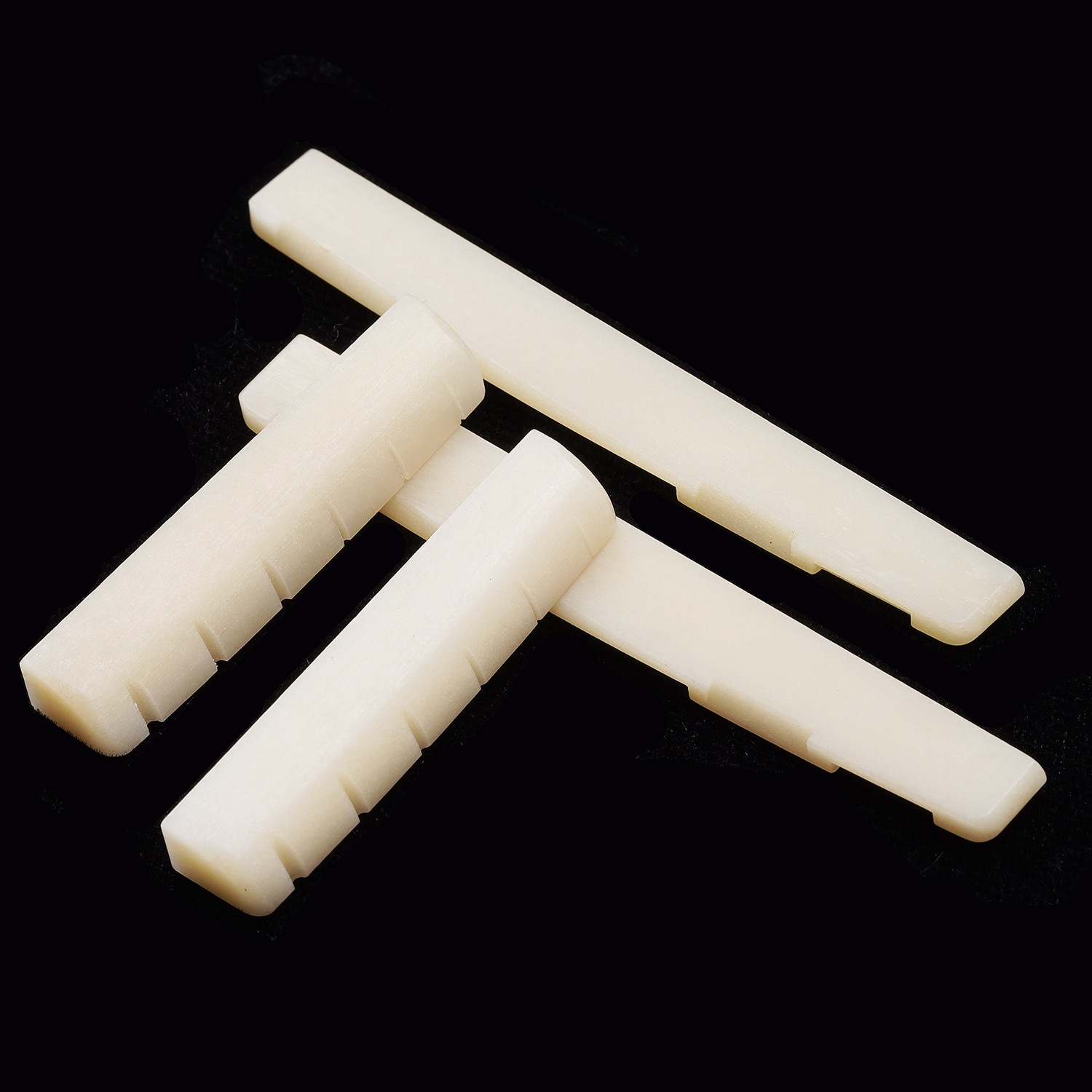
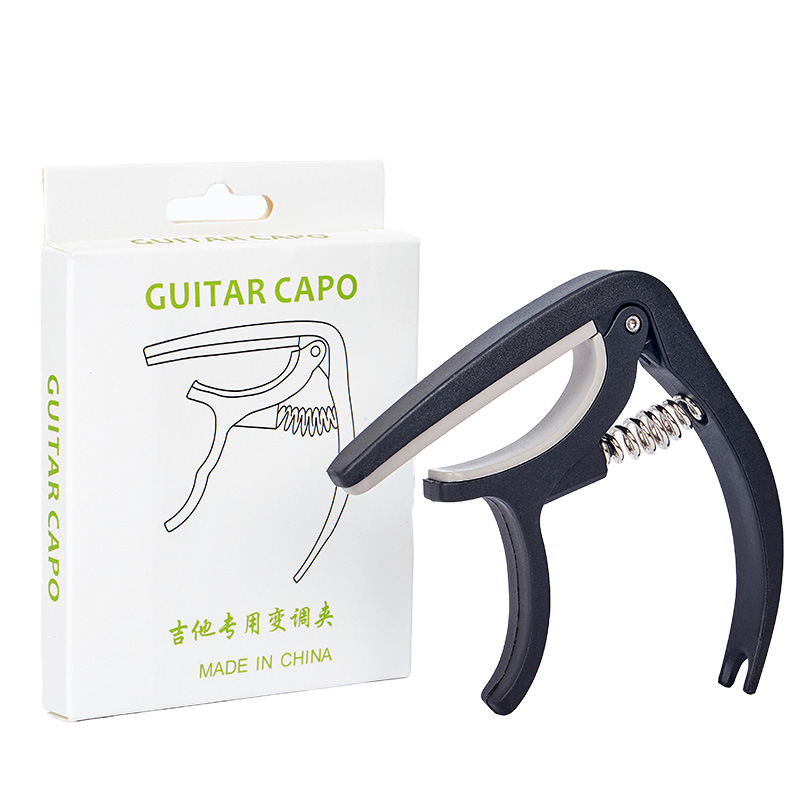
Yes! One of NFGF's primary competitive strengths is product line consolidation. Importers can combine classical nylon guitars, crossover models, electric guitars, bass guitars, ukuleles, kalimbas, tongue drums, and accessories (capos, tuners, gig bags, bone nuts) into a single 20ft or 40HQ container shipment, maximizing shipping efficiency and reducing freight overhead.
How does the factory manage CITES compliance for international shipping? +
We strictly adhere to CITES (Convention on International Trade in Endangered Species) regulations. We recommend non-restricted wood alternatives such as FSC-certified Indian Rosewood (with official export permits), Pau Ferro, Walnut, or Thermalized Maple. We provide complete chain-of-custody documentation for smooth customs clearance worldwide.
Why Partner with Huizhou NFGF Musical Instrument Co., Ltd.
Integrating R&D expertise, high-capacity production facilities, and global trade support from China's premier instrument hub.
Located in Qiuchang, Huiyang District, Huizhou—the heartland of China's acoustic and electric guitar manufacturing ecosystem—Huizhou NFGF Musical Instrument Co., Ltd. offers global buyers direct factory access backed by technical lutherie experience. Operating a modern 5,100 m² production plant with 53 skilled workers and luthiers, NFGF specializes in the comprehensive design, manufacturing, and international export of stringed instruments.
In-House R&D & Design Patents
Our dedicated engineering department holds over 100 design patents and copyrights. We assist brand owners with CAD body rendering, soundboard modal analysis, and custom bridge engineering to turn concept drawings into market-ready instruments.
Complete One-Stop Manufacturing
From initial raw wood cutting, kiln drying, automated CNC carving, and hand binding to automated spray booths, gloss buffer polishing, electronics assembly, and setup—every manufacturing step takes place 100% inside our factory walls.
Verified Global Trade Reliability
SGS on-site verified with extensive trade capacity across North America, Europe, Southeast Asia, and South America. We support flexible payment terms, transparent production tracking, and dedicated English-speaking account managers.
Request Your OEM/ODM Factory Quotation Today
Partner with an SGS-verified guitar manufacturer. Contact our engineering team for specifications, sample availability, and custom pricing for your brand.
Inquire Now