High-Performance OEM/ODM Instruments & Hardware Components
Explore our SGS-audited, export-ready portfolio of precision electric guitars, acoustic systems, wireless audio transmitters, and replacement hardware engineered for international brands, importers, and wholesale distributors.
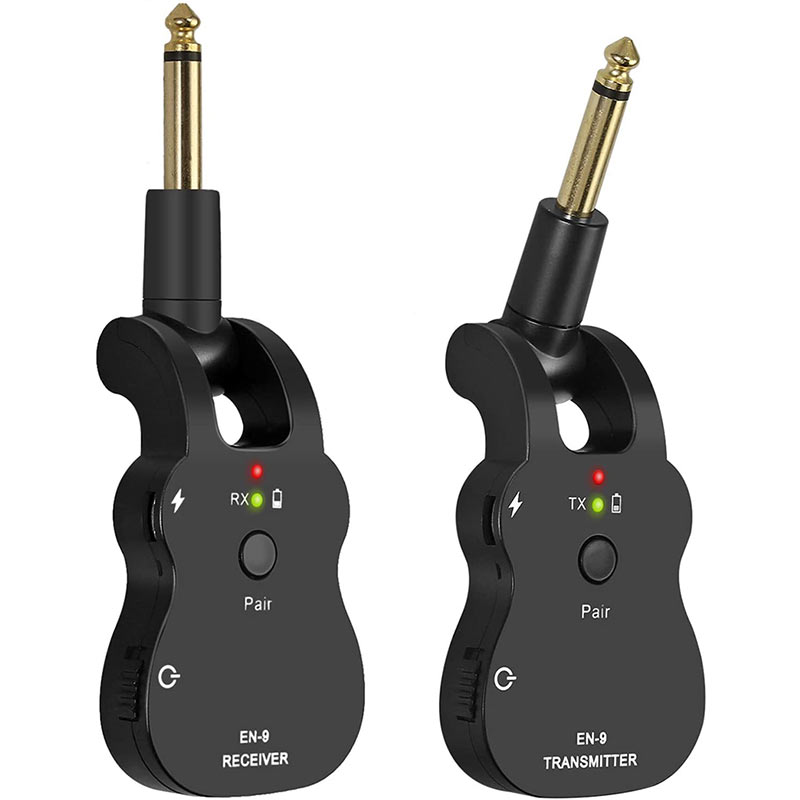
High Quality Wholesale Custom Digital Guitar Bass Audio Transmitter and Receiver Wireless System
2.4GHz uncompressed digital audio transmission, ultra-low <5ms latency, 24-bit/48kHz resolution, and 30-meter dynamic range for stage and studio applications.
Get a Quote
GALYDA Electric Guitar GM Style SS Pickup Tremolo Bridge 3 Way Toggle Switch Custom Logo OEM Factory
Precision-machined zinc alloy tremolo bridge assembly with Alnico V single-coil pickups, delivering classical sustain and zero-backlash mechanical stability.
Get a Quote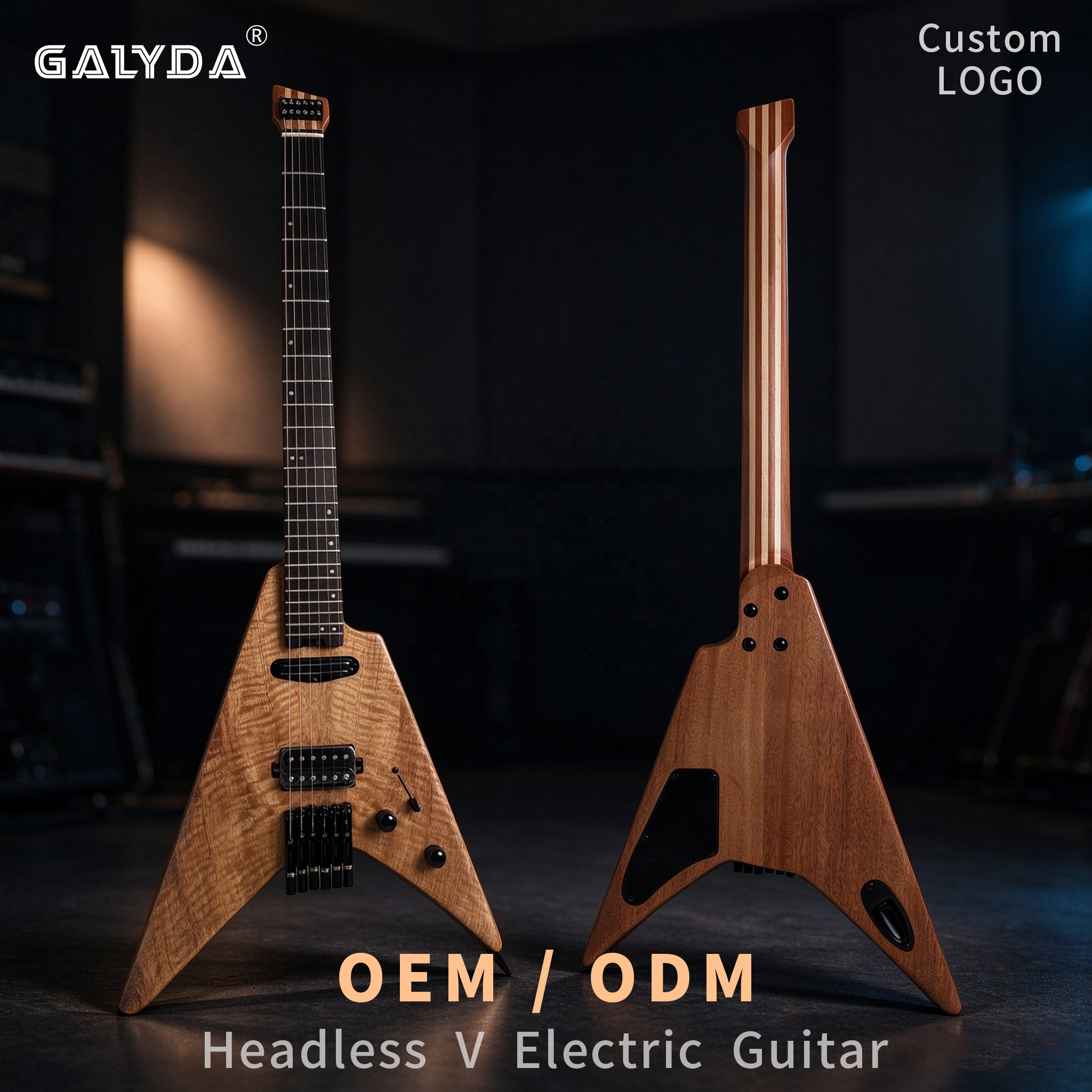
Headless V Shape Electric Guitar 6 Strings Mahogany Body 7 Piece Maple Neck Rosewood Fingerboard
Ergonomic headless design featuring a multi-laminate 7-piece hard maple/walnut neck, selected African mahogany body, and custom modular bridge tuners.
Get a Quote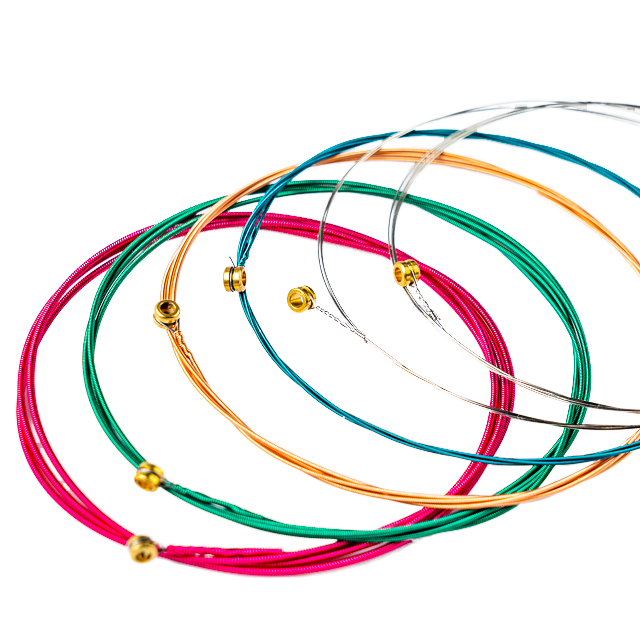
Set of Colorful 6-String Electric Acoustic Guitar Strings Steel Tone 1048 Series
High-carbon steel core with anti-corrosive nano-coated color polymer wrapping. Offers extended tonal life and consistent tension across all gauges.
Get a Quote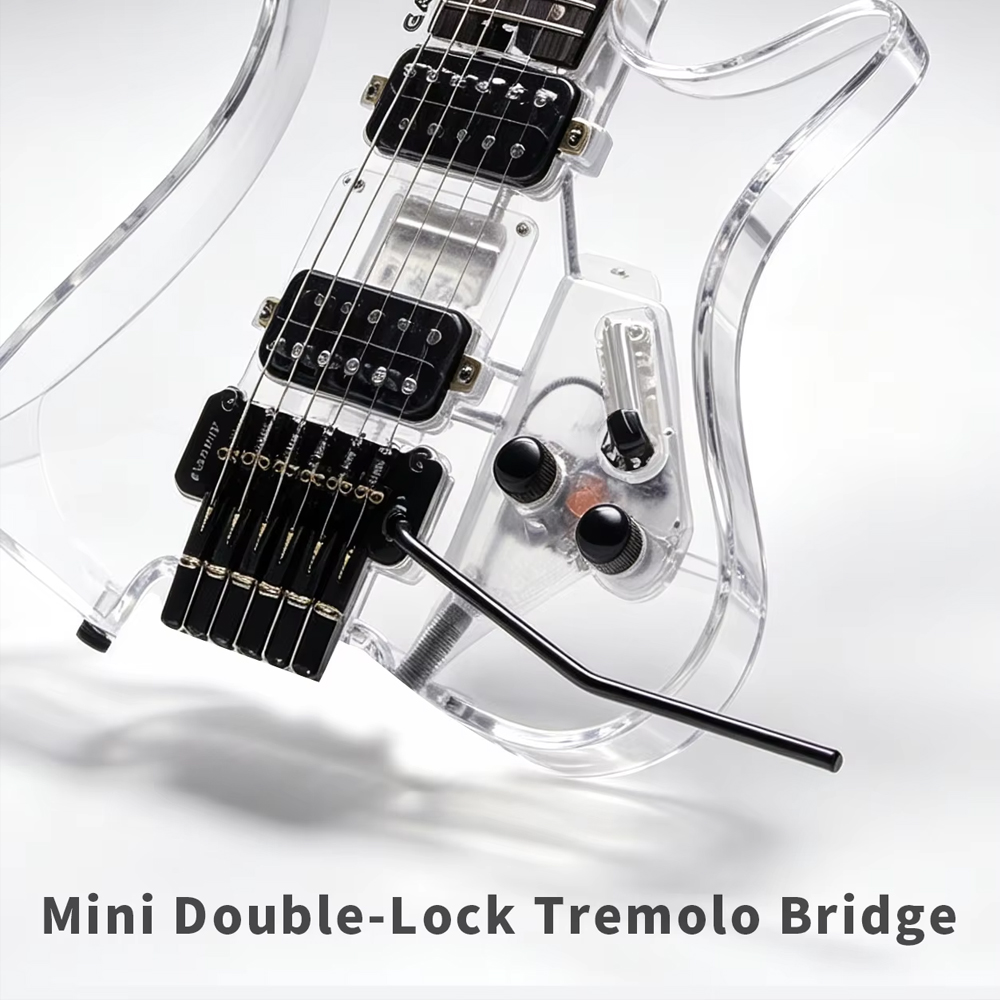
Silent Travel Guitar Africa Acrylic Chorus Headless Design Portable Professional Acoustic Electric Manufacturer
Ultra-portable acrylic frame structure with integrated headphone pre-amp, onboard chorus/reverb DSP effects, and active piezo pickup system.
Get a Quote
Professional In-Ear Monitor IEM HiFi Wired Earphones with Microphone Studio Musical Instrument Accessories
Dual dynamic driver architecture engineered for accurate stage monitoring, flat frequency response, passive noise isolation (-26dB), and detachable MMCX cable.
Get a Quote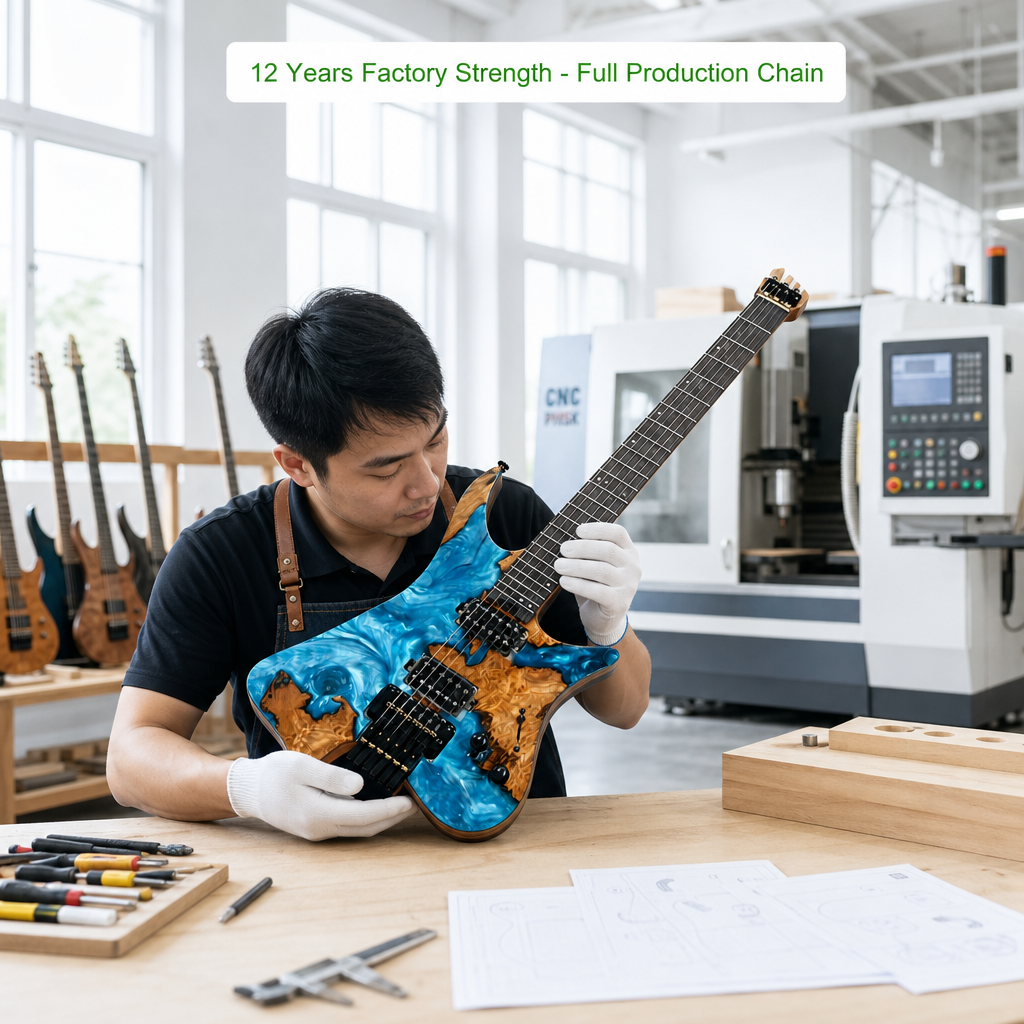
Headboard Electric Guitar With Bright Light High-Quality OEM ODM Factory Small Double-Fret Bridge
Interactive LED fretboard inlay system paired with double-locking tremolo hardware. Designed for modern performance visual art and educational market segments.
Get a Quote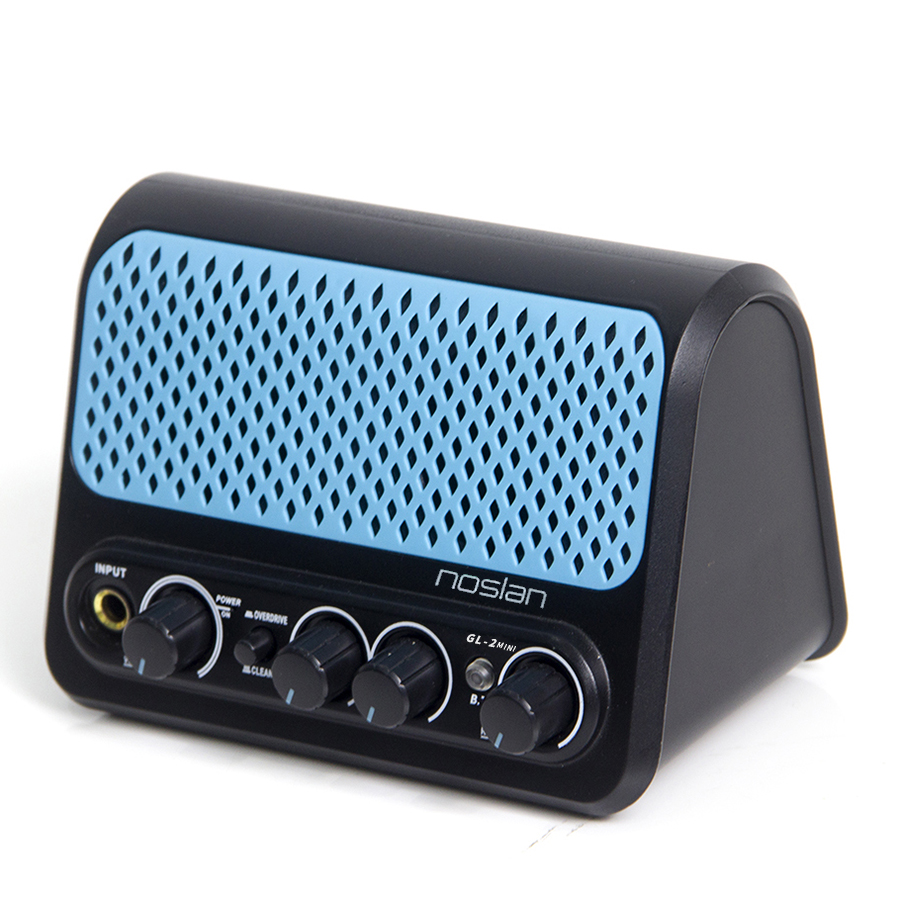
Rechargeable 10-Watt Electric Guitar Amplifier Speaker ABS Material with Distortion Clear Sound Effects Reverb
Compact lithium-battery powered 10W amplifier with clean/drive dual channels, digital delay/reverb, Bluetooth 5.0 audio streaming, and robust ABS chassis.
Get a QuoteEnterprise Capabilities: Why Global Brands Partner With NFGF
Situated in Qiuchang, Huiyang District, Huizhou City—the premier musical instrument manufacturing hub of Guangdong, China—Huizhou NFGF Musical Instrument Co., Ltd. operates a vertically integrated industrial ecosystem spanning R&D, precision woodworking, automated finishing, and global distribution.
SGS-Audited Facility & Material Traceability
Our 5,100 square meter factory is independently audited on-site by SGS Group (latest audit November 2025). We maintain strict incoming raw material inspections, verifying wood equilibrium moisture content (EMC between 8%–12%) and ensuring all hardware complies with REACH and RoHS standards.
High-Precision CNC & Automated Finishing
Equipped with 5-axis CNC machining routers, heavy-duty automatic surface sanders, and multi-stage dust-free spray painting booths. Our engineering tolerance for neck pocket fitting and fret slotting is controlled within ±0.02mm, guaranteeing perfect intonation and body neck alignment.
In-House R&D & Patent Protection
Our dedicated R&D department holds over 100 design patents and structural utility copyrights. We actively co-develop custom acoustic bracing patterns, active pickup circuitry, and ergonomic neck profiles with brand owners under strict Non-Disclosure Agreements (NDAs).
The NFGF Quality Benchmark: From Raw Tonewood to Sealed Container
Building world-class musical instruments requires harmonizing natural organic materials with mechanical precision. Every guitar body, neck, and electronic accessory produced in our Huizhou factory undergoes an 8-stage controlled production workflow:
2025–2030 Global Guitar Component Procurement Trends
As global musical instrument supply chains evolve, wholesale buyers, brand managers, and retail chain buyers face shifting consumer expectations, environmental regulations, and technological convergence. Below is our industry whitepaper analysis of emerging procurement vectors.
1. Sustainable & Alternative Tonewood Integration
With CITES restrictions on traditional Rosewood (Dalbergia) and declining old-growth Ebony supplies, global procurement is pivoting toward high-tech eco-alternatives. Thermally modified (roasted) Maple, Tech-wood, High-Density Fiber Composites, and Richlite fingerboards are seeing a 35% year-over-year increase in OEM specifications due to superior climate resistance and structural stability.
2. Onboard Wireless & Smart DSP Electronics
Modern players demand seamless connectivity. Sourcing trends show rapid growth in guitars with integrated 2.4GHz/5.8GHz wireless transmitters, Bluetooth audio accompaniment receivers, and low-power onboard DSP effects (reverb, chorus, delay) that operate without external amplifiers. OEM buyers are increasingly specifying active-passive hybrid preamp layouts.
3. Modular & Headless Hardware Systems
Travel-friendly, lightweight instruments are no longer a niche market. Headless electric guitars and basses featuring integrated bridge-tuning systems, dual-action truss rods, and quick-change pickup mounting plates represent the fastest-growing category among urban commuters, gigging musicians, and younger demographic segments.
Strategic Comparison: Traditional vs. Next-Gen OEM Sourcing
| Procurement Metric | Traditional Component Sourcing | NFGF Next-Gen Integrated OEM Solution | Strategic Benefit to Importer |
|---|---|---|---|
| Wood Drying Technology | Open-air natural drying (unstable EMC) | Automated Vacuum Kiln Drying (8%–12% EMC) | Eliminates neck warping & fret sprout in export markets |
| Hardware Tolerance | Standard die-cast (±0.10mm tolerance) | 5-Axis CNC & Precision Zinc Alloys (±0.02mm) | Flawless tuning stability & reduced return rates |
| MOQ Flexibility | High MOQs (300–500 units per color) | Flexible Low MOQ (1–10 units sample runs) | Accelerates market testing & lowers inventory capital risk |
| Compliance Assurance | Self-declared unverified specs | SGS On-Site Audited, CE, FCC & RoHS Certified | Seamless customs clearance across EU & North America |
| Supply Chain Footprint | Fragmented sub-contractors | 5,100 m² Vertically Integrated Workshop | Direct factory pricing with full production transparency |
Industry Development Dynamics: The Evolution of Guitar Manufacturing
The electric and acoustic guitar manufacturing sector is undergoing a profound paradigm shift driven by advanced metallurgy, automated woodworking, and digital signal processing. Understanding these micro-trends allows brand owners to construct future-proof product catalogs.
Advanced Pickup Metallurgy & Circuitry Customization
Pickup technology has progressed beyond simple Copper wire wrapping around Alnico or Ceramic magnets. Modern OEM manufacturing incorporates custom-voiced neodymium magnets, hum-canceling stacked coils, and active preamp circuits with ultra-low noise floors. By offering coil-splitting toggles, phase switches, and active EQ buffering, manufacturers allow brands to deliver diverse tonal palettes from a single instrument platform.
Hybrid Craftsman-Automation Manufacturing Model
While industrial CNC routing guarantees flawless neck joints and body bevels, the feel of an instrument remains inherently human. Leading guitar factories utilize a hybrid operational model: CNC machines perform repetitive structural cutting, while seasoned luthiers oversee hand fret-dressing, crown polishing, nut filing, and playability setup. This hybrid workflow maximizes throughput without sacrificing tactile craftsmanship.
Frequently Asked Questions for Sourcing & Procurement Managers
Direct answers to critical technical, operational, and commercial questions regarding custom OEM/ODM guitar production, branding options, quality control, and shipping logistics.
Our factory provides highly flexible MOQ terms to support both emerging brands and established global distributors. Standard electric guitars, electric basses, and acoustic models start at just 1 piece for in-stock evaluation samples and standard configurations. Custom logo runs typically start at 10 to 30 units depending on the complexity of the finish and hardware specifications. Ukuleles require an MOQ of 2 pieces, steel tongue drums start at 10 pieces, and small accessories (like picks or kalimbas) have an MOQ of 100 pieces.
We provide full ODM design-based customization as well as OEM branding options. Customization capabilities include:
• Branding: Silk-screen printing, water-transfer decals, laser engraving, mother-of-pearl headstock inlays, and customized neck plates.
• Wood & Finish: Choice of Mahogany, Basswood, Alder, Ash, Maple, Spruce, Rosewood, or Roasted Maple with High-Gloss, Satin, Matte, or Sunburst polyurethane/nitrocellulose finishes.
• Electronics & Hardware: SSS, HSS, or HSH pickup layouts, Alnico V / Ceramic magnets, locking tuners, Floyd Rose or fixed bridge systems.
• Packaging: Custom-printed full-color mail-order boxes, padded gig bags, heavy-duty flight cases, and custom barcode/shipping mark labeling.
Fret sprout and neck bowing are caused by unseasoned wood absorbing or losing atmospheric moisture. NFGF mitigates this risk through a rigorous wood acclimatization program. All lumber undergoes multi-week computer-controlled kiln drying to achieve a stable equilibrium moisture content (EMC) of 8%–12%. Necks are reinforced with dual-action steel truss rods and optional carbon fiber stabilization rods. Furthermore, fret edges are hand-beveled and bound under controlled factory humidity prior to final finishing.
Our manufacturing facility in Huizhou is independently verified on-site by SGS Group. We maintain valid SGS audit reports covering material verification, workshop capacity, quality management, and finished goods inspection. Additionally, our active electronic components, wireless transmitters, mini amplifiers, and effects pedals carry complete CE, FCC, and RoHS test certificates required for seamless importation into North America, Europe, and Australia.
For standard models requiring laser logo application, sample lead time is approximately 7 to 15 business days. Fully custom ODM prototypes featuring unique body shapes or custom tooling take roughly 25 to 35 days. Mass production lead times generally range between 30 and 45 days upon sample approval and deposit confirmation, depending on order volume and finish complexity.
NFGF maintains a comprehensive quality guarantee with a factory defect rate historically strictly under 0.15%. Every instrument undergoes 100% pre-shipment inspection covering action height, intonation, pickup wiring output, and finish integrity. In the rare event of transit damage or manufacturing defects, we provide free spare parts replacement, credit adjustments on subsequent orders, or full instrument replacement in accordance with our formal B2B service agreement.
Partner with China's Premier Instrument OEM Factory
Whether you are expanding an established music brand, launching a new instrument line, or sourcing high-margin wholesale stock, NFGF provides the technical expertise, manufacturing scale, and quality reliability your business requires.
Get a Quote