High-Precision Instruments & OEM Components
Direct from our SGS-verified manufacturing facility in Huizhou, China. Supporting low MOQ, custom branding, and mixed-container shipping.
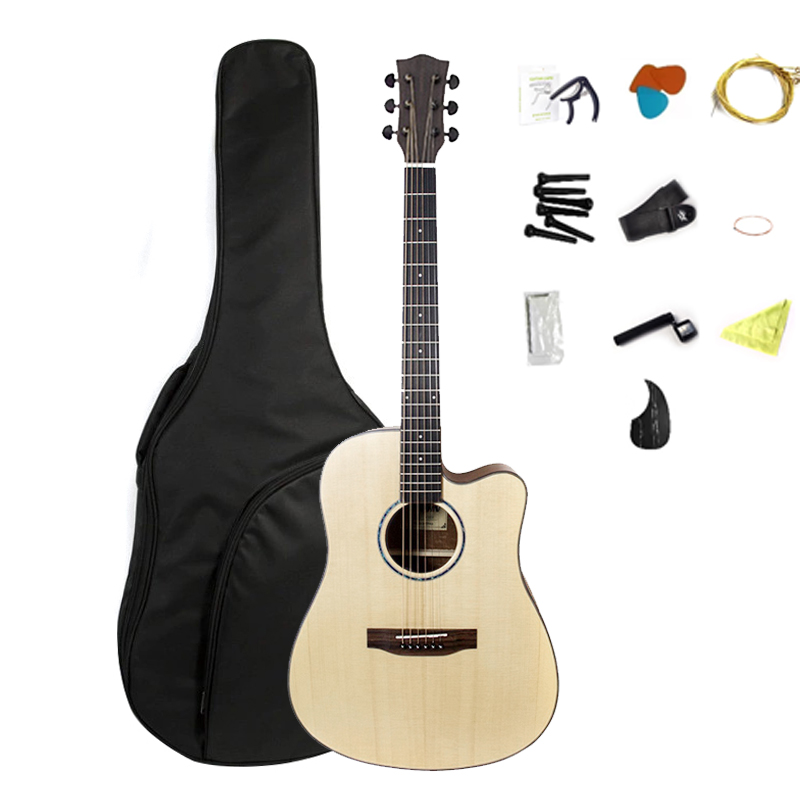

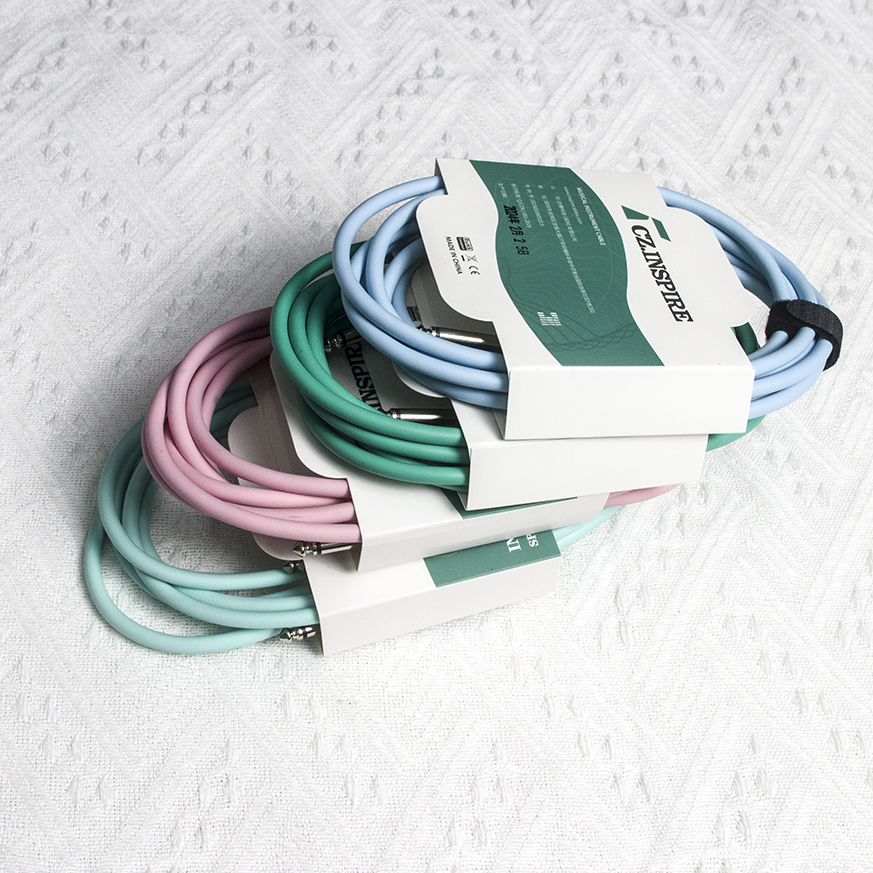
Engineering Precision in Custom OEM Electric Guitar String Production
A comprehensive examination of core geometry, alloy composition, tension physics, and corrosion mitigation in modern string manufacturing.
Hexagonal High-Carbon Core Mechanics
In modern high-performance electric guitar string manufacturing, the transition from traditional round wire cores to high-carbon steel hexagonal (hex) cores represents a pivotal evolution in tuning stability and mechanical coupling. The six sharp edges of a precision-drawn hex core bite directly into the wrap wire (typically Nickel-Plated Steel or Pure Nickel) during automated high-speed winding.
This mechanical lock prevents micro-slippage between core and wrap layers when subjected to heavy pitch bending, Floyd Rose tremolo action, or climate fluctuations. Our factory utilizes high-tensile Swedish carbon steel core wires calibrated to exact tensile yield tolerances, ensuring that intonation remains constant over extended performance cycles.
Electromagnetic Response & Alloy Selection
Electric guitar pickups operate via Faraday's Law of Induction, where vibrating ferromagnetic strings disturb the magnetic field created by pickup pole pieces. Consequently, the alloy selection for OEM electric guitar strings directly governs output voltage, harmonic richness, and frequency response.
Nickel-Plated Steel (8% Nickel wrap over high-carbon steel core) offers the ideal balance between magnetic permeability and tactile smoothness. For high-output modern metal applications, Stainless Steel wraps maximize magnetic flux disruption, resulting in heightened treble clarity and aggressive mid-range projection, whereas Pure Nickel wraps cater to vintage-voiced, warmer tonal profiles.
Key Technical Takeaway for OEM Procurement Managers
In global B2B string sourcing, 78% of retail returns and customer complaints trace back to two micro-defects: uneven core-to-wrap mass ratio causing erratic fretted intonation, and substandard ball-end twist anchoring leading to slippage at the bridge tailpiece. Partnering with a factory utilizing automated tension-feedback winding heads and automated end-lock twisting eliminates these failure points entirely.
OEM Alloy & Technical Formulation Matrix
Compare raw material characteristics to select the exact string spec for your brand's market positioning.
| Alloy Formulation | Wrap Material Composition | Core Type & Geometry | Magnetic Output | Corrosion Resistance | Target Genre / Market |
|---|---|---|---|---|---|
| NPS-8 Premium | 8% Nickel-Plated Carbon Steel Wire | Hex Core High-Tensile Steel | High (Balanced) | Standard (Vapor Pack) | All-Round, Rock, Pop, Blues |
| Vintage Pure Nickel | 100% Solid Pure Nickel Alloy Wire | Hex or Round Swedish Steel | Medium (Warm, Smooth) | Good (Natural Alloy) | Jazz, Classic Rock, Vintage Reissue |
| Stainless Steel 430 | Ferritic Stainless Alloy Wire | Hex Core Tempered Steel | Very High (Punchy) | Excellent (Uncoated) | Metal, Prog-Rock, Drop Tunings |
| Nano-Coated NPS | Micro-Polymer Coated NPS Wire | Hex Core Anti-Rust Treated | High (Sustained Brightness) | Superior (Salt-Spray Tested) | Tropical Climates, Heavy Gigging |
Future Procurement & Development Trends in Electric Guitar Strings
Strategic intelligence for brand owners and distributors planning product development and supply chain investments.
1. Sub-Micron Hydrophobic Nanocoatings
Historical polymer coatings were prone to flaking off under pick impact, deadening fundamental acoustic frequencies and damping high harmonics. The industry is moving toward sub-micron hydrophobic vapor-deposition technology.
By applying anti-oxidation nano-barriers at a molecular level prior to hermetic sealing, OEM factories can now offer string lifespans 3x to 5x longer without altering tactile finger-friction or compromising electromagnetic response.
2. Multi-Scale & Extended Gauge Customization
With the global boom in modern progressive metal, extended-range electric guitars (7-string, 8-string, and multi-scale fanned-fret instruments) have evolved from niche custom instruments into mainstream retail staples.
OEM string factories must support custom non-standard gauge pairings (e.g., .0095–.064 or progressive tension balance sets) with lengthened winding scale lengths to fit headless bridge hardware without unraveling.
3. Sustainable Hermetic Foil Packaging
Global environmental regulations and eco-conscious consumers are forcing a shift away from non-recyclable multi-layer plastics. Modern OEM string packaging emphasizes 100% recyclable aluminum-barrier foil pouches injected with inert nitrogen gas.
This zero-oxygen environment halts atmospheric oxidation during long maritime transport, guaranteeing 5+ years of shelf life for retail inventory while meeting EU environmental compliance directives.
Why Global Brands Partner with Huizhou NFGF Musical Instrument Co., Ltd.
Integrating state-of-the-art machinery, rigorous quality control, and complete OEM/ODM customization under one roof.
SGS-Verified 5,100 m² Production Plant
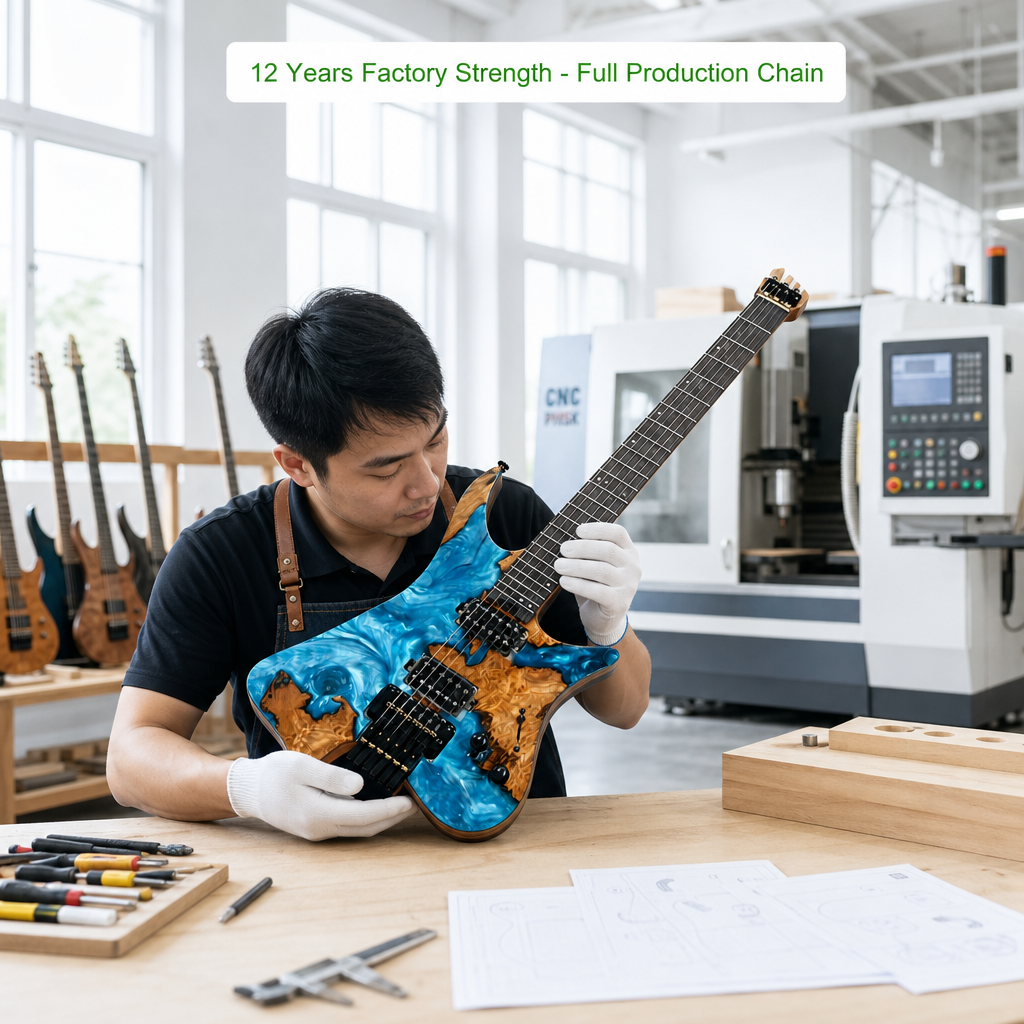
Established in 2014 in Qiuchang, Huiyang District, Huizhou—the heart of Guangdong's premier musical instrument industrial cluster—Huizhou NFGF Musical Instrument Co., Ltd. operates a modern 5,100 m² facility staffed by over 53 skilled specialists. Independently audited on-site by SGS Group, our facility maintains strict incoming material inspection, in-process CNC/sanding control, and finished goods testing.
Complete OEM & ODM Customization Ecosystem
From custom logo laser-engraving, custom gauge selection, and tailored alloy formulations to private-label packaging and retail-ready display boxes, NFGF provides an end-to-end service model. Backed by over 100 design patents and intellectual property copyrights, our R&D engineering team collaborates directly with client product managers to bring specialized instrument lines from concept to container shipment.
Automated Quality Assurance Protocols
Quality control at NFGF is embedded into every production stage. Raw steel wire undergoes laser-caliper diameter measurement to verify dimensional uniformity within ±0.002 mm. Winding machines feature dynamic tension feedback loops, ensuring zero gaps in wrap coils. Completed string batches undergo automated tensile break testing and salt-spray corrosion analysis before hermetic sealing.
Global Sourcing Flexibility & Low MOQs
Understanding the inventory constraints faced by growing brands and boutique distributors, NFGF offers flexible order structures. Standard catalog items and sample runs start from low minimum quantities (MOQ 1 piece for standard guitars/accessories), allowing brands to test market demand before committing to full container load (FCL) orders.
Frequently Asked Questions by OEM Sourcing Directors
Direct answers regarding manufacturing lead times, quality assurance, branding customization, and compliance.
What is the minimum order quantity (MOQ) for custom OEM electric guitar strings and instruments? +
For standard finished guitars, basses, and acoustic sets, our MOQ starts from as low as 1 piece for evaluation samples. For fully customized private-label string sets (with custom gauge combinations, branded foil pouches, and custom retail boxes), standard MOQs range from 500 to 1,000 sets depending on the level of packaging customization required.
Can NFGF put our brand logo on the strings, hardware, and packaging? +
Yes. We offer complete OEM branding options including silk-screen printing, laser engraving on headstocks or bridge components, custom printed string envelope paper, nitrogen-sealed foil pouches, and retail counter display boxes matching your exact brand design files.
Is your factory independently verified and compliant with international standards? +
Yes. Huizhou NFGF Musical Instrument Co., Ltd. has undergone comprehensive on-site facility audits conducted by SGS Group (latest verification completed November 2025). Our instruments and electronics carry CE and FCC listing compliance, ensuring smooth customs clearance for importers in Europe, North America, and Australia.
What quality control measures ensure string-to-string consistency across large batch orders? +
We implement a strict four-point QC protocol: 1) Incoming raw material verification via laser calipers for wire diameter and tensile strength testing; 2) In-process automated tension control during core-wrap winding; 3) Post-assembly playability and intonation sampling; 4) Pre-shipment visual and salt-spray anti-corrosion verification prior to hermetic sealing.
What is the average production lead time for bulk OEM production runs? +
Sample orders for existing catalog items typically dispatch within 3–7 business days. Custom OEM production runs generally require 20 to 35 calendar days following artwork confirmation and initial deposit, depending on order complexity and container scheduling.
Partner with a Leading OEM Instrument & String Factory
Request factory-direct price sheets, request custom sampling, or speak directly with our Senior Engineering Team regarding your upcoming production run.