Featured Flagship OEM/ODM Product Catalog
Direct from Huizhou's SGS-Verified Manufacturing Hub: High-Precision Stringed Instruments Built to International Standards

GALYDA GM Style SS Pickup Tremolo Bridge Guitar
View Product Details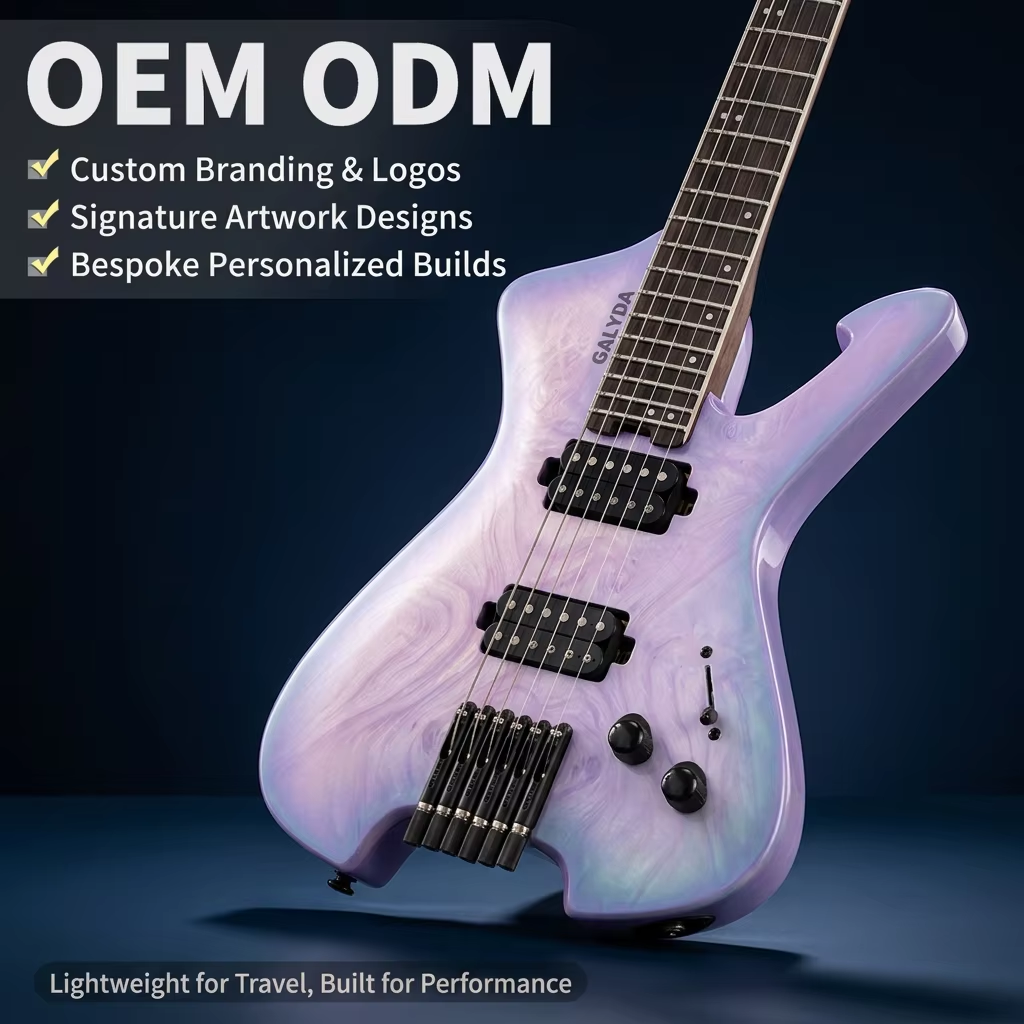
Custom Headless Electric Guitar with Artwork
View Product Details
Headless 5-String Fanned Fret J-Bass Guitar
View Product Details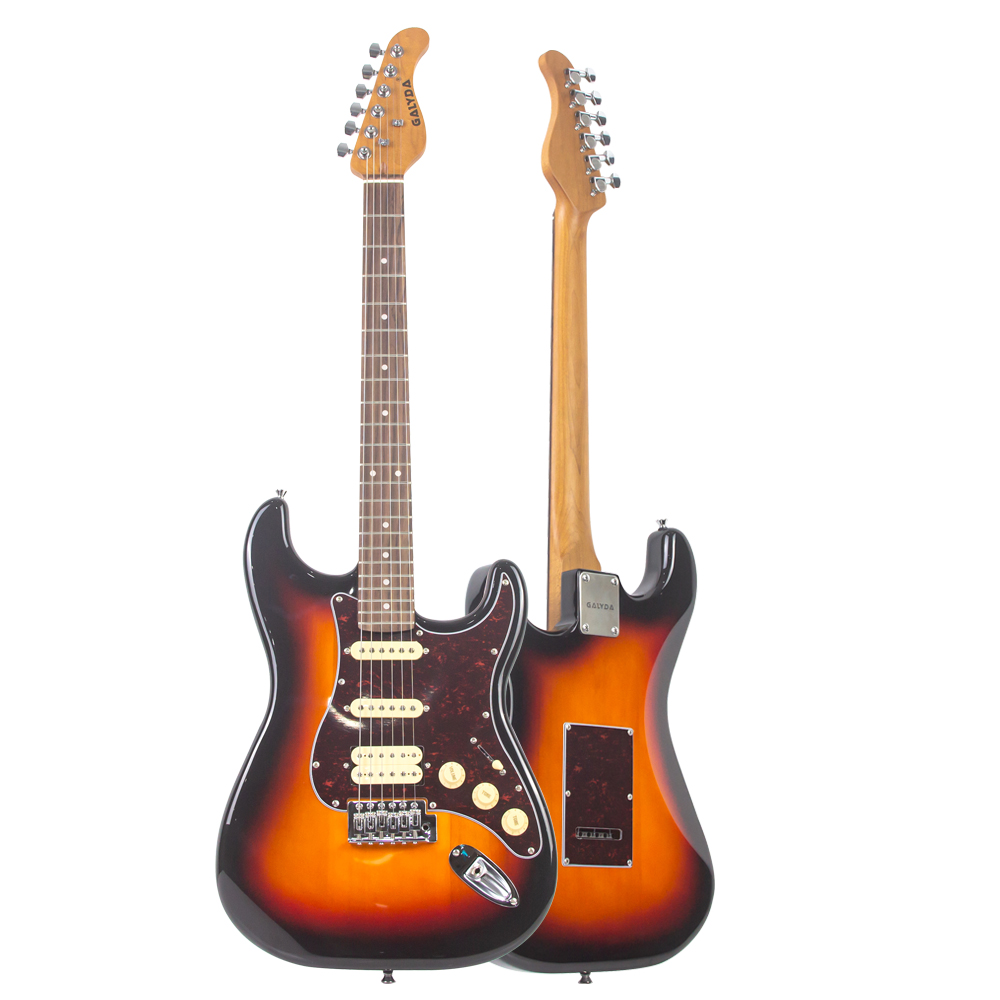
GALYDA 39-Inch ST Series Beginner Guitar Kit
View Product Details
LP Style High Gloss Flame Maple Top Guitar
View Product Details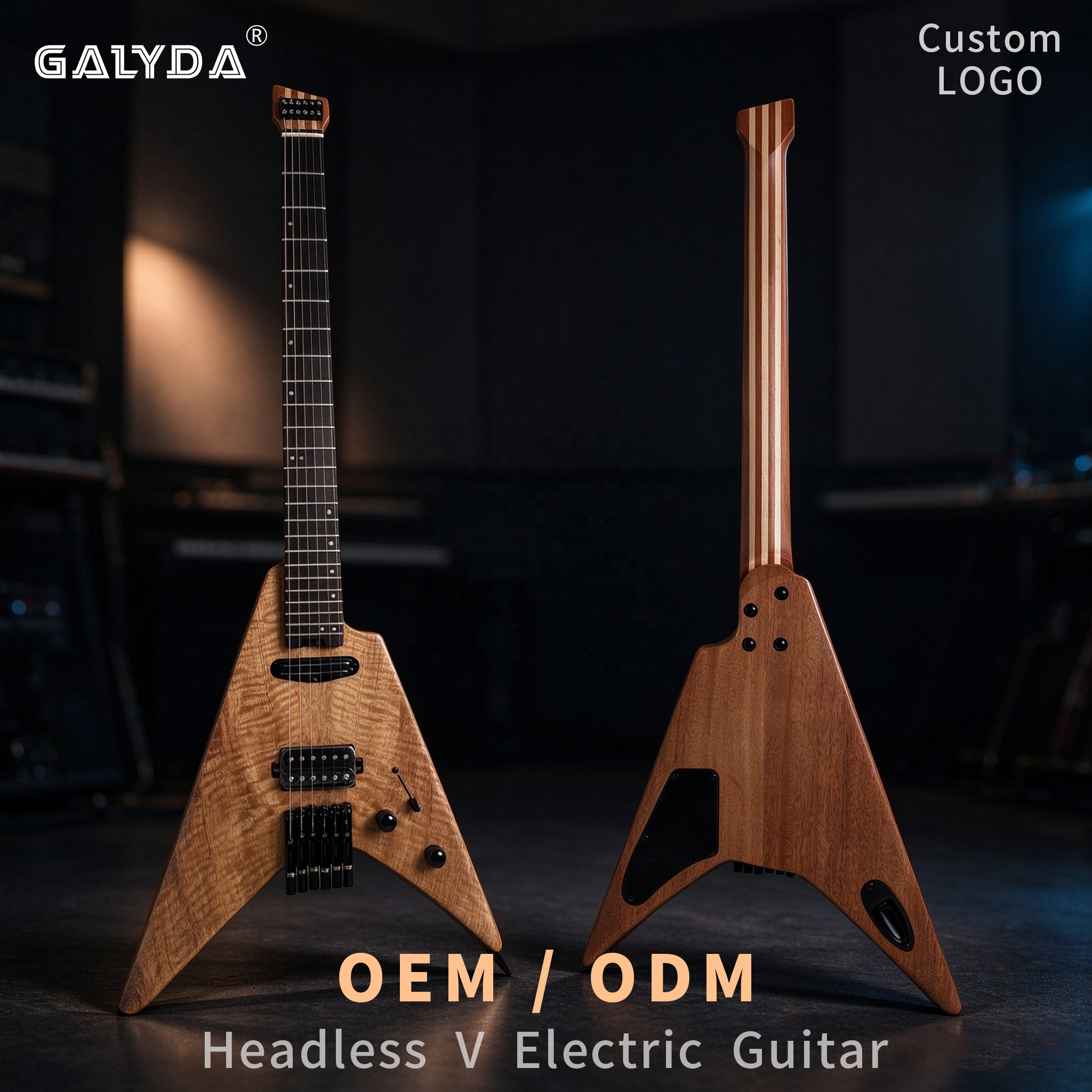
Headless V-Shape 6-String Electric Guitar
View Product Details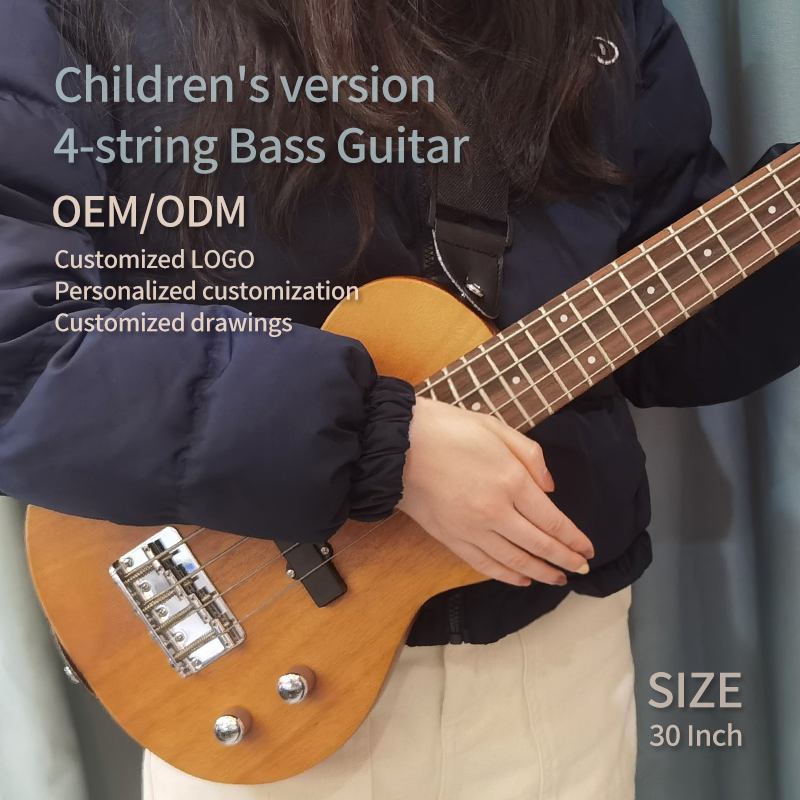
30-Inch Compact Four-String Electric Bass
View Product Details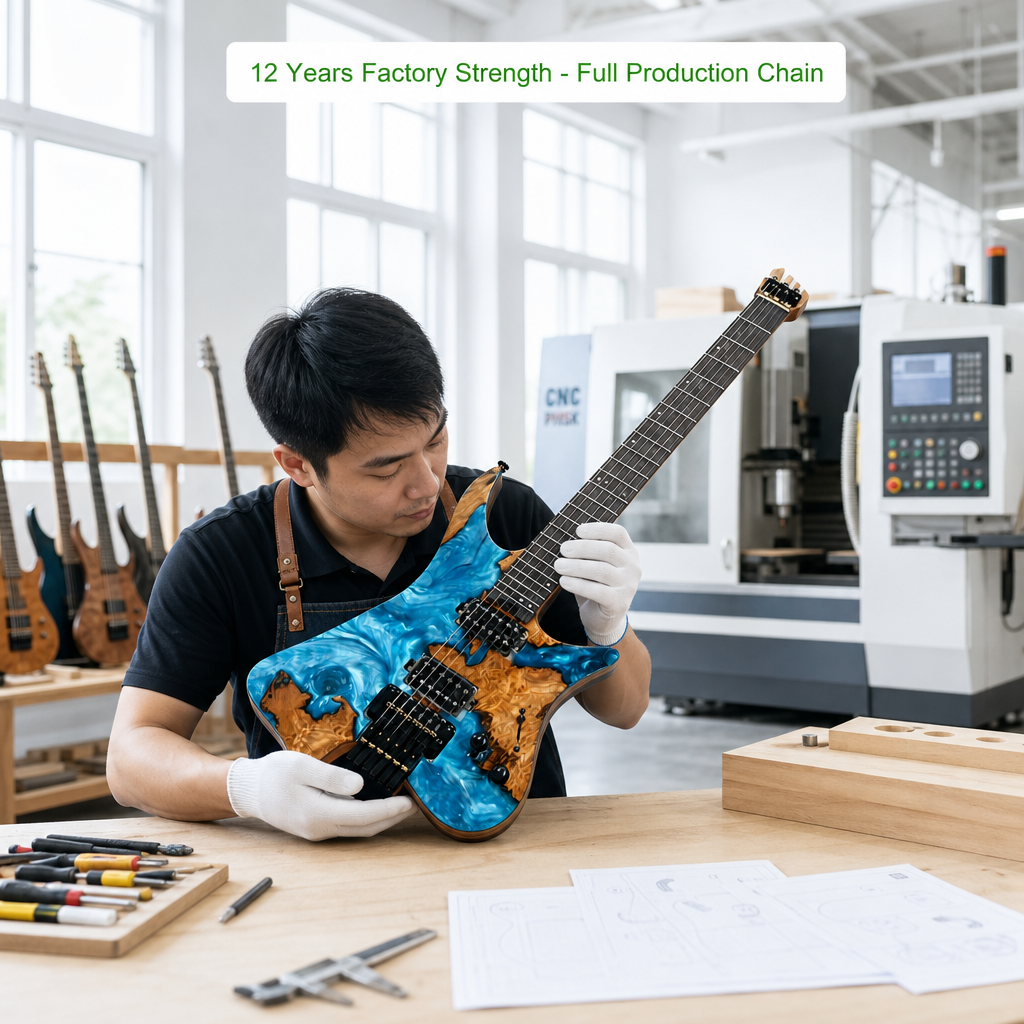
Bright Light Headboard Electric Guitar OEM
View Product DetailsB2B Executive Summary: Sourcing Solid Top Ukuleles From China
Understanding Acoustical Physics, Supply Chain Density, and Manufacturing Tolerances
In the global musical instrument industry, the shift toward Solid Top Ukuleles represents a fundamental evolution in consumer demand. Unlike entry-level laminated instruments, a solid top soundboard—crafted from a single, continuous piece of quartersawn tonewood—serves as the primary transducer of acoustic energy. When string vibrations transfer across the saddle and bridge, a solid soundboard vibrates dynamically across its entire surface area, generating complex harmonic overtones, superior volume projection, and a rich, resonant tone profile that matures over time.
China has established itself as the world's premier hub for stringed instrument manufacturing, with Guangdong Province—specifically the industrial clusters in Huizhou—leading the sector in technological modernization. Premier Chinese factories, such as Huizhou NFGF Musical Instrument Co., Ltd. (operating from a 5,100 m² SGS-verified facility), bridge the historical divide between hand-crafted luthier techniques and high-precision CNC automation. For global brand owners, wholesale distributors, and retail chain buyers, partnering with a top-tier Chinese solid top ukulele manufacturer offers unmatched cost efficiency, strict dimensional consistency, and customizable OEM/ODM frameworks.
5,100 m²
SGS Audited Facility
100+
Design Patents & IP
±0.05 mm
CNC Machining Tolerance
45-55%
Climate Control RH Room
Engineering Excellence: Anatomy of a Superior Solid Top Ukulele
Material Science, Bracing Geometry, and Precision Joinery Standardizing High-Volume Production
1. Kiln-Dried Quartersawn Tonewoods
Acoustic performance hinges on timber stability. Top manufacturers kiln-dry raw logs to a strict 8%–10% equilibrium moisture content (EMC). Quartersawn cuts ensure straight, vertical grain patterns, maximizing longitudinal stiffness while minimizing transverse expansion and cracking under varying humidity levels.
2. Precision Fan & Lattice Bracing
The internal soundboard bracing architecture dictates modal vibration. Advanced factories employ CNC-carved parabolic fan bracing or ultralight modified lattice patterns. This delivers optimal structural support against string tension without dampening high-frequency harmonic response.
3. Dovetail & Spanish Heel Neck Joinery
Energy loss at the neck-to-body junction degrades sustain. Utilizing CNC-machined interlocking dovetail joints or integrated Spanish heels guarantees a zero-gap mechanical fit, preserving low-frequency fundamental notes and preventing neck pitch movement over time.
Comprehensive Tonewood Specification Matrix for OEM Procurement
| Tonewood Variety | Density Range (g/cm³) | Acoustic Character | Target Market Tier | Recommended Body Pairing |
|---|---|---|---|---|
| Solid Hawaiian Acacia / Koa | 0.62 - 0.70 | Bright, punchy mid-range, blooming harmonics, high clarity | Premium / Collector / Pro Custom | Solid Koa Back & Sides |
| Solid Sitka Spruce | 0.43 - 0.48 | Maximum dynamic range, loud projection, crisp response | Intermediate to Professional | Rosewood or Mahogany Back & Sides |
| Solid African Mahogany | 0.50 - 0.55 | Warm, fundamental tones, woody resonance, balanced sustain | Mass Market High-Volume Bestseller | Mahogany Back & Sides |
| Solid Western Red Cedar | 0.35 - 0.40 | Dark, overtone-rich, highly responsive to light touch | Classical / Fingerstyle Specialists | Rosewood or Walnut Back & Sides |
Ukulele Industry Trends & Future Sourcing Trajectory (2025–2030)
Market Drivers, Tech Innovations, and Environmental Regulatory Mandates Shaping Procurement Strategy
1. Integrated Active Electronics & Smart Transducers
Global consumer demand is rapidly shifting toward electro-acoustic solid top ukuleles equipped with undersaddle piezo transducers, magnetic soundhole pickups, or built-in preamp systems with digital reverb/delay effects. Modern manufacturers integrate low-profile, light-weight side-mounted EQ units that maintain acoustic structural integrity while accommodating direct amplifier connection for live performance.
2. CITES & FSC Eco-Compliance Certification
International customs regulations are increasingly strict regarding restricted timber species. Forward-thinking Chinese manufacturers utilize 100% CITES-compliant tonewoods, offering eco-certified alternatives such as carbonized maple, thermally treated spruce, and sustainably harvested plantation mahogany. This eliminates supply chain bottlenecks and customs impound risks for European and North American buyers.
3. Hybrid CNC-Luthier Automated Workflow
To eliminate dead spots and dead notes across the fretboard, top manufacturers combine 5-axis CNC neck carving with micro-level hand sanding. Fret wire levelling is verified using laser sensors, ensuring action height at the 12th fret is maintained within a strict 2.0mm to 2.5mm window for optimal playability out of the box.
4. Low MOQ & Agility in OEM Custom Branding
Traditional factory models requiring 500-unit minimums are giving way to agile, low-MOQ sourcing models. Leading Chinese manufacturers now support boutique brands, music schools, and Amazon FBA sellers with OEM runs starting at lower threshold quantities, offering laser-etched headstock logos, custom body binding, and tailored gig bag packaging.
Why Partner with Huizhou NFGF Musical Instrument Co., Ltd.?
Vertical Integration, Rigorous Quality Control, and Unmatched Industry Experience Since 2014
SGS Audited & On-Site Verified
Located in Qiuchang, Huiyang District, Huizhou—Guangdong's world-famous instrument manufacturing center—our facility underwent full on-site SGS verification (Nov 2025). We guarantee complete transparency across material tracking, worker safety, and finished goods testing.
5,100 m² Integrated Manufacturing Hub
Our workshop brings timber conditioning, CNC milling, automated binding, multi-stage spray painting, buffing, final assembly, and acoustic testing under one roof. By removing third-party subcontractors, we maintain tight quality controls and preserve your margins.
In-House R&D & 100+ Patents
With 53 skilled craftsmen and a dedicated R&D engineering team holding over 100 design patents, NFGF serves not only as an OEM supplier but as a collaborative product co-developer for top global musical instrument brands.
NFGF Strict 8-Stage Quality Assurance Framework
Kiln dried to 8-10% moisture content
±0.05mm tolerance precision milling
Zero-gap neck pocket insertion
Multi-grade manual surface prep
High-gloss polyurethane or satin coating
Mirror-like gloss optical clarity
Fret crowning & intonation adjustment
Export carton drop and humidity check
Frequently Asked Procurement Questions (FAQ)
Essential Operational Insights for Wholesalers, Importers, and Retail Brand Buyers
1. What is the fundamental sound difference between a Solid Top and Full Laminated Ukulele? +
A solid top soundboard consists of a continuous slab of tonewood with uninterrupted grain lines. This allows the wood to vibrate freely in response to string energy, producing greater volume, dynamic range, warmth, and harmonic complexity. In contrast, laminated wood consists of thin veneers glued together with cross-grained adhesives, which stiffen the top, dampen acoustic vibration, and compress dynamic range. Solid tops also improve with age as the wood cures through playing ("opening up"), whereas laminated tops remain acoustically static.
2. What is the Minimum Order Quantity (MOQ) for custom OEM solid top ukulele orders? +
NFGF offers highly flexible MOQ tiers depending on customization depth. For standard in-stock solid top models with minor logo laser-engraving or headstock silk-screening, our MOQ starts at just 2 to 10 pieces for evaluation. For full custom ODM developments—involving custom body shapes, proprietary bracing configurations, specialized finish colors, and custom retail packaging—MOQ typically ranges between 50 and 100 units per model color run.
3. How does NFGF prevent solid tops from cracking during international ocean freight transit? +
Wood instability during transit is caused by sudden shifts in relative humidity (RH). NFGF mitigates this risk by kiln-drying all raw timber in automated chambers until equilibrium moisture content reaches 8%–10%. Furthermore, assembly and finishing take place in climate-controlled rooms maintained at 45%–55% RH. Final export packaging utilizes sealed moisture-barrier polybags along with silica gel desiccant packs inside double-walled 5-ply corrugated cartons, protecting instruments across tropical and arid shipping routes.
4. Which solid top ukulele sizes are available for OEM production? +
We manufacture all four standard ukulele scale lengths: Soprano (21-inch), Concert (23-inch), Tenor (26-inch), and Baritone (30-inch). Additionally, we offer specialized thin-body travel ukuleles, cutaway acoustic-electric models with side-mounted preamp systems, and 5-string or 8-string tenor configurations.
5. Can we supply our own brand designs, logos, and custom color references? +
Yes. We accept Vector artwork (AI, CAD, PDF) for headstock branding, mother-of-pearl or abalone fingerboard inlays, custom soundhole rosette patterns, and custom inner body labels. Color matching is performed using standardized Pantone codes or physical color swatches, verified under 5000K daylight inspection lamps before mass production.
6. Are CITES certificates provided for export of rosewood or restricted tonewoods? +
Yes. For instruments containing Dalbergia (Rosewood) or other regulated timber species, NFGF manages all required export inspection permits and CITES documentation. Alternatively, to simplify global logistics, we offer CITES-free alternatives such as high-density tech-wood, carbonized laurel, or thermally modified maple fretboards.
7. What testing equipment does NFGF use during the QC inspection process? +
Our quality control laboratory utilizes electronic timber moisture meters, digital dial indicators for action height and neck relief measurement, laser fret-alignment gauges, electronic tuners for intonation verification, and drop-test rigs to ensure export packaging integrity under transport shock.
8. What is the typical lead time for sample production and mass manufacturing? +
Standard OEM sample development takes approximately 10 to 15 days. Upon sample approval and deposit confirmation, full-scale production lead times range from 25 to 35 days, depending on order volume and finish complexity (e.g., high-gloss hand-rubbed bursts require longer curing times than satin finishes).
9. Does NFGF offer full instrument accessories and bundle solutions? +
Yes. As a full-service manufacturing hub, we supply complete retail-ready starter bundles including custom padded gig bags (5mm to 20mm padding), digital clip-on tuners, nylon/fluorocarbon replacement string sets, woven guitar straps, cleaning cloths, branded picks, and colorful retail display boxes.
10. How can global buyers initiate an inquiry or request a factory site audit? +
You can directly contact our international trade engineering team by clicking the inquiry trigger below. We provide instant technical consultations, product catalog pricing, sample shipping estimates, and schedule live video factory tours or in-person visits to our Huizhou facility.
Partner with China's Premier Solid Top Ukulele Factory
Elevate your musical instrument line with SGS-verified manufacturing, precision CNC craftsmanship, and competitive direct factory pricing. Talk with our engineering specialists today.
Send an Inquiry