Featured Wholesale Instruments & Hardware Solutions
Inspected on-site by SGS auditors. Engineered for global brands, music retail chains, and high-volume distributors demanding strict intonation and structural compliance.
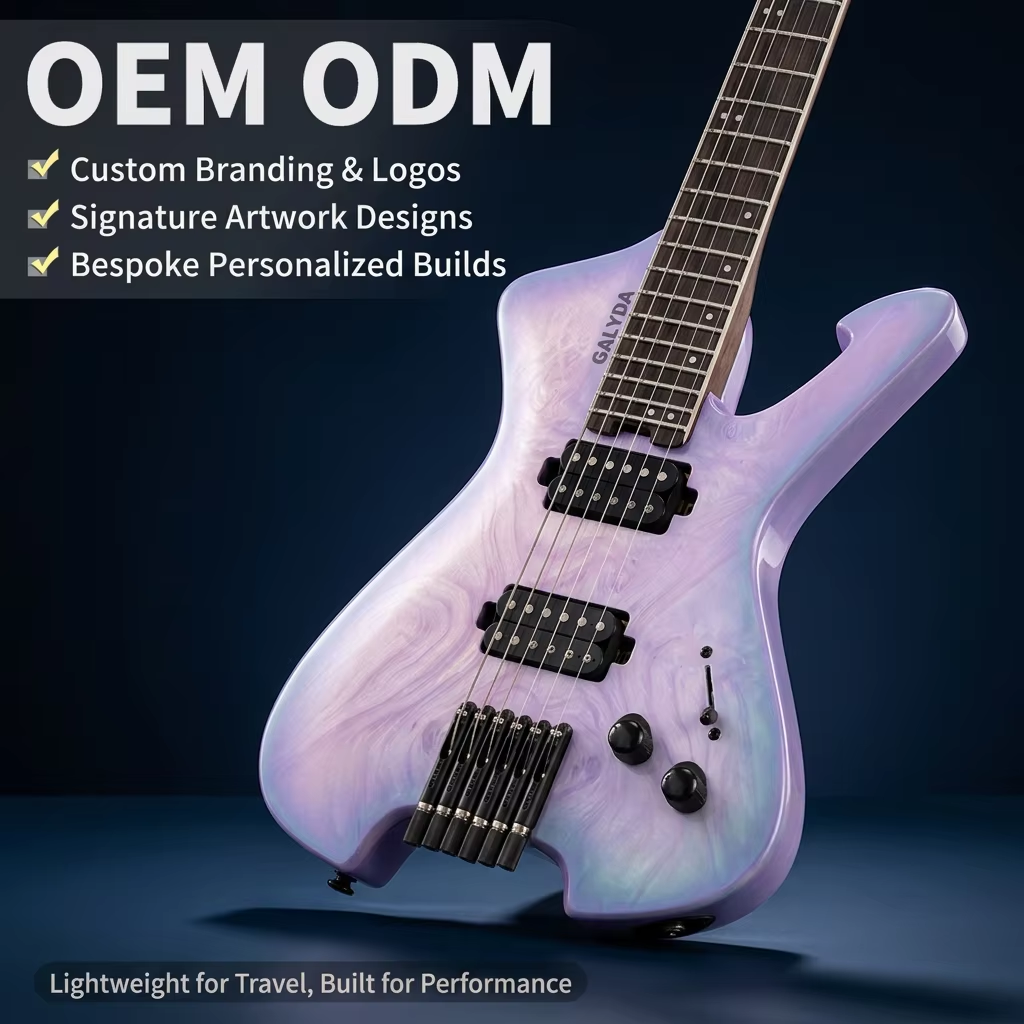
Factory Custom Headless Electric Guitar Custom Artwork Logo Humbucker Pickups Hardtail Tremolo Bridge
Ergonomic headless design, lightweight body, high-output custom humbucker set.
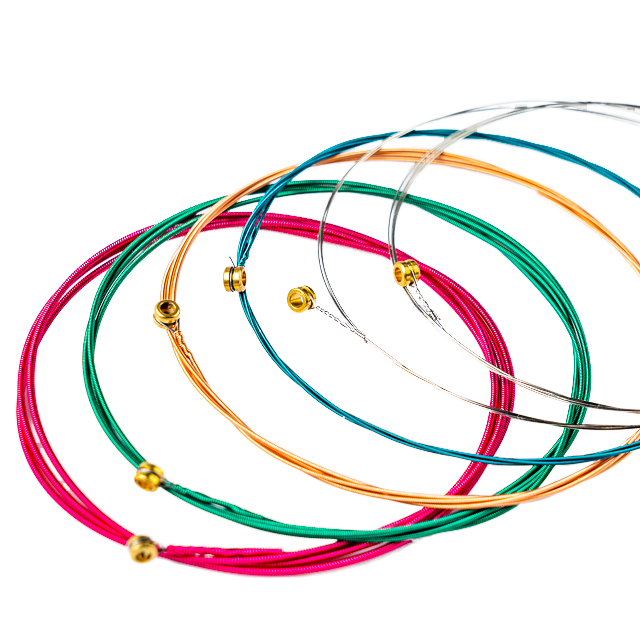
Set of Colorful 6-String Electric Guitar Acoustic Guitar Strings Steel Tone 1048 Series
Anti-oxidation coated carbon steel strings with color-coded bead ends for quick retail identification.
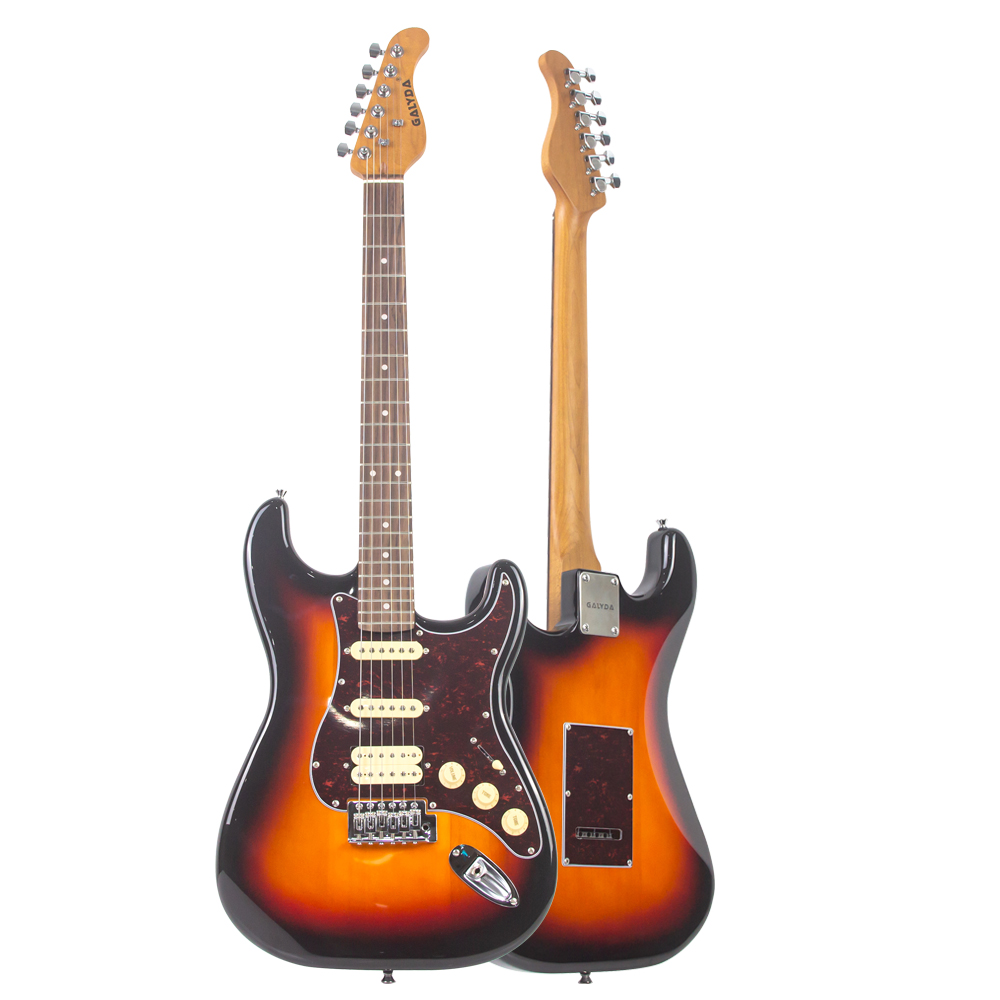
GALYDA 39-Inch Beginner Electric Guitar Set ST Series Poplar Body Carbonized Maple Neck Rosewood Fretboard S-S-H Pickups Glossy
Thermally carbonized maple neck for enhanced climate stability and rich tonal sustain.
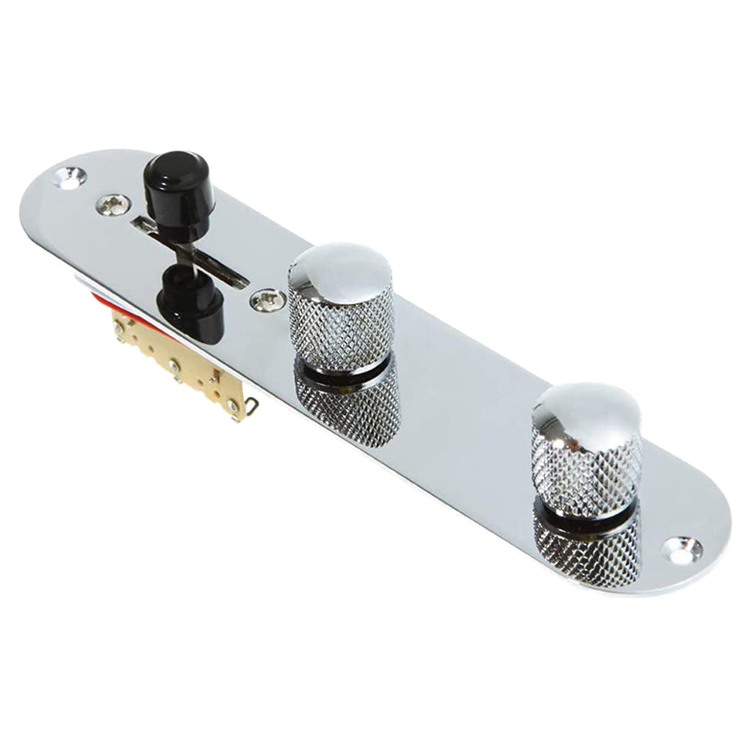
Fully Loaded Pre-Wired 3-Way Guitar Control Plate with Wiring Harness for /Telecaster Chrome/Black/Gold Strings
Drop-in assembly pre-wired harness with 250K potentiometers and heavy-duty 3-way toggle switch.
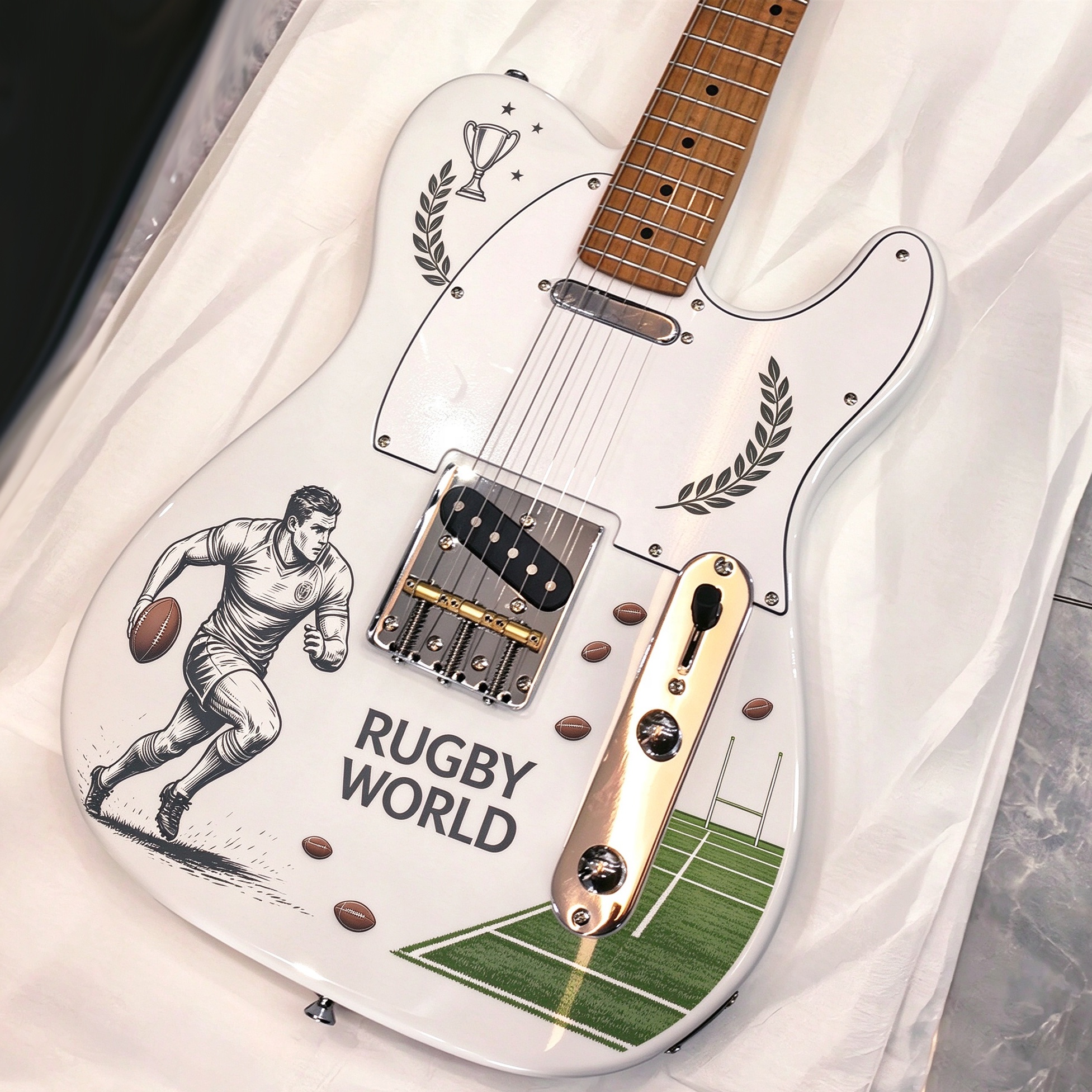
Custom TL Electric Guitar Sky Blue White Stripes Roasted Maple Neck Single Coil Pickup OEM Factory Direct
Vintage-voiced single-coil pickup configuration with premium roasted maple neck stability.
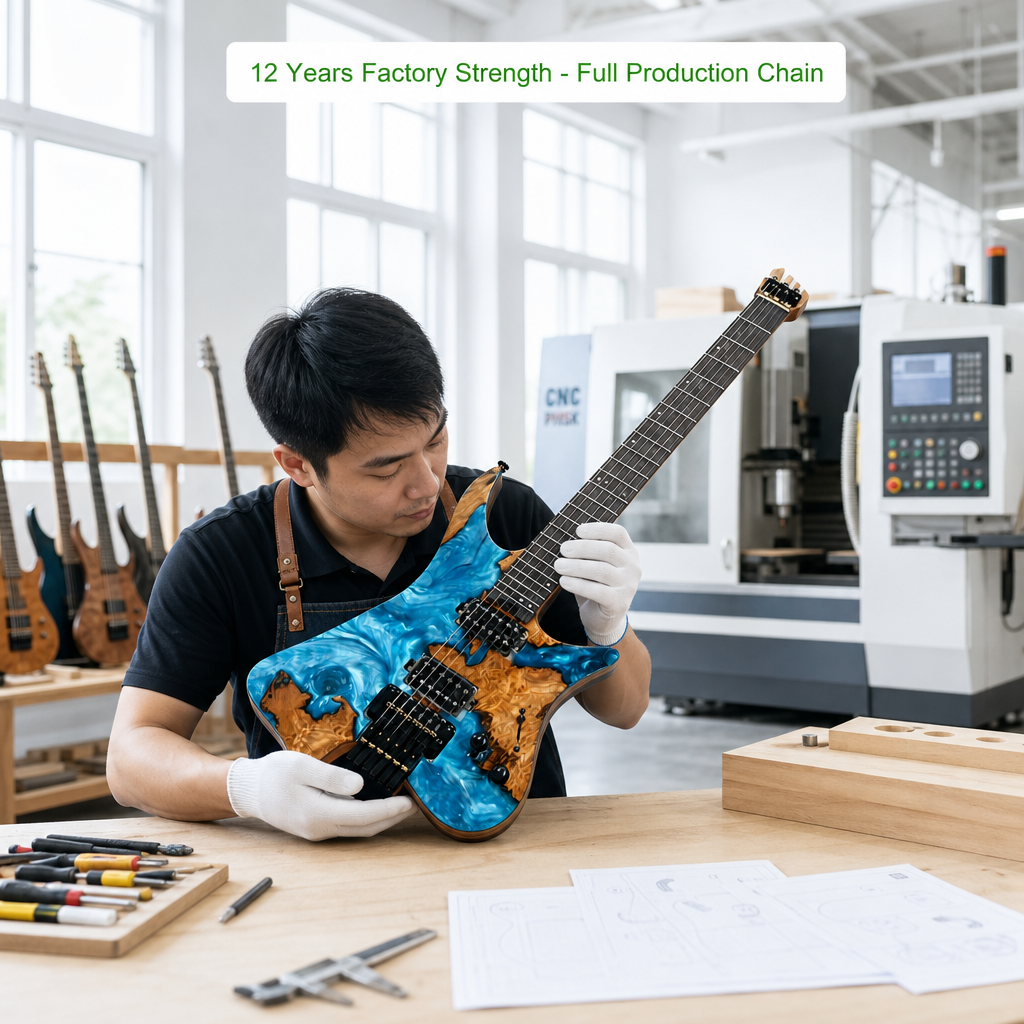
Headboard Electric Guitar With Bright Light High-quality Electric Guitar Factory OEM ODM Small Double-fret Bridge
Innovative stage-ready lighting system integrated into body binding for visual retail appeal.
AG Headless Electric Guitar With Maple Neck Acrylic Body and Small Double-wire Tremolo Bridge
Crystal-clear acoustic transparency with custom acrylic body construction and micro-tuners.
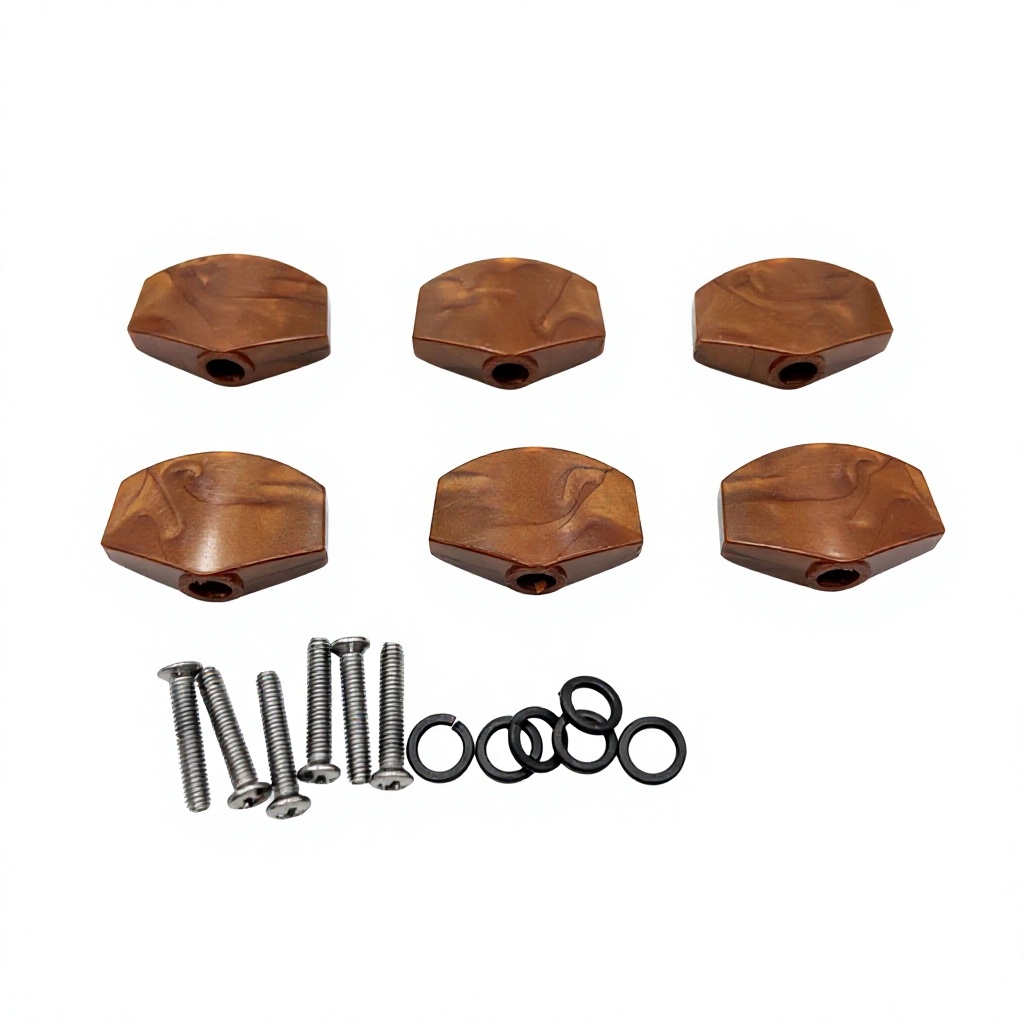
Plastic Guitar Tuning Knob Caps 6 Pieces Set for Acoustic Classical Guitar Handle Replacement
High-grade ABS replacement tuning buttons engineered for classical and acoustic machine heads.
Understanding China's Acoustic Guitar Manufacturing Ecosystem
China accounts for over 70% of global musical instrument manufacturing output. Navigating this ecosystem requires deep domain knowledge regarding regional industrial clusters, supply chain integration, and quality assurance protocols.
For global musical instrument brand owners, retail chains, and wholesale importers, evaluating China's best acoustic guitar factories and suppliers extends far beyond comparing FOB pricing. The acoustic guitar is a delicate balance of physics, woodworking craftsmanship, chemical engineering, and environmental acclimation. A single misstep in tonewood seasoning or soundboard bracing geometry can compromise structural integrity, leading to neck warpage, top-bulging, or bridge detachment when shipped across varying global climate zones.
Guangdong Province—specifically the Huiyang District in Huizhou—stands at the epicenter of high-precision stringed instrument manufacturing. Facilities operating within this cluster benefit from immediate proximity to specialized hardware foundries, lacquer formulation labs, and timber drying facilities. Huizhou NFGF Musical Instrument Co., Ltd. leverages these regional synergies to provide vertical OEM and ODM integration—transforming raw kiln-dried spruce, mahogany, and rosewood into market-ready instruments engineered to exact acoustic specifications.
Why Leading Global Brands Partner with Huizhou NFGF
Operational transparency, verified manufacturing infrastructure, and rigorous Quality Control (QC) protocols form the cornerstone of our OEM/ODM partnerships.
SGS On-Site Verified Facility
Huizhou NFGF Musical Instrument Co., Ltd. undergoes comprehensive on-site facility audits by SGS Group. Our operational footprint spans material trace-ability, supplier ethical compliance, automated production lines, and pre-shipment quality testing.
Automated CNC Wood Shaping
Equipped with multi-axis CNC routers and automated wide-belt sanding machines, we achieve body contouring tolerances within ±0.05mm. This eliminates human error in neck joint pocket milling and bridge positioning.
Patented Structural Bracing
Our internal R&D team holds over 100 design patents. We specialized in optimized parabolic X-bracing and scalloped soundboard architecture, delivering superior projection, bass response, and top vibration efficiency.
Manufacturing Quality Benchmarks: Standard OEM vs. NFGF OEM Protocol
| Technical Metric | Generic Wholesale Factory | NFGF Executive OEM Protocol | Buyer Benefit |
|---|---|---|---|
| Wood Moisture Content (EMC) | 10% – 14% (Air-dried ambient) | 6% – 8% (Computerized Kiln-dried) | Prevents body cracking & neck warpage in dry climates. |
| Neck Joint Precision | Manual mortise-and-tenon fitment | CNC Dovetail Jointing (±0.02mm fit) | Maximizes acoustic energy transfer & long-term neck stability. |
| Finish Application | Thick Nitrocellulose/Polyester coats | Ultra-thin UV-Cured Eco Polyurethane | Enhances tonewood resonance while providing scratch resistance. |
| Fret Dressing & Setup | Basic manual file levelling | Plek-Style Precision Dressing & Crown | Eliminates string fret-buzz; delivers low-action playability out of box. |
| Acoustic / QC Testing | Visual inspection only | 100% Electronic Frequency & Intonation Test | Guarantees exact pitch accuracy across all 12th fret octaves. |
Future Sourcing Trends in the Acoustic Guitar Supply Chain
Emerging market forces, environmental regulations, and shifting consumer demographics are reshaping how international buyers select Chinese manufacturing partners.
1. Thermalization & Torrefaction (Baked Wood Technology)
Torrefaction accelerates the artificial aging of tonewood soundboards by baking wood in an oxygen-deprived kiln at 160°C–200°C. This process breaks down hemicellulose, rendering the wood moisture-impermeable and imparting the acoustic response of a 50-year-old vintage instrument. B2B buyers are increasingly prioritizing suppliers capable of executing in-house torrefaction to meet demand for high-tier acoustic lines.
2. Sustainable Tonewood Compliance & CITES Mitigation
With tightening CITES restrictions on traditional Dalbergia (Rosewood) and endangered mahogany species, leading factories are deploying eco-friendly alternative tonewoods. Carbonized Maple, Roasted Jatoba, Engineered Ebony, and FSC-certified Sitka Spruce are becoming industry standards. Suppliers with transparent wood provenance and Lacey Act compliance paperwork are capturing major market share.
3. Smart Acoustics & Embedded DSP Transducers
Modern players expect acoustic guitars to perform seamlessly in digital environments. Future-proof procurement strategies favor acoustic models equipped with vibration-based actuators (TransAcoustic pickups) that project reverb, delay, and chorus directly from the guitar body without external amplifiers, alongside USB-C digital recording outputs.
4. Agile Supply Chains & Hybrid Low-MOQ Sampling
The traditional requirement of 500-unit minimum order quantities per SKU is giving way to agile, low-MOQ procurement strategies. Retailers and boutique brands now demand flexible production runs—starting from as low as 1 to 50 pieces for market testing—supported by rapid 3D prototyping and CAD customization before mass rollouts.
Engineering Innovations Shaping Next-Generation Acoustic Guitars
How physical design enhancements, ergonomics, and hybrid materials are elevating instrument playability and longevity.
Ergonomic Body Sculpting & Armrest Bevels
Traditional Dreadnought and Jumbo acoustic body shapes often cause shoulder fatigue during extended playing sessions. Modern factory production lines now integrate CNC-milled armrest bevels and cutaway scoops directly into the upper bout binding.
This structural sculpting requires precise wood bending and specialized binding jigs, offering high visual value and ergonomic comfort that justifies higher retail margin points.
Carbon Fiber Composite Hybrid Bracing
By pairing traditional Engelmann spruce soundboards with ultra-light carbon-fiber brace caps, manufacturers achieve a 20% reduction in soundboard mass while increasing structural tensile strength. The result is unprecedented acoustic velocity, immediate note attack, and total immunity to belly-bulging under heavy string tensions.
Key Technical Specifications
NFGF OEM Acoustic Platform Benchmarks
- Body Styles: Dreadnought (41"), Grand Auditorium (40"), Orchestral Model (36"/38"), Parlor (34").
- Top Options: Solid AAA Sitka Spruce, Torrefied Spruce, Mahogany, Acacia.
- Back & Sides: Mahogany, Rosewood, Flame Maple, Sapele, Carbon Fiber Composites.
- Nut Width: 43mm (Standard), 45mm (Fingerstyle), 48mm (Hybrid Nylon).
- Binding: ABS, Wooden Purfling, Pearloid, Flame Maple bevel.
- Truss Rod: 2-Way Dual Action Steel Rod (Headstock adjustable).
Frequently Asked Questions: Sourcing Acoustic Guitars from China
Clear, authoritative answers addressing critical procurement, compliance, quality control, and OEM logistical inquiries.
What is the minimum order quantity (MOQ) for custom OEM/ODM acoustic guitars?
At Huizhou NFGF Musical Instrument Co., Ltd., our flexible manufacturing setup allows for sample-level testing starting from 1 piece on selected stock electric and acoustic models. For custom-branded production runs (incorporating custom headstock logos, unique tonewood specs, or custom laser engraving), standard MOQs range from 20 to 50 pieces depending on the complexity of customization. Bulk container shipments (20GP/40HQ) offer optimal freight-per-unit cost efficiency.
How do Chinese guitar suppliers protect acoustic instruments from cracking during sea freight transit?
Environmental stability during ocean transportation is paramount. We implement a multi-layered protection protocol: First, all tonewoods are kiln-dried to a strict 6%–8% Equilibrium Moisture Content. Second, finished instruments are stored in climate-controlled conditioning rooms for 72 hours prior to packing. Third, each guitar is packed inside an impermeable anti-humidity polybag containing silica gel desiccants before placement into 5-ply heavy-duty corrugated export cartons.
Can NFGF provide custom logo branding, headstock shapes, and tailored retail packaging?
Yes. We offer complete OEM and ODM customization services. Logo application techniques include mother-of-pearl/pearloid headstock inlay, metallic water-decal transfer, silk-screen printing, and high-precision laser engraving. Additionally, we provide custom retail packaging—including full-color outer boxes, barcode labeling, branded padded gig bags, user manuals, and starter accessory kits tailored to your brand identity.
What third-party certifications and compliance standards does your factory maintain?
Our production facility has been assessed on-site by SGS Group (latest verification completed November 2025). Electronic components such as onboard active pickups, EQ preamps, and effects pedals carry CE and FCC certifications. Furthermore, all timber utilized in our production process complies with international forestry regulations, including the U.S. Lacey Act and EU Timber Regulation (EUTR).
What is the typical lead time for sample development and bulk production runs?
Sample production lead times for custom-branded instruments typically range between 15 to 25 days depending on the spec level and finish type. Full container bulk production orders are completed within 30 to 45 business days upon sample approval and deposit confirmation. Accelerated production scheduling is available for repeat OEM partners.
How does your Quality Assurance (QA) process handle defective units or transit damage?
Every instrument undergoes an 8-stage quality inspection pipeline—covering raw wood grading, CNC tolerance verification, lacquer thickness testing, fret dressing, electronics testing, and playability action setup. In the rare event of manufacturing defects or transit damage reported upon container arrival, our standard warranty policy provides immediate unit replacement credit or spare part replacement in your subsequent shipment.
Partner with China’s Leading OEM Acoustic Guitar Manufacturer
Elevate your instrument portfolio with factory-direct pricing, SGS-verified quality controls, and low MOQ flexibility. Contact our engineering team today for instant quotes and sample evaluation packages.