Featured OEM/ODM Electric Basses, Cables & String Instruments
Factory-direct instruments and acoustic assemblies crafted in our 5,100 m² Huizhou manufacturing plant. Each SKU represents our turnkey engineering capabilities—from multi-scale fanned frets and tonewood jointing to precision string-bed calibrations.

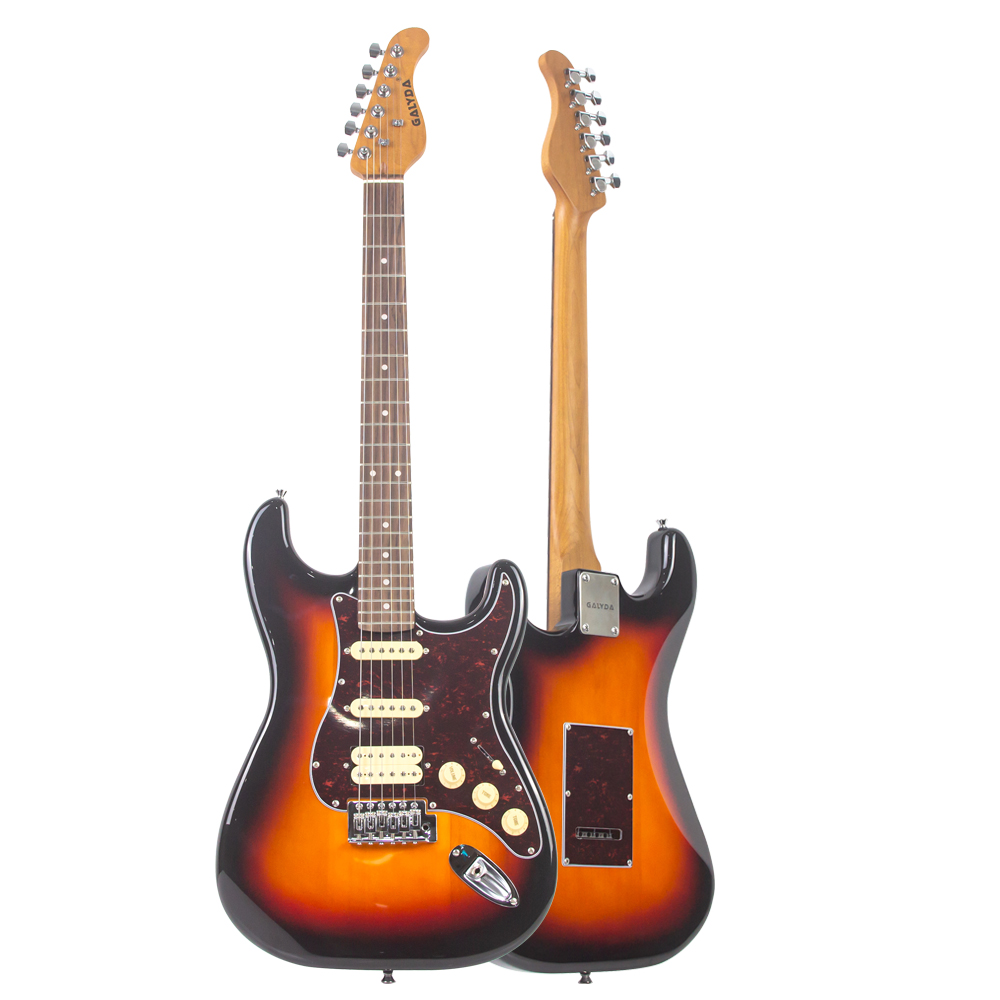
SGS Audited Facility
Year Established
Patents & CE Marks
Global B2B Rating
1. The Physics of Bass Guitar Strings: Core Geometry & Alloy Thermodynamics
In modern acoustic and electric bass production, the performance of the string system directly dictates the fundamental harmonic overtone series, attack transients, and intonation stability across extended neck scales. As a CE-certified, SGS-audited stringed instrument factory based in Huizhou, Guangdong, Huizhou NFGF Musical Instrument Co., Ltd. approaches bass string manufacturing as a strict discipline of metallurgy and applied mechanics. The mechanical tension required to tune standard 34-inch and 35-inch scale bass guitars (or 37-inch multi-scale low B arrangements) places immense compressive loads on neck truss structures—frequently exceeding 160 to 220 pounds of combined lateral tension.
The core wire serves as the structural foundation of the bass string. NFGF employs precision-drawn Swedish and German high-carbon steel hexagonal cores (C1065 / C1070 carbon compositions) rather than traditional round cores for all export-grade OEM baselines. While round cores offer a slightly softer tactile feel, the precision 6-point hexagonal cross-section anchors the outer wrap wire mechanically along its longitudinal edges. This interlock prevents internal slippage, dead spots, and core-wrap separation during dynamic slap, pop, and aggressive plectrum play. Hex cores deliver instantaneous transient attacks, crisper high-frequency resonance, and mathematically consistent tension balancing along the entire fretboard.
Stringed instrument accessories entering the European Union and North American markets are subject to stringent consumer health regulations. NFGF bass strings comply with EU Directive 2011/65/EU (RoHS) and REACH Regulation (EC No 1907/2006). All raw wire alloys are spectroscopically analyzed to guarantee total absence of prohibited lead, mercury, hexavalent chromium, and restricted phthalates, preventing contact dermatitis during prolonged tactile engagement.
2. Wrap Alloy Metallurgy: Matching Bass Tones to Market Demands
Sourcing directors and brand owners must align string alloy selections with the acoustic profile of their target instruments. Whether pairing strings with high-output active neodymium pickups or vintage passive split-coils, alloy conductivity and magnetic permeability represent decisive acoustic variables:
Nickel-Plated Steel (NPS): The undisputed benchmark for contemporary commercial versatility. By encasing an 8% electro-plated high-purity nickel layer over a magnetically active steel core, NPS delivers an optimized sonic balance—punchy mid-range resonance, bright high-end articulation, and smooth tactile lubricity that minimizes player fret wear on medium-jumbo nickel-silver frets.
Stainless Steel (AISI 302/430 Ferritic & Austenitic Blends): Formulated for maximum output, aggressive treble bite, and exceptional anti-corrosive resistance. Stainless wrap wire yields the highest magnetic pull against pole pieces, maximizing sonic punch in hard rock, metal, and complex slap-funk styles while defying sweat and humidity in coastal performance environments.
Pure Nickel Wrap: Engineered for vintage warmth, classic rock, and Motown soul setups. Pure nickel wraps dampen harsh 5kHz harmonic spikes, yielding a rich, round, fundamental-forward acoustic envelope preferred on P-bass and hollow-body electric configurations.
| Alloy Composition | Magnetic Sensitivity | Tonal Spectrum | Fretboard Wear Factor | Target B2B Application |
|---|---|---|---|---|
| 8% Nickel-Plated Steel | Balanced / High | Punchy mids, transparent attack, warm sub-bass | Low-Medium | Standard factory OEM stock sets; versatile retail lines |
| AISI 302/430 Stainless | Very High | Bright high transients, aggressive scooped mids | Medium-High | Metal, progressive rock, active-preamp bass lines |
| Pure Nickel (Grade A) | Warm / Moderate | Vintage fundamentals, compressed treble | Very Low | Retro-market reissues, flatwound jazz models |
| Polymer Nano-Coated NPS | Balanced | Equalized acoustic attack with extended sustain | Low | Premium retail packaged lines, climate-stressed regions |
3. Micro-Coating Nanotechnology & Anti-Oxidation Armor
A primary failure point in wholesale bass string inventory is atmospheric oxidation. Standard unprotected phosphor bronze or uncoated steel strings can develop microscopic surface pitting and tarnish within 90 to 180 days of marine container transit if packaging integrity is compromised. NFGF integrates proprietary ultra-thin polymer barrier technology applied at the vapor phase. With a sub-micron coating thickness of less than 4 microns, our protective polymer shields the inner windings and hex cores from human lactic acid, sweat salts, and relative humidity exceeding 85% without deadening string vibration.
Future Procurement Trends in Bass Strings & Instrument Hardware
How international music brands, distributor networks, and Amazon FBA operators are restructuring their instrument supply chains for 2025–2030.
Tension-Balanced & Multi-Scale Sets
With the global surge in 5-string, 6-string, and multi-scale fanned fret basses (such as our custom headless J-Bass), generic tension gauge charts are becoming obsolete. Sourcing managers are increasingly requesting custom-wound long-scale (35"-37") strings that guarantee equalized lateral tension across each individual string. This eliminates the "flabby low B" symptom while preventing excessive finger pressure and bridge buzz on treble strings.
Custom Scale GeometriesHermetic Inert Gas Packaging
B2B importers are phasing out non-sealed paper string envelopes in favor of hermetically sealed, nitrogen-flushed multi-barrier poly pouches. Inert nitrogen displacing oxygen inside individual string packaging arrests oxidative degradation indefinitely, granting wholesale distributors and e-commerce merchants a shelf life exceeding 36 months regardless of maritime or warehousing humidity fluctuations.
Zero-Oxidation GuaranteeFull Traceability & ESG Compliance
European supply chain due diligence mandates strict verification of metal smelting sources and environmentally friendly degreasing solvents. Ultrasonic aqueous degreasing is replacing halogenated organic solvents across advanced production plants. Importers rely on NFGF for verified supply chain documentation that streamlines customs clearance under CE and RoHS directives.
CE & RoHS CertifiedTechnological Milestones Reshaping Modern String Production
From artisanal manual winding benches to closed-loop digital computerized winding centers, instrument string manufacturing has entered the Industry 4.0 era.
Computerized Servo Winding
Modern bass string winding demands continuous computerized torque and tension control. High-speed servo motors maintain uniform wrap angle and tension across the taper, eliminating microscopic air gaps that cause buzzes, dead notes, and premature fatigue breakage at the bridge saddle.
Laser Micrometer QC
In-line non-contact laser micrometers measure string diameter in real time along two orthogonal axes. Any variance exceeding ±0.0005 inches triggers an automatic line halt, guaranteeing that every string set matches exact factory gauge specifications for perfect intonation.
Cryogenic Stress Relief
Deep cryogenic processing (-300°F / -184°C) realigns the crystal lattice structure of both carbon core and nickel wrap. This metallurgical treatment closes interstitial vacancies in the metal matrix, extending string fatigue life, pitch stability, and resonant sustain by up to 2.5 times.
Ultrasonic Aqueous Degreasing
Before nano-coating or final assembly, completed strings pass through ultrasonic wash stations containing deionized aqueous solutions. High-frequency cavitation bubbles strip away all drawing lubricants and micro-debris without polluting effluent streams or damaging the wire surface.
Your Verified Chinese Manufacturing Partner Since 2014
Integrating tonewood lutherie, precision hardware assembly, and certified string winding under a unified 5,100 m² operational umbrella.
SGS On-Site Audited Factory
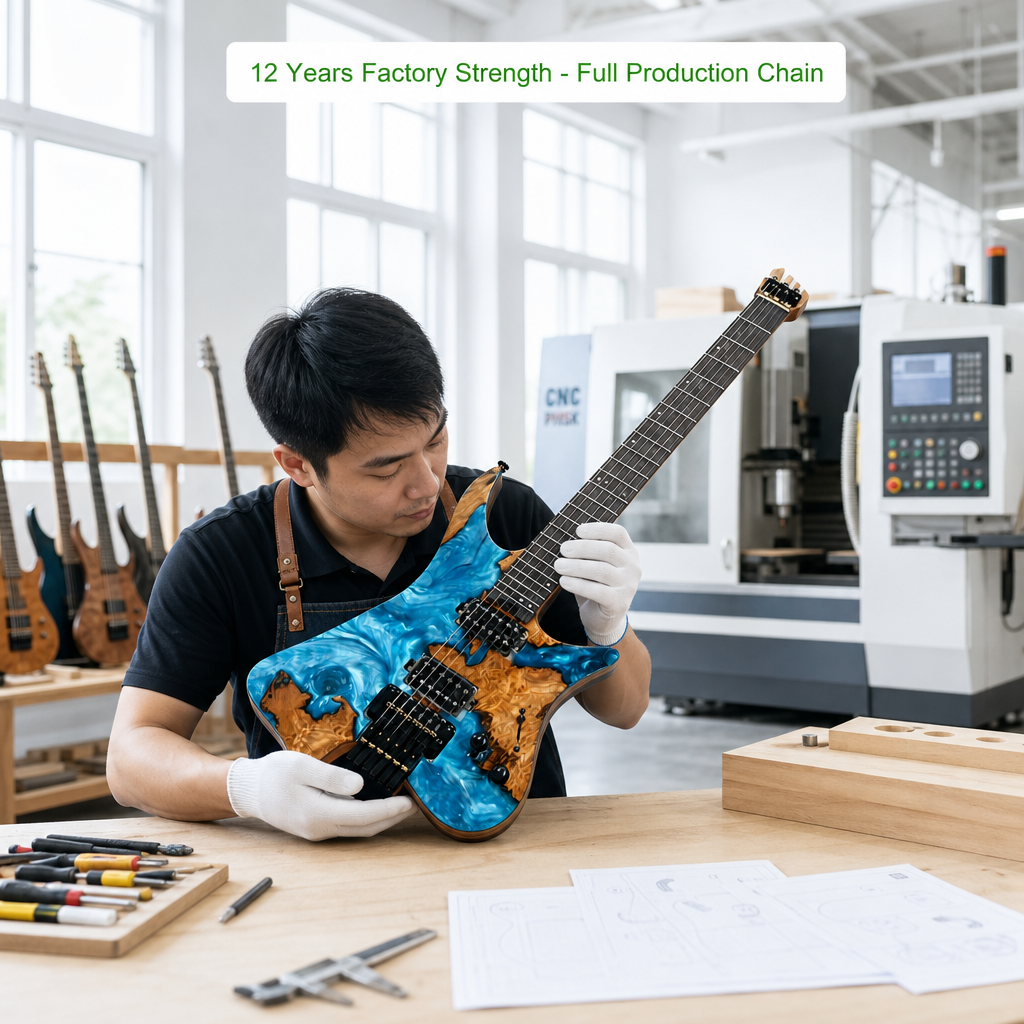
Our production floor, warehouse facilities, and management systems are verified on-site by SGS Group (latest audit November 2025). We maintain certified traceability across raw material intake, CNC routing, finishing booths, and finished product inspection.
SGS Verified SupplierTurnkey OEM/ODM Engineering
Backed by more than 100 industrial design patents and proprietary copyrights, our R&D team co-develops bespoke bass shapes, custom wiring harnesses, multi-scale bridges, and branded string gauges. We transform conceptual briefs into production reality swiftly.
100+ Patents & CopyrightsFlexible Sourcing & Low MOQs
We eliminate inventory barriers for developing musical instrument brands and international school programs. Sample testing begins from just 1 piece for standard bass models, with custom-printed string runs and accessory packs starting at accessible wholesale minimums.
MOQ From 1 PieceFrequently Asked Questions on Bass Strings & OEM Procurement
Detailed answers to technical, commercial, and regulatory inquiries commonly raised by brand owners, sourcing directors, and wholesale importers.
What makes CE certification critical for bass guitar strings and instrument components?
CE certification confirms that the materials, surface treatments, and electronic accessories (such as pre-wired harnesses, active pickups, and cables) conform to European Union health, safety, and environmental protection standards. For bass strings, this certifies full compliance with RoHS and REACH regulations, ensuring zero toxic heavy metals (lead, cadmium, mercury) and zero restricted chemical finishes, preventing border seizures during EU customs clearance.
What are the minimum order quantities (MOQ) for custom-gauge bass string sets?
For standard catalogue gauge sets (.045-.105 / .040-.100 / .045-.130), our baseline MOQ for sample validation starts as low as 50 sets. For fully customized private-label foil envelopes, customized color-coded ball ends, and bespoke multi-scale core-to-wrap ratio combinations, standard production MOQs range from 500 to 1,000 sets per gauge combination.
How does core wire geometry affect bass string durability and fretboard intonation?
Hexagonal high-carbon steel cores feature six sharp edges that mechanically anchor the outer wrap wire during the computerized winding cycle. This eliminates microscopic wrap slippage, which is the primary cause of tuning instability and pitch drift. Round cores, while offering slightly more flexibility, are more prone to unwinding at the bridge saddle if trimmed improperly before tuning.
Can NFGF supply matched string sets for 35-inch extra-long and multi-scale bass guitars?
Yes. Our automated winding machinery accommodates specialized scale lengths up to 37 inches for multi-scale fanned-fret basses (such as our headless custom 5-string J-Bass). We calibrate the taper point of the low B and E strings to seat perfectly over high-mass bridges without wrapping heavy windings around the tuning posts.
What anti-corrosion packaging options are offered for transoceanic container shipping?
We provide triple-layer composite aluminum-barrier foil pouches that are hermetically heat-sealed with nitrogen purging. This seals out oxygen and moisture completely, preventing oxidation during ocean freight transit and maintaining fresh-from-the-factory tonal brilliance for up to 3 years in distributor warehouses.
Can we combine electric basses, cables, amplifiers, and strings in a single mixed container?
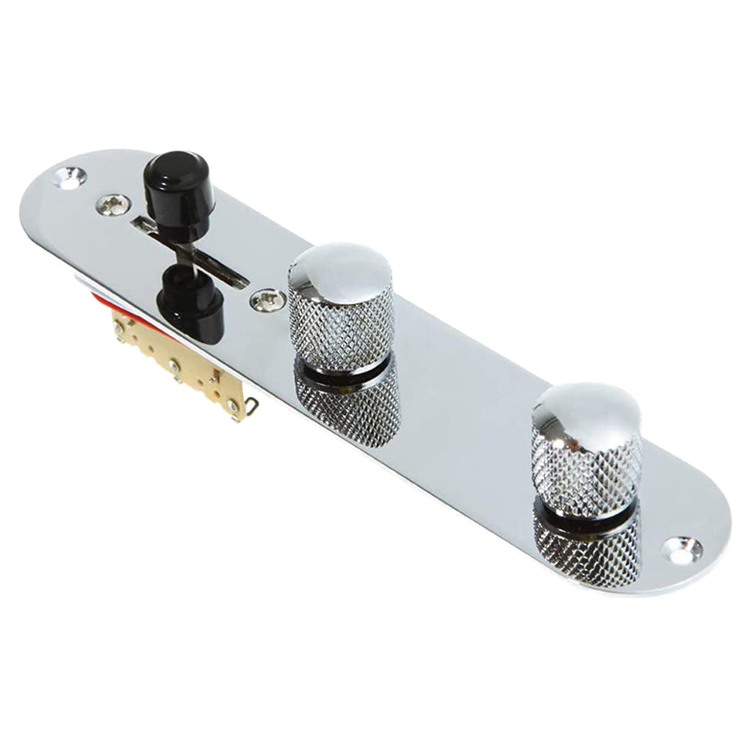
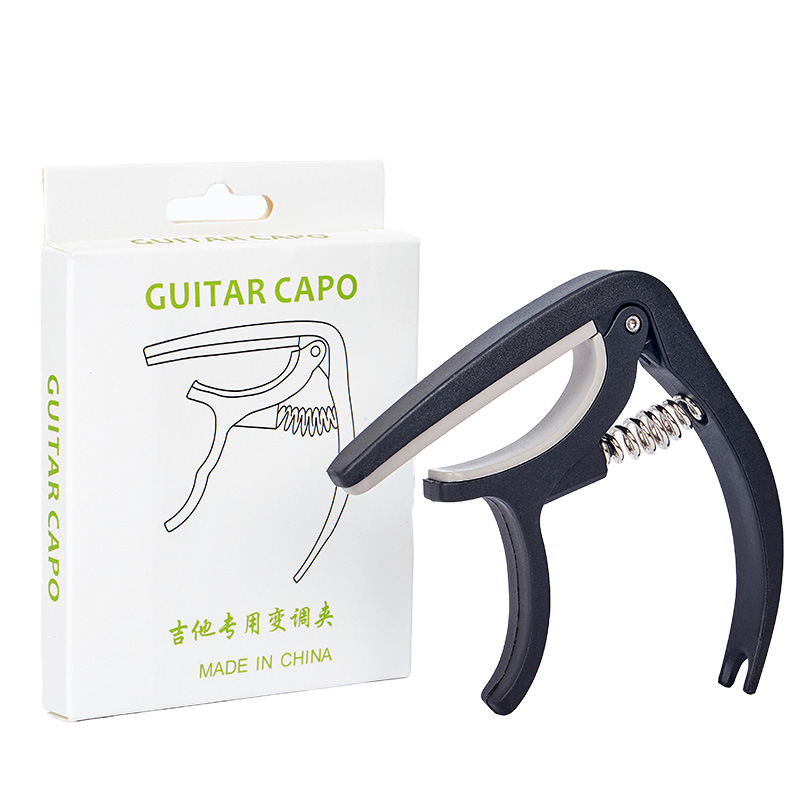
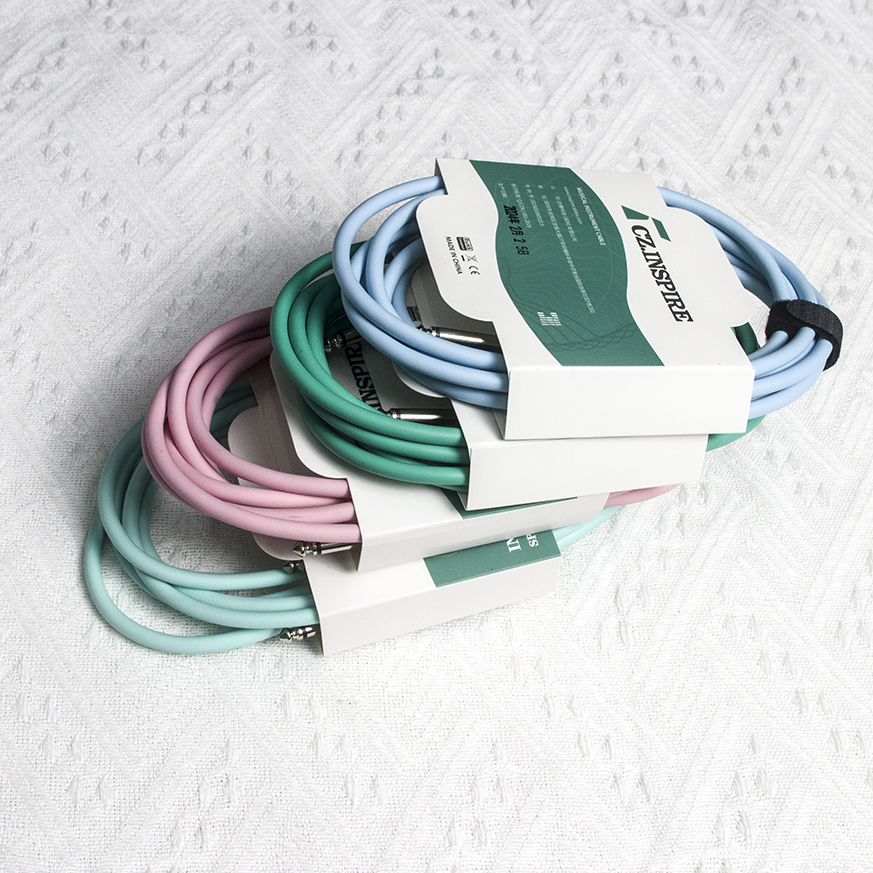
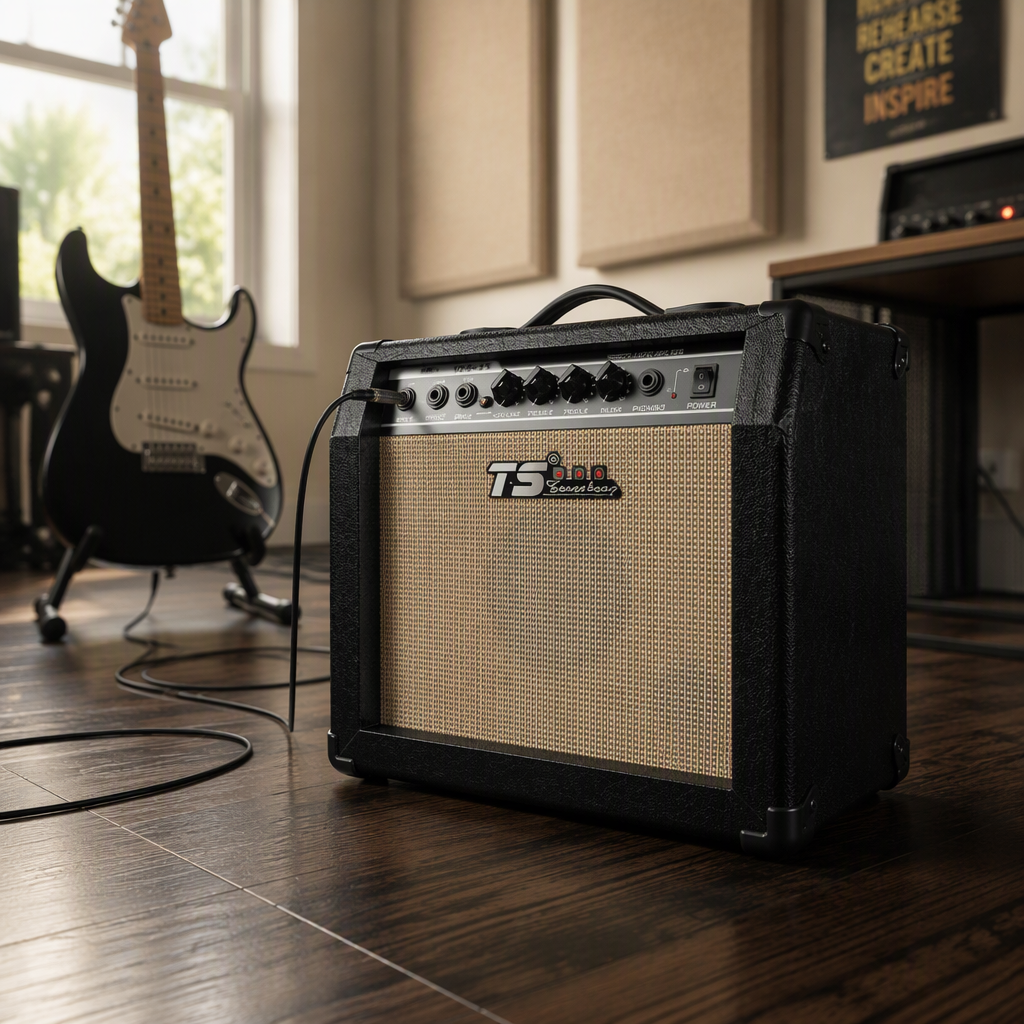
Absolutely. One of NFGF's strongest competitive advantages as a one-stop factory is mixed-SKU container consolidation. Clients can consolidate electric basses, starter guitar sets, pre-wired telecaster harnesses, 6.35mm instrument cables, capos, portable amps, and retail-packaged strings into a single FCL shipment from our Huizhou factory, optimizing shipping costs and customs brokerage fees.
Partner With a Certified Chinese String & Instrument Manufacturer
Whether you require turn-key private-label string manufacturing, custom fanned-fret bass development, or certified OEM instruments for retail distribution, our engineering team is ready to evaluate your technical brief and deliver competitive pricing within 24 hours.
Send an Inquiry